
Sungrow vs Fronius Solar Inverters: Reliability and Performance Compared

The inverter with the longer headline warranty isn’t automatically the more reliable choice. With sungrow vs fronius solar inverter reliability and performance, the result depends on the specific model, system design, installation and support, not brand reputation alone.
It’s understandable if the comparison feels difficult. Specifications vary across models and configurations, while warranty terms don’t tell the whole story about how an inverter will perform on your roof or fit future battery plans. A fair comparison starts with equivalent models and looks beyond broad brand claims.
This guide explains which measures matter in real-world use, including efficiency, warranty coverage, monitoring, battery compatibility and manufacturer support. It will help you compare current Australian information without treating one brand as the automatic winner. You’ll also see why careful system design and electrical installation can influence reliability, so you can weigh Sungrow and Fronius against your energy use, property and plans for storage.
Table of Contents
Sungrow vs Fronius: What Does Inverter Reliability Actually Mean?
Sungrow vs Fronius Performance: Which Specifications Matter?
Sungrow vs Fronius Reliability: Compare Support, Warranty and Monitoring
How to Choose Between Sungrow and Fronius for Your Solar System
Plan a Reliable Solar Inverter Installation with the Right System Design
Sungrow vs Fronius: What Does Inverter Reliability Actually Mean?
Inverter reliability is the ability of a correctly selected and installed unit to operate consistently under its intended conditions, with suitable protection and dependable support across the system’s working life. It’s different from efficiency. Reliability concerns dependable operation; efficiency describes how effectively the inverter converts electrical energy. A high efficiency figure alone can’t tell you how a model will perform at your property.
A solar inverter is a key part of a photovoltaic system, but its results depend on more than the unit itself. For a fair look at sungrow vs fronius solar inverter reliability and performance, assess the specific model alongside the system design, installation and conditions it will operate in.
Which factors influence solar inverter reliability?
Four factors deserve attention: model design, installation quality, operating environment and system configuration. The inverter needs to suit the solar array and the way its panels are arranged. Correct installation and commissioning also matter, as does choosing a location where the unit can operate within the manufacturer’s stated conditions.
Heat, restricted ventilation, dust and weather exposure can affect the operating environment. A shaded, appropriately ventilated location may help avoid unnecessary heat build-up, while the manufacturer’s documentation sets out the conditions and protection limits for each model. These details are especially relevant when the inverter is installed outdoors or near dusty areas.
A product warranty describes specified coverage and conditions. It isn’t a promise of uninterrupted operation, nor does it cover every system issue or installation factor. Read the terms for the exact model, and distinguish manufacturer support from installation workmanship and commissioning.
Why a brand-wide winner can be misleading
Sungrow and Fronius each offer different inverter models and categories. Comparing unlike products, such as units designed for different system sizes or purposes, can lead to an unreliable conclusion. Compare equivalent categories and generations, then use the relevant Australian manufacturer documents to assess specifications, features and warranty conditions.
Details vary by model and market, so a general brand claim may not reflect the unit suited to your system. A single customer review or anecdote can flag an individual experience, but it can’t establish long-term reliability across a product range. A more useful comparison identifies the models assessed and explains how the information was gathered.
In practice, reliability is a system outcome. Matching the inverter to the array, site and future energy needs, then installing and commissioning it carefully, gives you a more useful basis for comparison than choosing by brand reputation alone.
Sungrow vs Fronius Performance: Which Specifications Matter?
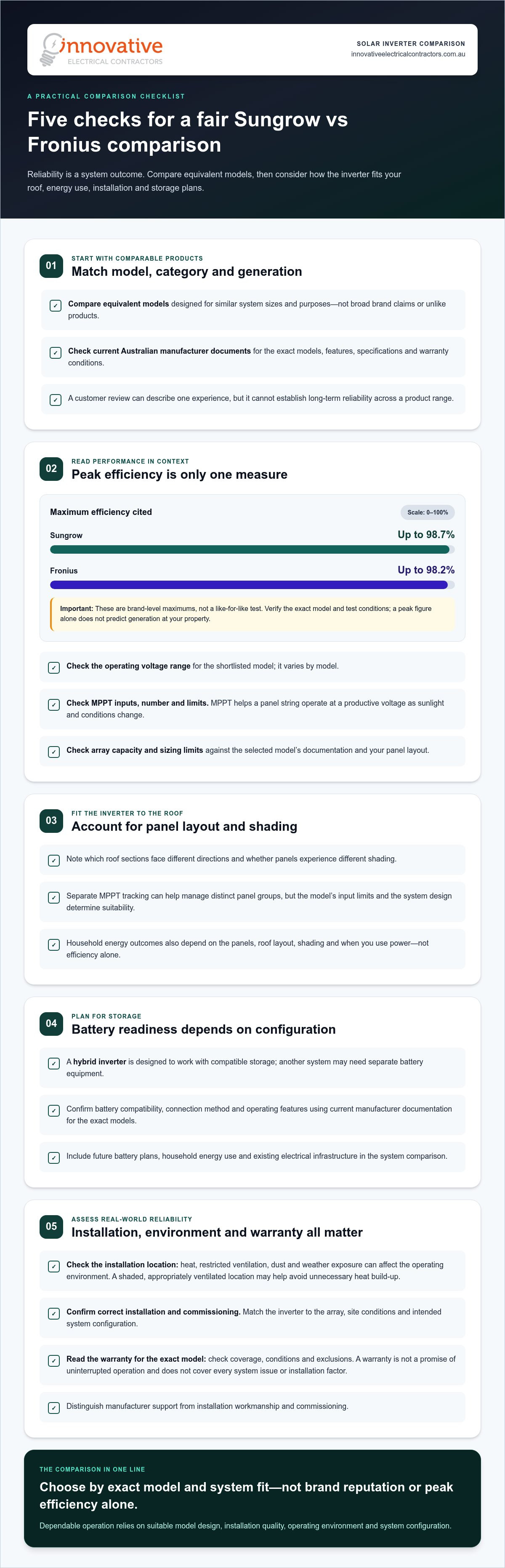
Peak efficiency can help narrow a shortlist, but it won’t predict how much usable energy your home receives. The maximum efficiency figures cited here are up to 98.7% for Sungrow and 98.2% for Fronius. These are brand-level maximums, not a like-for-like test. A laboratory efficiency figure describes conversion under specified conditions; your household’s energy outcome also depends on the inverter, panels, roof layout, shading and when you use power.
For the sungrow vs fronius solar inverter reliability and performance comparison, start with equivalent inverter categories and exact model datasheets. This overview of inverters and grid services explains how they relate to solar system operation. For each shortlisted model, check the details below and confirm them against current Australian documentation.
How to compare efficiency, MPPTs and inverter sizing
MPPT, or maximum power point tracking, helps a panel string operate at a productive voltage as sunlight and conditions change. The number of MPPTs matters when roof sections face different directions or experience different shading. Separate tracking can help manage distinct panel groups, but the model’s input limits and the system design still determine suitability.
Compare operating range, MPPT inputs and array capacity alongside efficiency. Check the panel layout and inverter sizing against the exact datasheet. Don’t assume a higher peak figure means more generation in every installation.
Do Sungrow and Fronius perform differently with batteries?
Battery readiness depends on the inverter configuration. A hybrid inverter is designed to work with compatible storage, while another system may need separate battery equipment. Compatibility, connection method and operating features vary by model, so match the inverter and battery using current manufacturer documentation. For practical storage care, see this guide to solar battery maintenance.
Good results start with a design matched to the roof, energy use and storage plans. Explore solar and battery system design to see how those project details shape an installation.
Sungrow vs Fronius Reliability: Compare Support, Warranty and Monitoring
Warranty length is useful, but it’s only one part of support. For a fair sungrow vs fronius solar inverter reliability and performance comparison, use the terms for the exact inverter model sold in Australia, then consider how monitoring and fault support work in practice.
What should you check in an inverter warranty?
As of October 2026, Sungrow offers a standard 10-year warranty for most residential inverters installed in Australia after July 2020. The stated cover includes parts, labour and transport. Fronius offers eligible inverters below 50 kW a free 10-year warranty with product registration. Its Warranty Plus terms require registration on Solar.web within 30 months of delivery. Eligible inverters above 50 kW have a free five-year warranty, with an optional paid extension available for some products. Fronius warranty periods commence on commissioning.
These terms aren’t interchangeable promises for every model. Before comparing them, read the current Australian manufacturer documentation and check:
Which model and installation date the warranty applies to.
Whether registration is required, and the deadline and process.
What costs and components are covered, and what exclusions apply.
How to lodge a claim and what information or steps are required.
A longer warranty doesn’t prove an inverter will operate for that entire period or show how often faults occur. It sets out specific remedies if a covered issue arises. Manufacturer product support is also distinct from installation workmanship and commissioning. Careful electrical work and correct commissioning help the system operate as designed, but they don’t replace the manufacturer’s warranty terms.
How do monitoring and serviceability affect peace of mind?
Monitoring is most useful when it makes system status easy to understand. Compare the information available for each model: generation trends, operating status, clear fault notifications and access to historical data. Check whether an alert identifies the affected component or simply signals that attention may be needed. Don’t assume every model or setup provides the same level of detail.
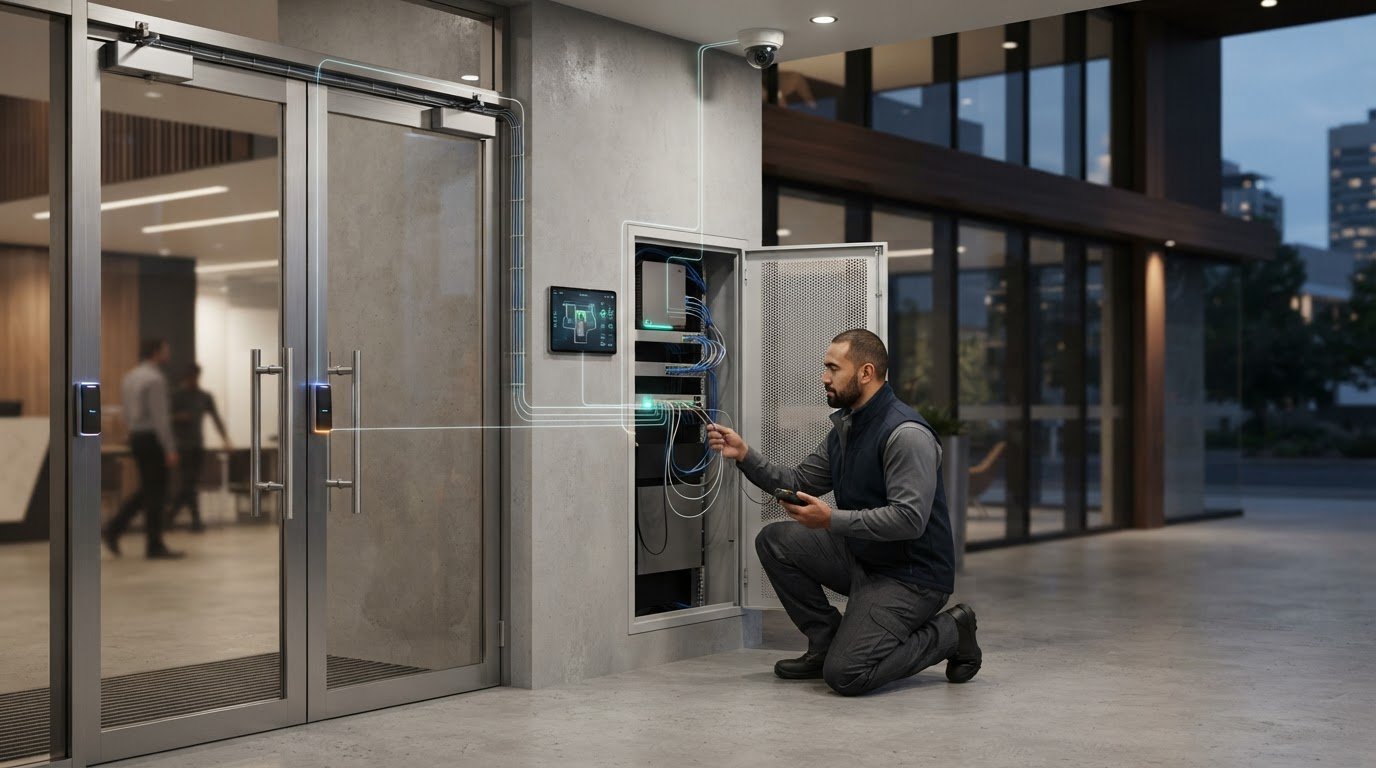
Accessible data can help with fault finding by showing when performance changed and whether an issue appears ongoing. It can also inform maintenance decisions, but monitoring can’t diagnose every electrical fault on its own. Installation records and commissioning information provide useful context for interpreting an alert.
Warranty, monitoring and serviceability each support confidence in different ways. Innovative Electrical Contractors provides electrical work, including fault finding and switchboard upgrades, as well as solar and battery installations. A reliable comparison weighs exact warranty terms and practical support alongside model-specific evidence, rather than naming a brand-wide winner without comparable data.
How to Choose Between Sungrow and Fronius for Your Solar System
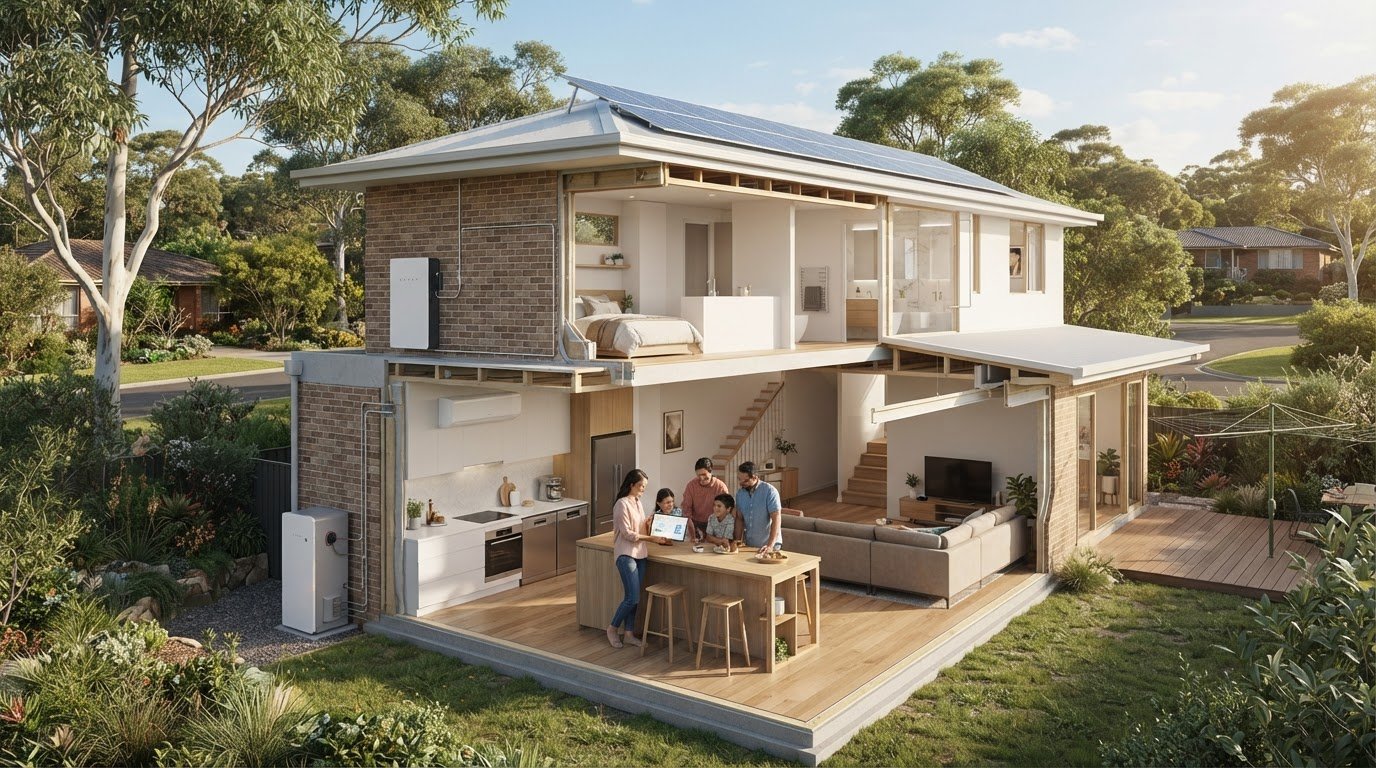
Choose the inverter around the job your solar system needs to do. A practical comparison starts with your energy use and property, then checks whether shortlisted models suit the proposed design. This keeps the focus on system fit, not brand reputation alone.
Confirm your energy goals. Consider when your household uses the most power, whether you plan to add a battery and whether backup power or off-grid operation is important. These priorities affect the system architecture, not just the inverter choice.
Assess the site. Review roof orientations, shading and available panel areas. Also consider inverter placement, ventilation and the existing electrical infrastructure, including whether switchboard work may form part of the project.
Shortlist equivalent models. Compare Sungrow and Fronius models in similar capacity ranges and the same product category. For complex roof layouts, check whether each model’s MPPT configuration suits the proposed panel arrangement.
Verify the documentation. Record current Australian datasheet and warranty details for each exact model. Check operating limits, system compatibility, monitoring features and any conditions that matter to your plans.
Match inverter features to your property and energy goals
A roof with panels facing different directions may need a design that can manage distinct panel groups appropriately. Review MPPT inputs alongside the panel layout and likely shading, rather than choosing on input count alone. If battery storage is part of your plan, confirm the proposed inverter and battery architecture are compatible. Backup capability also depends on the system design, so define which circuits or loads you want supported.
Off-grid ambitions call for a broader assessment. Consider the inverter as part of a coordinated solar, battery and generator system, with the design reflecting expected loads and how energy will be managed. For a new build, electrical planning for new homes can help you consider energy requirements alongside the wider electrical layout.
Use a fair Sungrow vs Fronius comparison checklist
Put equivalent models side by side and note the source and date of each specification. Include verified efficiency, operating limits, MPPT arrangement, warranty terms, monitoring and battery compatibility. Then assess the complete proposed system: panel layout, inverter sizing, electrical infrastructure and future energy needs. A model that looks strong on paper may not be the better fit if it doesn’t suit the roof or planned storage.
For a project-focused comparison, plan your solar and battery system around your property, energy use and future requirements.
Plan a Reliable Solar Inverter Installation with the Right System Design
The right inverter is only part of a dependable solar setup. Electrical assessment, thoughtful placement and careful commissioning help the system operate as intended. The final choice should suit the property and planned system, with specifications checked against current documentation for the exact model.
What a well-planned inverter installation should address
Inverter placement affects its operating environment and how easily it can be monitored or serviced. The design should account for manufacturer-specified clearances, ventilation, weather exposure and access. A hot, enclosed or hard-to-reach location may create avoidable challenges, so the proposed position needs to work for both the equipment and the property.
The inverter also needs to integrate correctly with the solar panels, any battery storage and the property’s electrical system. An electrical assessment can identify existing infrastructure that may affect the installation, such as a switchboard that needs upgrading. Commissioning should include checks that the system has been configured and is operating as designed. Clear handover information helps the owner understand system operation, monitoring and the documentation to keep.
How Innovative Electrical Contractors can help with system planning
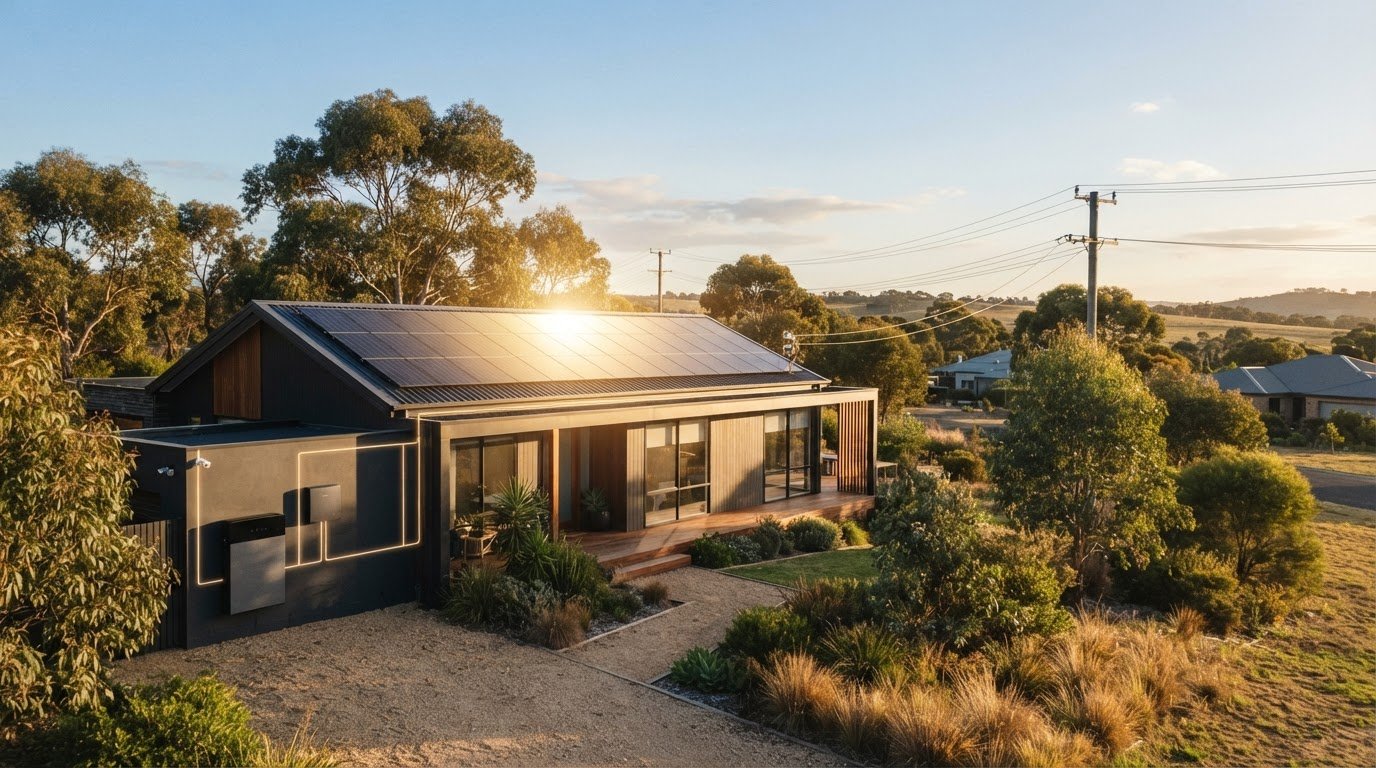
Innovative Electrical Contractors provides solar and battery installations, electrical work and off-grid solutions. Planning around your roof, energy use and future requirements connects inverter selection with the system as a whole. If you’re considering backup power or an off-grid setup, solar, batteries and generator systems need to be considered together. Electrical work, including a switchboard upgrade, can also be factored into the project where needed.
That project-focused approach is central to comparing sungrow vs fronius solar inverter reliability and performance. Rather than choosing on a brand claim alone, match the inverter to the system design and verify its current model documentation. Share your energy goals, property considerations and plans for future battery storage or backup power to shape the installation approach.
For a practical next step, discuss your solar and battery installation with Innovative Electrical Contractors.
Choose an Inverter That Fits Your Energy Plans
The sungrow vs fronius solar inverter reliability and performance comparison isn’t settled by a brand name or peak-efficiency figure. Compare equivalent models using current Australian specifications, warranty terms and battery compatibility. Then consider how the inverter will work with your roof, electrical setup and future energy needs.
System design and installation matter too. Placement, ventilation and commissioning all contribute to how the equipment operates. Innovative Electrical Contractors provides solar and battery installations for residential and commercial projects, with electrical expertise that includes switchboard upgrades and fault finding. For off-grid needs, solar, batteries and generator systems can be planned together.
Start with your property, everyday energy use and plans for storage or backup. Plan a solar and battery system that suits your property with a design shaped around your requirements. A considered choice now can help you move forward with greater confidence in your solar system.
Frequently Asked Questions
Is Sungrow or Fronius more reliable?
Neither brand can be named the more reliable choice for every solar system without comparable, model-specific evidence. Reliability depends on the inverter model, how it’s installed and commissioned, the conditions it operates in and the support available. For a useful sungrow vs fronius solar inverter reliability and performance comparison, look for evidence that identifies the models and explains its method, rather than relying on brand reputation or one customer’s experience.
Which solar inverter performs better, Sungrow or Fronius?
Performance depends on the exact models and how well they suit your system. Compare equivalent inverter categories using current Australian datasheets, including operating range, MPPT inputs, sizing limits and efficiency. A higher peak specification doesn’t automatically mean more useful energy at your home. Roof direction, shading, panel arrangement and household energy use all affect the result, so assess the proposed system design alongside the inverter figures.
How much difference does inverter efficiency make to solar output?
Efficiency affects how much energy is lost during conversion, but the difference between two peak figures shouldn’t be treated as a guaranteed difference in household generation. Peak efficiency is measured under specified conditions, while actual output also depends on the panels, sunlight, temperature, shading and system design. Compare efficiency figures for the exact models and test conditions, then consider whether other features suit your roof and energy needs.
Can I add a battery to a Sungrow or Fronius inverter later?
Possibly, but it depends on the inverter model and the system architecture. Some inverters are designed to work with compatible batteries, while other setups may need additional equipment or a different configuration. Before choosing an inverter, consider the battery you may want, how it connects and whether backup capability matters. Check current manufacturer compatibility documents for the exact inverter and battery combination before planning a later addition.
What happens if a solar inverter fails?
If an inverter stops operating, solar generation may be reduced or unavailable until the issue is assessed and resolved. Check the monitoring app or display for an alert, and note when the problem began. Don’t remove covers or attempt electrical repairs yourself. Use the manufacturer’s warranty and support process for the inverter, and arrange qualified electrical assistance to assess the system and its installation.
Are Sungrow and Fronius inverters suitable for Australian conditions?
Suitability depends on the specific model and where it will be installed. Check the Australian manufacturer documentation for its operating conditions and environmental protection, then plan placement to account for heat, ventilation, dust and weather exposure. The inverter also needs to suit the panels and electrical system. Confirm model documentation and applicable Australian installation requirements as part of the system design, rather than assuming every model fits every property.
Should I choose an inverter based on brand or system design?
Prioritise system design, then compare brands through equivalent models that fit your requirements. Consider roof orientations, shading, expected energy use, existing electrical infrastructure and future battery or backup plans. Check each shortlisted model’s specifications, warranty, monitoring and compatibility in current documentation. A carefully selected and installed inverter can better suit the property than choosing by brand name alone. Solar and battery planning should account for the whole system, not just one component.
Comments