
Benefits of a Fully Electric Home in Australia: 2026

What if going all-electric didn’t mean replacing everything at once? For Australian households, the benefits of a fully electric home australia-wide are easier to assess when electrification is treated as a staged energy plan, not a single costly overhaul.
Whether switching from gas will reduce your energy costs depends on your household, appliances, electricity use and tariff. It’s also worth checking what your electrical setup can support and whether upgrades could be needed. Efficient electric systems can offer practical advantages, but upfront costs and careful planning matter too.
This guide explains the benefits and trade-offs, then sets out how to choose what to upgrade first. You’ll learn how solar and batteries can complement electric appliances, when a switchboard upgrade may be relevant, and how air conditioning fits into an efficient home. The aim is a clear, manageable plan for a new home or a gradual update to an existing one.
Table of Contents
What does a fully electric home mean in Australia?
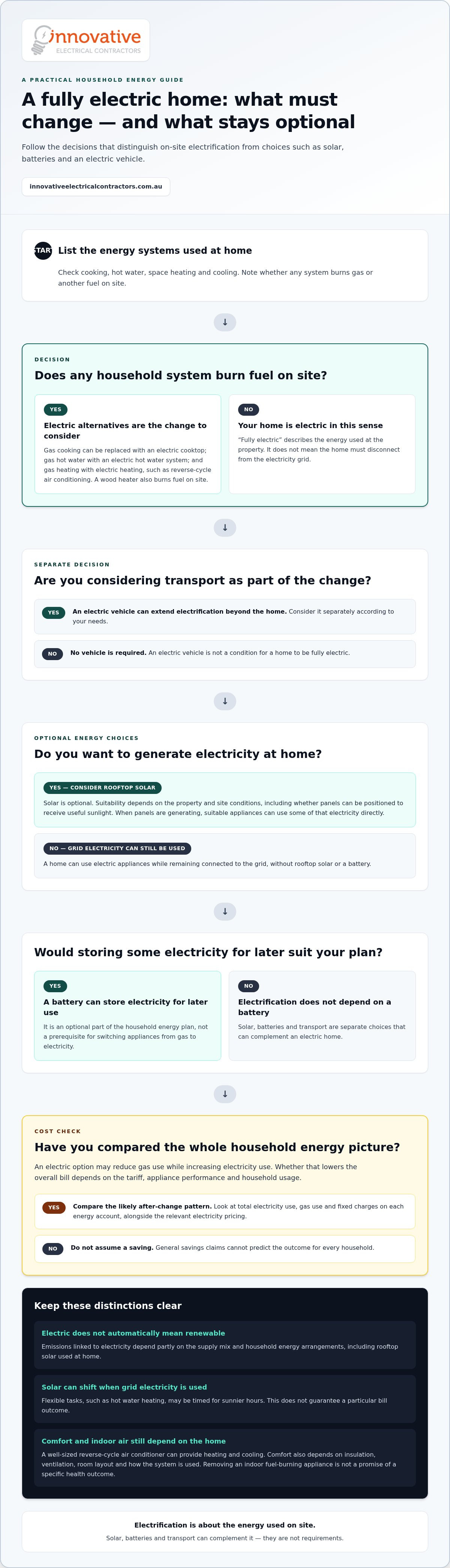
A fully electric home uses electricity for its household energy needs instead of burning fossil fuels on site. In practice, that usually means replacing gas cooking, gas hot water and gas heating with electric alternatives. A wood heater also burns fuel on site, so a home that relies on one isn’t fully electric in this sense.
“Fully electric” describes how energy is used at the property. It doesn’t mean the home is disconnected from the electricity grid, or that all its electricity comes from renewable sources. Emissions linked to electricity use depend partly on the supply mix and household energy arrangements, including whether rooftop solar is generating power for use at home. Australia’s changing supply mix is outlined in Energy in Australia.
Which parts of a home can be electrified?
Start with the main household energy uses: cooking, hot water, space heating and cooling. Electric cooktops, electric hot water systems and reverse-cycle air conditioning can replace appliances that burn gas or other fuels on site. For heating, the key distinction is whether the system uses electricity or burns fuel, not simply whether it warms the same rooms.
Pool heating can be another optional upgrade. Transport is separate: an electric vehicle may extend electrification beyond the home, but it isn’t required for a home to be considered fully electric. Plan household systems first, then consider a vehicle separately according to your needs.
Does a fully electric home need solar and batteries?
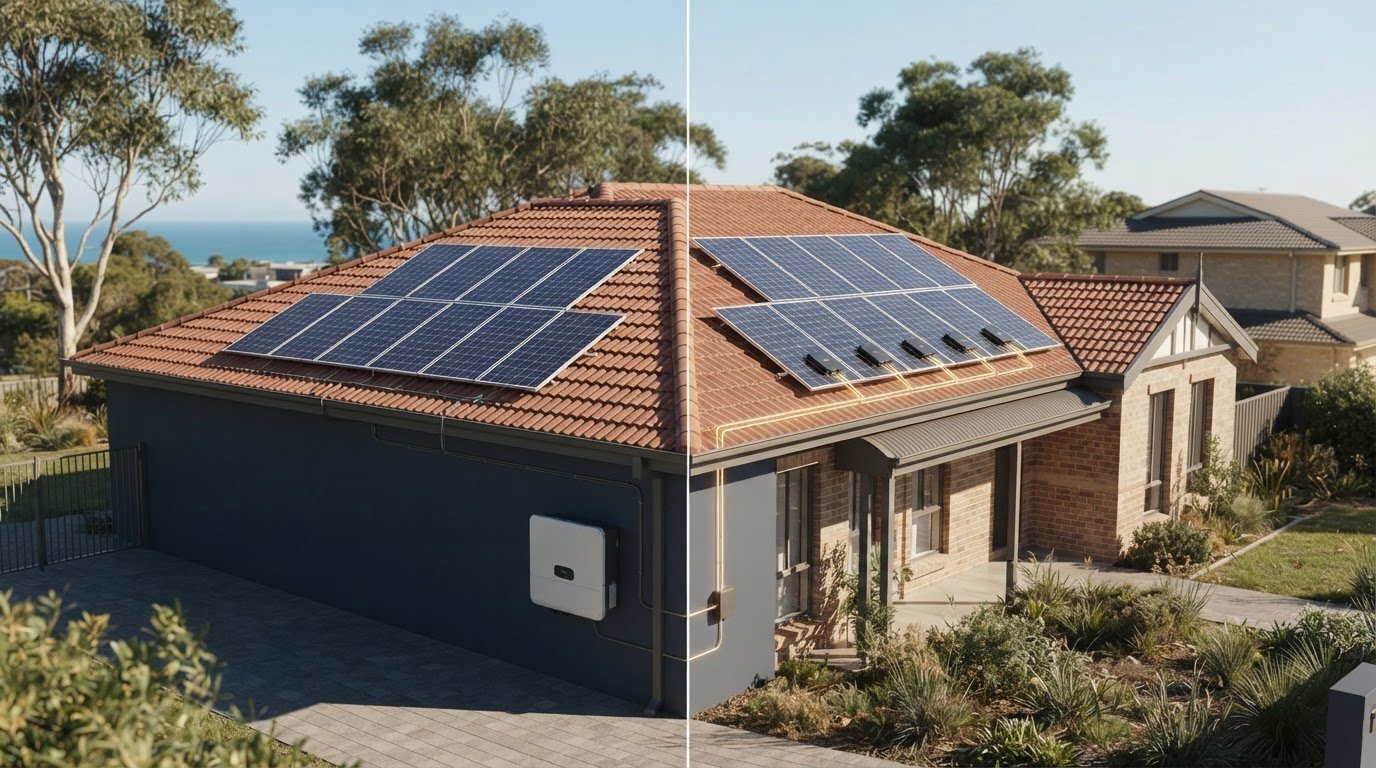
No. A grid-connected home can use electric appliances without solar panels or a battery. Rooftop solar is an optional way to generate electricity at home. Its suitability depends on the property and site conditions, including whether panels can be positioned to receive useful sunlight.
A battery is optional too. It stores electricity for use later, but it isn’t a prerequisite for switching from gas appliances to electric ones. Solar and batteries are separate decisions within a broader household energy plan, not equipment every all-electric home must have.
That distinction matters when weighing the benefits of a fully electric home australia: electrification is about the appliances and energy sources used on site, while solar, batteries and transport are choices that can complement it. A home can be fully electric and remain connected to the grid, with no battery or electric vehicle.
Households have different starting points. A new home can be planned around electric systems from the outset. An existing home may still have gas appliances or a wood heater, and move towards electric alternatives over time. Residential electrical planning can help coordinate new loads and future priorities. Switchboard upgrades and electrical maintenance may also be part of that work. Start by listing which systems use on-site fuel and which already run on electricity.
How can an all-electric home benefit bills, comfort and health?
Electrification can change how much energy a home uses, when it uses it and where that energy comes from. Efficient electric appliances may use less delivered energy for some household tasks, but that doesn’t automatically mean every household will pay less. The result depends on the appliance being replaced, its electric alternative, the household’s energy use and electricity pricing.
For a useful comparison, look beyond the appliance itself. Compare total electricity use, gas use and fixed charges on each energy account. An electric option might reduce gas consumption while increasing electricity consumption. Whether that lowers the overall bill depends on the tariff and usage pattern, so general savings claims can’t predict the result for every home.
Solar adds another consideration. When rooftop panels are generating, running suitable appliances can use some of that electricity directly. Household routines might shift hot water heating or other flexible electricity use towards sunnier hours. This changes when electricity is drawn from the grid, but doesn’t guarantee a particular bill outcome. A battery can store some generated electricity for later use, but it remains an optional part of the plan.
Electricity emissions also vary with the supply mix and the home’s energy arrangements. Using rooftop solar while it’s generating can change the source of electricity used for household tasks. Grid electricity remains part of the picture for many homes, so electrification doesn’t mean every unit of power has the same emissions impact.
When might electrification improve household energy costs?
Operating costs depend on the electricity tariff, appliance performance and how much a household uses each system. Solar self-consumption may help make use of electricity generated on the roof, especially if flexible tasks can run during generation. To assess your situation, compare current energy use and tariffs with the likely usage pattern after an appliance change. Treat general savings figures as context, not a forecast for your home.
How can electric appliances affect comfort and indoor air?
A well-sized reverse-cycle air conditioner can provide heating and cooling. Comfort also depends on insulation, ventilation, room layout and how the system is used. Replacing an appliance that burns fuel indoors removes that appliance’s on-site combustion. This is a practical distinction, not a promise of a specific health outcome. Good ventilation and suitable appliance selection still matter. Air-conditioning installation and maintenance can form part of a considered household energy plan.
That’s why the benefits of a fully electric home australia are best judged as a connected household plan, not by looking at one appliance in isolation. Electrical planning can help coordinate new loads with solar, battery storage and cooling priorities. Innovative Electrical Contractors provides solar and battery installations and air-conditioning solutions to support the wider energy setup.
What are the trade-offs of making a home fully electric?
The main trade-off is practical: upgrades take planning, and upfront work can be substantial if several appliances need replacing at once. There’s no need to change everything immediately. Replacing a gas hot water system when it reaches the end of its life may be more manageable than removing a working system early, particularly if the change also requires electrical work.
Timing matters. A functioning appliance has remaining useful life, while replacing it early means paying sooner and discarding equipment that still works. Planning ahead can, however, help avoid rushed decisions if an appliance fails. Weigh its condition, likely replacement timing and the work involved in switching to an electric alternative.
What can affect the cost and complexity of switching?
Every property is different. The condition and location of an appliance, its installation requirements and the home’s electrical capacity can all affect the scope of an upgrade. A new electric appliance adds to household electrical demand, so switchboard capacity, wiring and other connected loads should be considered together.
Upgrading several systems at once can require more coordination than replacing one appliance at a time. Electrical planning, including a review of switchboard requirements, can clarify what work may be needed and how upgrades could be staged. Don’t assume electrification will always lower bills or remove every household cost. Energy charges, appliance performance and household use still influence the result.
How do renters and apartment households approach electrification?
Renters may have less control over fixed appliances, wiring and other building infrastructure. Their options depend on which changes are within their control and whether the property owner is planning upgrades. Start by identifying the appliances you can influence and recording what may need attention, without assuming you can replace fixed equipment.
Apartment upgrades may involve shared services or decisions that affect the building, not just one unit. That can make the timing and coordination different from a standalone home. Consider the wider electrical setup alongside each appliance, especially if several systems or households could be affected.
A staged approach can balance the benefits of a fully electric home australia with the realities of budget, property type and appliance condition. For an owner, that might mean planning an electric replacement around an appliance’s expected end of life. For a renter or apartment resident, it may mean identifying constraints before deciding which changes are realistic.
There’s no single upgrade schedule for every household. Aim to avoid unnecessary replacement while making considered choices about the next system due for attention. Reviewing electrical capacity and installation needs can bring those decisions into focus before work begins.
How should you plan a staged transition to an electric home?
Start with the home you have, not a list of appliances to replace. Review how you use energy, note which systems rely on gas or another fuel, and identify what’s working well and what’s nearing replacement. Then consider the electrical work and household routines each change could involve. This helps you stage the transition and avoid replacing equipment before it’s needed.
Use this sequence to turn broad intentions into practical next steps:
Assess current energy use. Review electricity and gas bills, tariffs and usage patterns. Note when you’re home, when heating or cooling is used, and which energy tasks could shift to another time.
Prioritise upcoming replacements. Record each appliance’s age and condition, then focus on systems that are failing or approaching the end of their useful life. Avoid discarding working equipment simply to electrify sooner.
Plan the electrical requirements. Consider the new appliance’s load alongside existing systems, switchboard capacity and wiring. If you’re planning several upgrades, map them together rather than treating each as an isolated job.
Review the plan as needs change. Revisit your priorities after a replacement, a change in household routine or a decision to add solar or a battery.
Which appliance should you replace first?
There’s no universal first choice. Compare cooking, hot water and heating or cooling based on what uses energy in your home, what’s likely to need replacement soon and what matters most to your daily routine. A system nearing the end of its life may take priority over one that still works reliably. Include electrical capacity and installation needs in the comparison so your preferred option is practical for the property.
Efficiency upgrades can support the transition too. Insulation and shading may affect how much heating or cooling a home needs, while your household schedule can influence when flexible electricity use is convenient. Consider these alongside new appliances rather than assuming equipment alone will determine comfort or energy use.
How can solar, batteries and efficient appliances work together?
Solar panels generate electricity while sunlight is available, which can serve household loads running at the time. A battery can store electricity for later use, depending on the system design. Together, these systems can influence when power is generated, used or stored, but they don’t guarantee a particular bill outcome. For practical battery care, follow the solar battery maintenance guide.
Before committing to an upgrade, review current incentives, tariff options and eligibility for your location. These details can change and may depend on the equipment or household circumstances, so use current information when comparing options. A clear sequence helps you capture the benefits of a fully electric home australia without making every decision at once. Innovative Electrical Contractors provides electrical work, solar and battery installations, and air-conditioning solutions to help coordinate your home’s energy priorities. Plan your home electrical upgrades.
How can electrical planning support your fully electric home?
As household systems shift from gas to electricity, the home’s electrical setup needs to support current use and planned upgrades. Considering new or replacement appliances together can help identify how their loads may fit alongside existing circuits, switchboard capacity, solar generation and battery storage. It also keeps the transition focused: plan for the systems your household needs instead of assuming every appliance must be replaced at once.
Electrical planning doesn’t promise lower bills, greater comfort or energy independence. It helps clarify the work and priorities involved before changes are made. For example, if you’re considering new heating or cooling as well as another electric system, reviewing both plans together can inform the order of work and whether the electrical setup needs attention.
What can professional electrical planning help coordinate?
Residential electrical work can support new or replacement household systems, including switchboard upgrades and electrical maintenance. Innovative Electrical Contractors also installs solar and battery systems, which can complement electrification with on-site generation or storage. Air-conditioning installation and maintenance can be planned alongside other electrical needs.
These services support the electrical and energy systems around a home. The right combination depends on the property and the homeowner’s priorities. Consider how each planned change connects to the home’s wider setup, including existing circuits and future upgrades.
What is a practical next step for homeowners?
Start with a simple record of what’s already in the home. Note each appliance, whether it uses electricity or burns fuel, its condition and likely replacement timing. Add a snapshot of your household’s energy use and daily routines. This creates a practical starting point for deciding which upgrades could come next and what electrical work may need coordination.
For households weighing the benefits of a fully electric home australia, make the plan specific to the property. Innovative Electrical Contractors provides residential electrical, solar, battery and air-conditioning solutions to support the electrical planning behind a staged transition. The aim is to make informed decisions about connected systems, not to promise a particular bill outcome or level of energy independence.
Once you’ve mapped your appliances and priorities, explore electrical and energy solutions that can support your next step. A clear plan gives you a practical basis for deciding what to address now, what can wait and how future upgrades may fit together.
Make your next upgrade part of a bigger plan
Electrification doesn’t need to be a single, all-at-once project. A home energy roadmap can help match each upgrade to the condition of your existing equipment, your household’s changing needs and the electrical work involved. Review the plan as appliances reach replacement age rather than sticking to a sequence that may no longer suit.
For homeowners weighing the benefits of a fully electric home australia can offer, list the systems you’d like to change and note questions about capacity, timing or solar and battery integration. Residential electrical support can include switchboard upgrades and maintenance, as well as solar, battery, off-grid and air-conditioning installations. The right scope depends on your home and priorities. No single setup guarantees lower bills or energy independence.
Turn your ideas into a practical upgrade plan with Plan your home’s electrical and energy upgrades. Start with the next decision, then build from there. A well-considered first step can make the rest feel more manageable.
Frequently Asked Questions
What does it mean to have a fully electric home in Australia?
It means the home’s everyday energy needs are met by electric systems rather than appliances that burn fossil fuels on site. Cooking, water heating and space conditioning are common areas to consider. An electric vehicle is a separate choice, not part of the household definition. A home can still be connected to the electricity grid, and its emissions depend partly on how its electricity is supplied.
Is a fully electric home cheaper to run in Australia?
It can be, but there’s no universal answer. The search phrase “benefits of a fully electric home australia” often reflects interest in lower bills, yet the result depends on the appliances replaced, energy tariffs, system efficiency and household habits. Compare your current gas and electricity use with the likely electricity demand after an upgrade. Solar use may also affect how much electricity you draw from the grid, but savings aren’t guaranteed.
Can you electrify a home without rooftop solar or a battery?
Yes. A grid-connected home can run electric appliances without rooftop solar or battery storage. These are optional additions, not prerequisites. If you’re considering solar, assess whether the roof and site suit a system and whether daytime generation aligns with household use. A battery can store electricity for later, but it adds another system to plan. You can electrify appliances first and assess solar or storage separately.
What should you replace first when moving away from gas?
Start by listing gas appliances, their condition and likely replacement timing. An appliance that’s failing or nearing the end of its useful life may be a sensible candidate, while a reliable system may not need immediate replacement. Then compare household priorities, including hot water needs, cooking preferences and heating or cooling use. The best first step is the one that fits your home, routine and upgrade plans.
Are fully electric homes better for indoor air quality?
Replacing an appliance that burns fuel indoors removes that appliance’s on-site combustion, which can reduce one source of indoor pollutants. That doesn’t mean electrification alone guarantees healthy indoor air. Cooking practices, ventilation, moisture and other sources also matter. Use suitable ventilation for cooking and maintain household systems as intended. If air quality is a concern, consider the whole indoor environment rather than attributing it to one appliance.
Can renters or apartment owners electrify their homes?
Yes, though the options can differ from those in a standalone home. Renters may have limited control over fixed appliances, while apartment owners may need to consider shared electrical infrastructure or building-wide systems. Start by identifying which appliances you control and which changes depend on the property or building. Keeping a record of existing equipment and replacement needs makes future planning more concrete.
Do you need to upgrade your switchboard to electrify a home?
Not always. Whether an upgrade is needed depends on the existing switchboard, wiring and electrical demand of the new systems being considered. Adding several high-demand appliances may call for a closer assessment than replacing one system. Reviewing the home’s electrical setup can clarify whether the existing capacity suits the planned work. Don’t assume an upgrade is necessary before the requirements are assessed.

Comments