
Split System Air Conditioning Installation: A Practical Homeowner’s Guide

Updated: Oct 3
What makes a split-system installation a good fit for your home? If you’re researching split system air conditioning installation, look beyond how quickly a job can be booked or the headline quote. The key is whether the proposed system suits the room and property, and whether the installer has clearly explained the work involved.
Room size, windows, ceiling height and insulation can all affect system choice. Electrical requirements, access and the positions of the indoor and outdoor units can also shape the installation. A useful quote explains what’s included, identifies possible extra work and sets out what to expect on installation day.
This guide covers the process, from assessing your home and comparing system options to checking an installer’s relevant credentials, safety practices and workmanship. You’ll also find questions to ask before booking and points to check at handover. Use them to compare quotes on more than the headline figure and prepare for the work ahead.
Table of Contents
What does split system air conditioning installation involve?
A split system has an indoor unit connected to an outdoor unit. The equipment and installation requirements need to be considered for the specific property. Split-system installation involves positioning and connecting the indoor and outdoor units, checking their operation, and explaining the finished system to the homeowner.
Choosing and purchasing an air conditioner is only part of the job. A suitable installation also considers where the units can go, how they’ll connect, whether the site is accessible and what electrical work may be needed. The scope depends on the property, selected equipment and existing setup, so check the written quote rather than assuming every installer includes the same tasks.
For a straightforward overview of what air conditioning is and how different systems work, Wikipedia offers useful background. The practical installation details still need to be assessed at your home.
What happens during a standard installation?
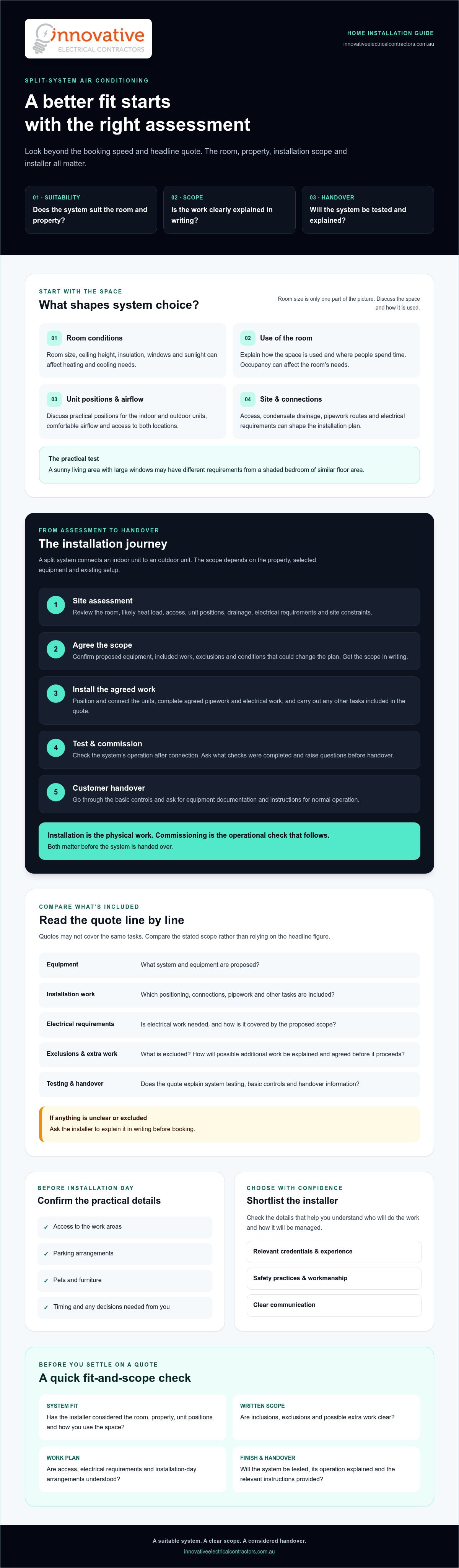
Before work starts, the installer should assess the proposed locations and confirm the agreed scope. Depending on the job, the work may involve positioning the units, running connecting pipework, completing the electrical connection, testing the system and handing it over to you. The sequence and inclusions can vary. Ask what’s covered, what’s excluded and how any additional work will be discussed before it proceeds.
Testing and handover are important parts of the job. Make sure you know how to operate the system and who to contact if you have questions about its use. If electrical work is required, confirm how it fits into the installation scope.
Which decisions need to be made before installation?
Consider how you’ll use the room, where people spend time and where the indoor unit could provide comfortable airflow. The outdoor unit also needs a suitable, accessible position. Discuss both locations during the assessment, before work begins.
Room size alone doesn’t determine whether a system is suitable. Ceiling height, insulation, sunlight, windows and occupancy can all affect a room’s heating and cooling needs. For example, a sunny living area with large windows may have different requirements from a shaded bedroom of similar floor area. Heating and cooling specialists such as Fast Furnace Company emphasise evaluating system capacity against the unique layout and heat load of each space. Explain how the space is used so the installer can assess it in context.
For broader advice on choosing equipment before discussing installation, consult an Australian air conditioner buying guide. Once you’ve narrowed down your options, an assessment of the property can help clarify whether the proposed system and installation plan are suitable for your home.
How is a split system assessed, installed and commissioned?
A professional job involves more than connecting two units. The installer needs to understand the room, confirm a workable plan and check the system after installation. Room layout, insulation, sunlight and occupancy affect heating and cooling needs. Access, airflow and a practical route for condensate drainage can also influence where the units can go.
Commissioning matters because it checks that the connected system operates as expected before handover. Installation is the physical work; commissioning is the operational check that follows.
Site assessment: Review the room, likely heat load, access, unit positions and condensate drainage. Identify electrical requirements and any site-specific constraints.
Agreed scope: Confirm the proposed equipment, work to be completed, exclusions and any conditions that could change the plan. Ask for the scope in writing before work starts.
Installation: Position and connect the indoor and outdoor units, complete the agreed pipework and electrical work, and carry out any other tasks included in the quote.
Testing and commissioning: Check the system’s operation after connection. Ask the installer to explain the checks completed and raise questions before handover.
Customer handover: Go through the basic controls and ask for the equipment documentation and instructions for normal operation.
What should an installer assess before work begins?
The assessment should consider how the room is used, its insulation and sun exposure, and where each unit can be placed. The installer should also check access to the proposed locations and how condensate drainage can be managed. If electrical work may be needed, ask what the existing setup can support and whether further work is anticipated.
An assessment helps establish a suitable plan, but some details may remain unresolved until work begins. Access limitations or other site conditions can affect the job. Confirm what the assessment has established, what remains provisional and how changes will be handled. The written quote should make the agreed scope clear.
What should testing and handover include?
At handover, ask the installer to demonstrate the basic controls and explain normal operation. Check that you have the relevant equipment documents and instructions. If anything about how the system works or the work completed is unclear, ask before the installer leaves.
A clear process helps you plan and identify unanswered questions early. If you’re considering professional air-conditioning installation, review the installation provider’s information and confirm the proposed assessment and scope directly.
How can you compare split-system installation quotes fairly?
A low headline figure doesn’t tell you whether two proposals cover the same equipment and work. Compare the system details, installation scope, exclusions, electrical requirements and handover. Access, the pipework route and mounting requirements can change what a job involves, so look for a quote based on your property rather than a generic description.
For example, one quote may assume easy access and a short pipework route, while another may account for a more involved mounting position. Ask each installer to explain the assumptions behind the proposal. This makes differences visible without relying on headline figures alone.
Which installation inclusions and exclusions should you check?
Check that the quote identifies the equipment, planned installation tasks and any proposed additional work. Ask how changes will be explained and approved before extra work proceeds. If you’re replacing an existing system, confirm whether its removal and disposal are included. Clarify who will remove packaging and leave the work area tidy. Have any verbal explanation that affects the scope confirmed in writing.
How can you assess an installer’s suitability?
Ask about relevant licences, insurance and experience, then verify claims with the appropriate issuing body or insurer. Check that the installer can explain how they’ll protect the work area, manage site safety and test the system before handover. Reviews can offer useful context, but weigh them alongside a clear written scope and practical answers to your questions.
A quote that leaves important details open isn’t necessarily incomplete, but it needs clarification before you accept it. Electrical work may form part of the installation, so ask who is responsible for it and what the proposal includes. For information about the provider’s air-conditioning installation service, review its service details and confirm the specific scope directly.
What should you prepare before split system installation day?
Preparing in advance can help the work proceed smoothly and prevent confusion about access or responsibilities. Confirm the timing, who needs to be on site and which areas the installer needs to reach. If electrical changes or unexpected site conditions arise, ask what work is proposed and how it affects the agreed scope before anything proceeds.
How can you make the work area ready?
Use this checklist to prepare the property. Confirm any arrangements with the installer rather than assuming what access or site preparation is required.
Access: Check how the installer will reach the indoor and outdoor unit locations. Arrange access with occupants, a property manager or another relevant site contact if needed.
Parking: Confirm where the installer can park and whether you need to share access instructions in advance.
Pets: Keep pets safely away from work areas and pathways during the visit.
Furniture and belongings: Clear space near the agreed work areas where practical. Move or protect nearby belongings as agreed with the installer.
Work area: Make sure the agreed locations and access routes are clear. Ask whether the installer needs anything else moved or made accessible.
Don’t move or alter proposed equipment locations yourself. If you’re concerned about access or an obstruction, raise it with the installer before installation day so you can agree on a practical approach.
What questions should you ask before the installer arrives?
Confirm that the equipment and installation scope match what you agreed to. Check the expected arrival arrangements, site access and any decisions or preparation expected from you. If someone else will be home, pass on the key details and make sure they know which areas are involved.
Ask how the installer will raise unexpected work, such as an electrical change or a site condition that affects the plan. Agree that any changes will be explained and approved before work outside the written scope proceeds. If electrical work is part of the proposal, a modern electrical services guide can provide broader context, but ask the installer what applies to your installation.
Before the visit, check what operating guidance and paperwork you can expect at handover. This helps you know what to ask and collect once the system is installed.
For air-conditioning installation alongside electrical services, discuss your installation requirements and clarify the proposed scope before booking.
How do you choose an installer for split system air conditioning?
A suitable installer should be able to explain the proposed system and work in terms you understand, not just provide a quote. If you’re comparing options for split system air conditioning installation, use the same criteria for each: verified credentials, relevant experience, a clear written scope, safe work practices and reliable communication.
Credentials: Ask which licences or other credentials apply to the work, then verify the installer’s claims with the relevant issuing body.
Experience: Ask about experience with installations similar to your property and the conditions identified during assessment.
Scope: Check that the proposal describes the equipment, planned work, exclusions and your responsibilities.
Safety: Ask how the work area will be managed and how the installer will protect people and property during the job.
Communication: Look for clear answers about timing, changes, testing and handover.
What makes an installation proposal clear and reliable?
A useful proposal puts the important details in writing. It should describe the equipment and planned work, identify exclusions and explain any responsibilities you have. It should also flag site constraints and state how proposed changes will be discussed. If a quote seems to omit work you think may be necessary, don’t guess what’s covered. Ask the installer to clarify the scope and confirm the answer in writing before agreeing to proceed.
Marketing claims alone don’t establish suitability. Verify relevant credentials and regulatory claims using appropriate sources, and ask the installer to explain how they apply to your job. Reviews can help you form an impression, but they’re only one signal. A clear proposal and confident answers to practical questions matter too.
If the project requires both air-conditioning installation and electrical work, consider whether the provider can explain how those parts of the job fit together. That doesn’t mean extra electrical work is automatically needed. The proposed scope should identify any requirements found during assessment and explain who is responsible for them.
What is the next step if you are ready to enquire?
Before contacting an installer, note how the room is used, the proposed unit locations and any access details that could affect the work. Write down questions about equipment, site constraints, electrical requirements and handover. Then ask for an assessment and a written scope before agreeing to the work.
Innovative Electrical Contractors provides air-conditioning installation alongside electrical services. Discuss your air-conditioning installation and ask what assessment and written scope are appropriate for your property.
Take the next step with a clear installation plan
A successful split-system installation starts with an assessment of the room and property, followed by a written scope that sets out the work, exclusions and any electrical requirements. Compare quotes based on equivalent equipment and inclusions. Before booking, make sure testing, handover and installation-day arrangements are clear.
Innovative Electrical Contractors provides air-conditioning installation alongside electrical services, including switchboard upgrades. If electrical work is needed, ask how it relates to your proposed installation and what the agreed scope covers. A clear conversation can help you understand the plan and make an informed decision.
Discuss your split system installation with our team to talk through your property and installation needs. With the right questions and a well-defined scope, you can feel prepared for the work ahead.
Frequently Asked Questions
How long does split system air conditioning installation take?
Installation time depends on the property and the agreed scope. Straightforward access and suitable unit locations may make the job simpler, while a longer pipework route, difficult access or additional electrical work can affect the schedule. Ask the installer for an expected timeframe based on the site assessment, and check whether it could change if unexpected conditions are found.
Do I need an electrician to install a split system air conditioner?
Any electrical connection should be completed by an appropriately licensed electrician, in line with the requirements that apply in your state or territory. Ask who will carry out the electrical work and whether it’s included in the installation scope. Don’t assume that buying the air conditioner includes every connection or electrical task. Get responsibilities confirmed in writing before work begins.
Where should the indoor and outdoor units be positioned?
Positioning should take airflow, room use, access and the connection route between the units into account. The indoor unit needs a location suited to distributing air through the room, while the outdoor unit needs a practical, accessible position. Sunlight, windows, furniture and possible condensate drainage can also affect the plan. Ask the installer to explain the proposed locations and any site constraints before agreeing.
Can a split system be installed in any room?
Not necessarily. Suitability depends on the room and property, not just floor area. Insulation, ceiling height, sunlight, windows, occupancy, possible unit positions and access can all influence the assessment. A room with large, sun-facing windows may have different heating and cooling needs from a shaded room of similar size. Ask an installer to assess the space before choosing a system or confirming the installation plan.
What should be included in a split system installation quote?
A quote should identify the proposed equipment, planned installation work, exclusions, electrical work and what’s included at handover. It should also explain relevant assumptions, such as access, unit positions and the pipework route. Compare equivalent equipment and scope rather than headline figures alone. If removal of an existing system, packaging or other work is relevant, ask who is responsible and have the answer confirmed in writing.
Does split system installation require changes to the electrical switchboard?
Not every installation requires a switchboard change. Whether electrical work is needed depends on the property’s existing setup and the requirements of the proposed system. Ask the installer to identify any electrical work found during assessment and explain whether a switchboard upgrade may be necessary. Confirm the reason, responsibility and proposed scope in writing before approving additional work. Don’t assume an upgrade is required without a site-specific explanation.
What happens during split system air conditioner commissioning?
Commissioning is the operational check carried out after the equipment has been connected. The installer checks that the system operates and should explain its basic controls during handover. Ask what checks were completed and request the equipment documentation and instructions for normal operation. If anything is unclear, raise it before the installer leaves. The precise process and any paperwork provided can depend on the job, so confirm these details in advance.


Comments