
Preparing your home for an electric vehicle: charging costs and utility rates
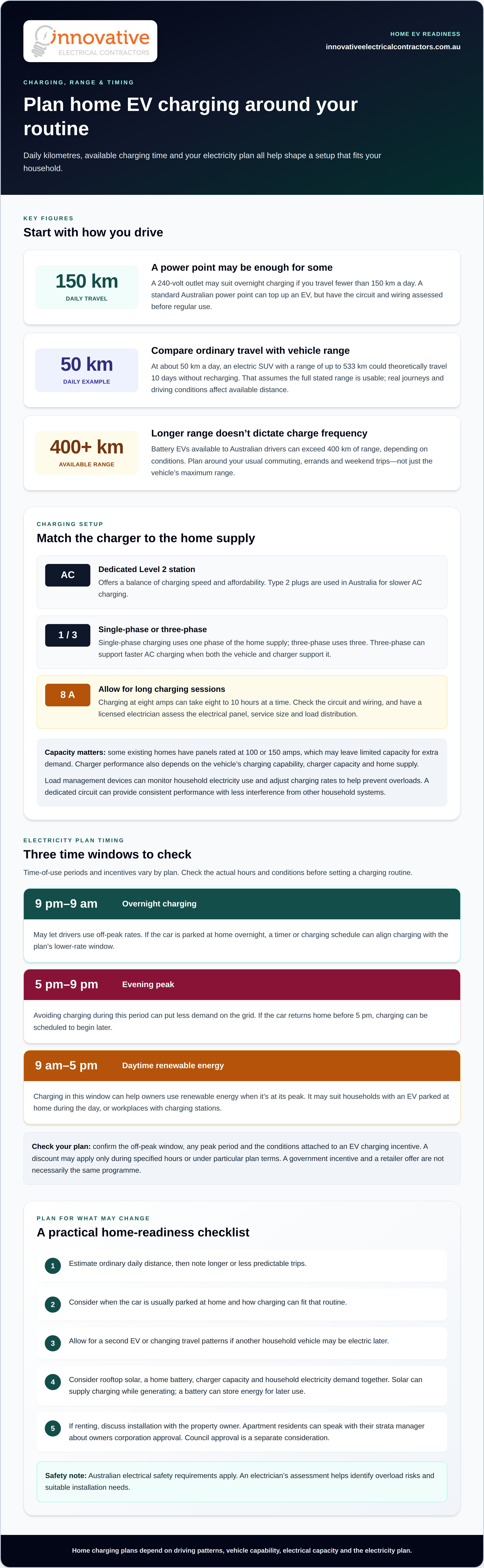
Yes, you can add EV charging to your home later. A standard Australian power point can top up an electric vehicle, and a 240-volt outlet may be enough for overnight charging if you travel fewer than 150 km a day. Preparing your home for an electric vehicle future can also mean planning ahead for a dedicated charger and the electrical capacity it needs.
Preparing your home for an electric vehicle future means looking beyond the charger itself. Your daily driving distance, when you can charge and your electricity plan all affect how well a home setup fits your routine. The right preparation can make charging more convenient without assuming every household needs the same equipment.
This guide explains the main charger options, how driving range shapes your needs, and how time-of-use rates and incentives may affect charging costs. It also covers practical ways to allow for future charging during renovations, along with potential environmental and property benefits of EV readiness.
Table of Contents
1. What types of electric vehicle chargers are available?
Australian homes can charge an EV from a standard power point or install a dedicated ev charger. A standard Australian power point can top up a vehicle, while a 240-volt outlet may suit overnight charging for drivers travelling fewer than 150 km daily. Dedicated Level 2 stations provide a balance of charging speed and affordability. In Australia, Type 2 plugs are used for slower AC charging.
Single-phase charging draws power through one phase of the home’s supply; three-phase charging uses three. Three-phase can support faster AC charging when the vehicle and charger also support it. Performance depends on the vehicle’s charging capability, the charger’s capacity and the home’s supply.
Before installing, a licensed electrician can assess the electrical panel, service size and load distribution. Some existing homes have panels rated at 100 or 150 amps, leaving limited capacity for extra demand. Charging at eight amps can take eight to 10 hours at a time, so the circuit and wiring should be checked. Australian electrical safety requirements apply; an electrician’s assessment helps identify overload risks and suitable installation needs.
A standard power point can charge an EV, but the circuit and wiring still need assessment before regular use. Load management devices monitor household electricity use and adjust charging rates to help prevent overloads. A dedicated circuit can also provide consistent performance with less interference from other household systems.
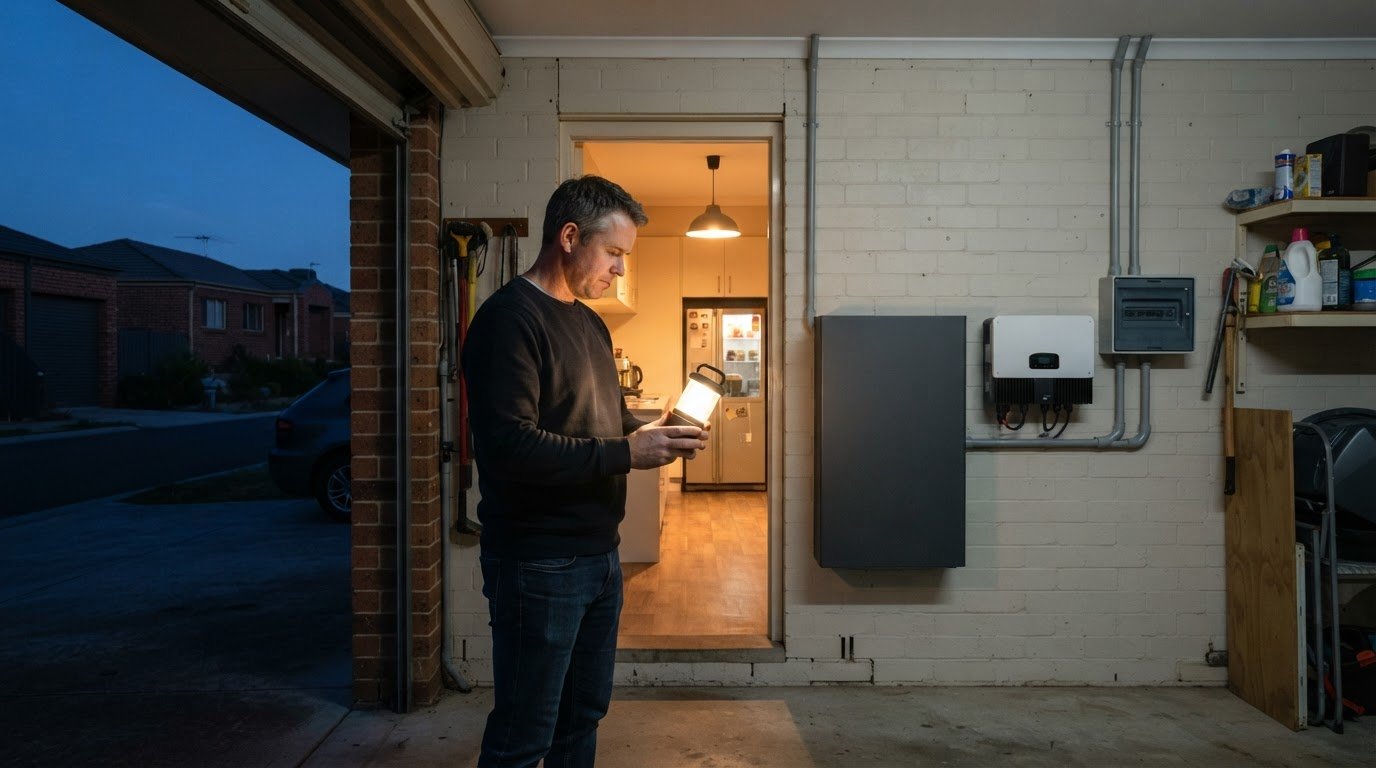
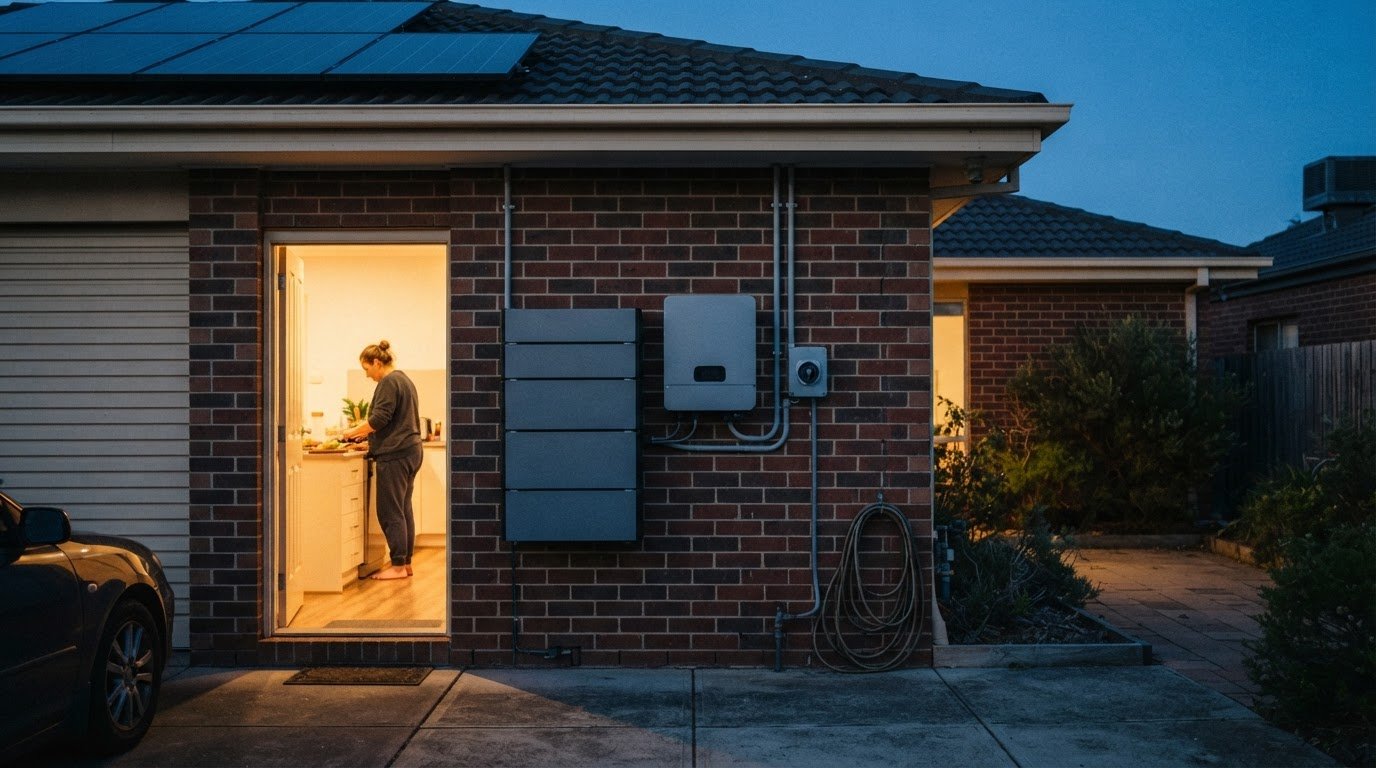
Rooftop solar can supply electricity for charging while it is generating. A home battery can store energy for later use, including charging after solar output falls. Consider solar and battery systems alongside charger capacity and household electricity demand.
If you rent, discuss a proposed installation with the property owner before arranging work. Apartment residents can speak with their strata manager about seeking owners corporation approval. Council approval is a separate consideration, so factor in local requirements alongside the electrical assessment.
2. Planning around daily driving distances and EV range
Preparing your home for an electric vehicle future starts with your usual kilometres, not the vehicle’s maximum range. A driver covering about 50 km daily could theoretically travel 10 days without recharging in an electric SUV with a range of up to 533 km. That example assumes the full stated range is usable. Real journeys and driving conditions affect the distance available.
Battery EVs available to Australian drivers can exceed 400 km of range, depending on conditions. That can provide flexibility for longer trips, but it doesn’t mean every owner needs to charge only occasionally. Track regular commuting, school runs, shopping and weekend travel. A typical weekday pattern gives a more useful guide than an unusually quiet day.
Use three steps to shape your home charging plan:
Estimate the distance you drive on ordinary days, then note longer or less predictable trips.
Consider when the car is usually parked at home and how much time charging can fit into that routine.
Allow for a second EV or changing travel patterns if another household vehicle may be electric later.
Range is only one part of the decision. The vehicle’s energy use, your charging habits and access to charging away from home all affect how often you’ll plug in. When comparing models, weigh range against your actual journeys rather than choosing the largest battery by default. Incentives may influence purchase decisions, but they don’t change how far a vehicle can travel between charges.
A plan for preparing your home for an electric vehicle future should look beyond today’s needs. A household that drives modest distances now may add longer commutes, regular regional trips or another EV later. Planning around those possibilities helps match home charging capacity to likely use, without assuming every owner needs the same setup. A considered home electrical plan can account for expected driving and future household demand.
3. Utility time-of-use rates and incentives
Your electricity plan can affect when home charging costs less. Some Australian providers offer time-of-use rates or incentives for off-peak EV charging. These plans divide the day into pricing periods, so the charging schedule matters as much as the charger’s capacity. Compare the actual periods in your plan before setting a routine.
Overnight charging between 9pm and 9am may let drivers use off-peak rates. Charging during the 5pm to 9pm evening peak can be avoided to put less demand on the grid. If your car sits in the garage overnight, a timer or charging schedule can align charging with your plan’s lower-rate window.
Daytime charging has a different advantage. Charging between 9am and 5pm can help owners use renewable energy when it’s at its peak. This may suit households where an EV is parked at home during the day, or workplaces with charging stations. Buildings with shared charging need schedules that account for when vehicles are present and electricity demand across the site.
Check three details in your electricity plan: the off-peak window, any peak period, and the conditions attached to an EV charging incentive. A discount may apply only during specified hours or under particular plan terms. Include it in your cost estimate only after understanding those conditions. Don’t assume a government incentive and a retailer offer are the same program.
Then match the schedule to your routine. If the car returns home before 5pm, charging can be set to begin later, avoiding the evening peak. If daytime solar generation is available, charging during the 9am to 5pm window may use more renewable energy. A home battery can store electricity for later charging, but its contribution depends on when it charges and household demand. Public charging stations can provide another option when home charging times don’t suit, though they use a different charging arrangement.
4. Environmental and property benefits of EV readiness
A battery electric car sold in 2023 was estimated to emit roughly half as much carbon dioxide over its lifetime as an equivalent combustion vehicle. That comparison puts EV readiness within a wider transport shift, while recognising that home charging infrastructure is one part of the picture. The electricity used, driving patterns and vehicle all shape the household’s contribution.
For homeowners, the practical benefit starts with having a suitable place to charge. A garage or off-street parking space can make charging part of a regular routine, rather than relying only on public networks. Before renovation work, identify the likely parking position and consider how electrical access can reach it neatly and safely.
Preparing your property can also help avoid unnecessary rework. During a new build or renovation, plan the charger location alongside parking, switchboard access and possible future wiring. If there isn’t an EV in the household yet, empty conduit can make later wiring easier without opening finished walls. Plan around a real parking layout, not an abstract future setup.
Shared buildings need a broader view. Apartment charging can involve common areas, parking allocation and owners corporation approval, so infrastructure planning should account for how residents use those spaces. A shared charging arrangement also needs to consider the building’s electrical demand and how access is managed across multiple vehicles.
EV readiness doesn’t guarantee a higher sale price. Its value is practical: future owners can see whether vehicle charging is convenient and whether the home has been considered for changing transport needs. Clear planning records and accessible equipment can also help explain the setup during a sale or renovation.
For a home project, plan EV-ready electrical infrastructure around parking, future wiring and household use. In Australia, that early coordination can make the transition to an electric vehicle more straightforward without overbuilding for needs the household doesn’t have.
Innovative Electrical Contractors: New Homes
Innovative Electrical Contractors can plan electrical needs for a new home build, including practical provision for future EV charging. Early planning lets you consider parking, wiring routes and household electricity use together, rather than treating charging as an afterthought. For existing homes, the company’s Electrical Services can support broader electrical planning for an EV-ready setup.
If your household is also considering solar or battery storage, plan those needs alongside future vehicle charging. The right approach depends on the home’s layout, electrical capacity and how the household expects to use its vehicle. This is a useful next step when building, renovating or reviewing how your home may support changing transport needs.
Contact Innovative Electrical Contractors to discuss electrical planning for your home.
Make your next electrical decision count
Preparing your home for an electric vehicle future is also an opportunity to consider how its energy needs may evolve. A considered plan can connect vehicle charging with solar and battery storage while keeping everyday electrical use in view. For a business property, the same forward thinking can align charging plans with broader electrical requirements.
Innovative Electrical Contractors provides Electrical Services, Commercial Electrical, and off-grid solar, battery and generator installations. These services can support electrical planning for homes and businesses as transport and energy needs change. Discuss how your property is used and what you want it ready to support.
Contact Innovative Electrical Contractors to talk through your electrical plans. A practical plan can help you move forward with confidence.
Frequently Asked Questions
Can EV chargers be added later?
Yes, you can add an EV charger after a home is built. Before arranging installation, have the electrical panel, service size and load distribution assessed. If walls are being renovated, empty conduit can provide a route for future wiring without reopening finished areas. In an apartment, discuss the proposal with the strata manager because owners corporation approval may be needed.
What types of electric vehicle chargers are available?
Home charging options include a standard Australian power point and a dedicated Level 2 charger. Type 2 plugs are used for slower AC charging in Australia. For vehicle compatibility, distinguish home AC charging from fast DC charging: most new EVs sold in Australia use CCS2 for fast charging, while CHAdeMO serves a limited selection of vehicles. Match the charging connection to the car.
Will EV charging overload the grid?
Household electrical capacity and electricity-grid demand are related, but they’re different considerations. At home, a load management device can monitor electricity use and adjust the EV charging rate to help prevent overloads. Charging schedules can also shift demand away from the evening peak. For grid impacts, the key factor is how charging demand is distributed, rather than one charger operating in isolation.
What home electrical upgrades are needed to charge an EV in Australia?
Not every home needs the same upgrade. An electrician assesses the existing panel, service size, wiring and household load before determining whether a dedicated circuit, wiring changes or panel work is needed. For example, an older home with limited spare capacity may need a different solution from one with room for an additional circuit. The vehicle and charger also affect the requirements.
What Australian rebates or incentives are available for home EV chargers?
Some utility providers offer time-of-use rates or incentives for off-peak EV charging. These can reduce the cost of charging at eligible times, depending on the provider’s plan terms. The available information identifies utility offers, not a specific government rebate for home chargers. Before including an incentive in your budget, establish whether it applies to the charger, electricity plan or charging schedule.
What should homeowners check before choosing a home EV charger?
Start with vehicle compatibility: check the car’s charging connection and AC charging capability. Then consider where the vehicle parks, the cable route, when it’s usually at home and whether you may add another EV later. Have the home’s capacity assessed before selecting charger output. Apartment owners should also factor in parking arrangements and the approval process.

Comments