
Home battery options for energy self-sufficiency, compared by cost
The biggest battery isn't automatically the best home battery for energy self-sufficiency in 2026. The right fit depends on how much electricity your household uses, how much rooftop solar is left to store, and what you want to keep running when the sun goes down. A battery stores surplus solar for later use; it doesn’t generate electricity on its own.
It’s reasonable to want more control over when you use solar power, but battery capacity and cost need to suit your home. This comparison explains how to weigh storage size against household demand, and how the Australian federal rebate affects the upfront cost of an eligible system. You’ll also see how different battery capacities suit different patterns of use, so you can focus on an option that supports greater self-sufficiency without paying for storage you’re unlikely to use.
Table of Contents
Which Solar Battery Is Best In 2026?
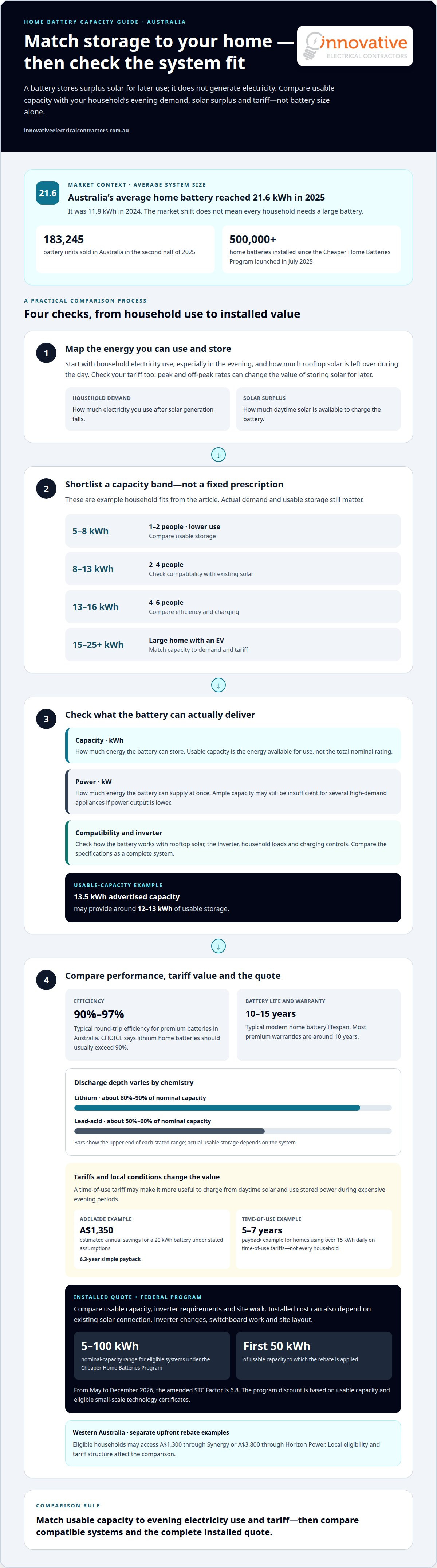
The best home battery for energy self-sufficiency in 2026 depends on usable capacity, household demand and your electricity tariff. Australia’s fast-growing battery market offers more choice, but no single system suits every home.
Battery savings across Australian cities
City savings depend on solar generation, household use and the tariff’s peak and off-peak rates. One Adelaide example estimates A$1,350 in annual electricity savings and a 6.3-year simple payback for a 20 kWh battery under stated assumptions. Homes using over 15 kWh daily on time-of-use tariffs may see a 5-7-year payback. These examples show why local usage matters more than a national ranking.
Installer-voted battery rankings
Installer-voted rankings can help shortlist systems, but a top position alone doesn’t show whether a battery suits your home. Compare each option’s usable storage, efficiency, compatibility with existing solar and ability to match your charging pattern. For example, a system with ample storage may suit evening demand, while a smaller compatible unit may better fit a home with lower use. Australia recorded 183,245 battery units sold in the second half of 2025, making careful comparison increasingly relevant.
State and tariff considerations
State conditions and retail tariffs shape how a battery earns value. A time-of-use tariff can make charging from daytime solar and using stored power during expensive evening periods more useful. The 5-7-year payback example applies to homes using over 15 kWh daily on such tariffs, not every household. In Western Australia, eligible households may access an upfront rebate of A$1,300 through Synergy or A$3,800 through Horizon Power. Local eligibility and tariff structure affect the comparison.
Australian battery system comparisons
Capacity is a practical way to compare systems before considering brand or installer rankings. The table shows household-fit examples, not fixed prescriptions; actual demand and usable storage still matter. Australia’s average home battery system size reached 21.6 kWh in 2025, up from 11.8 kWh in 2024. That market shift doesn’t mean every household needs a large system. More than 500,000 home batteries have been installed since the Cheaper Home Batteries Program launched in July 2025.
Choose a battery by matching its usable capacity to your evening electricity use and tariff, then compare compatible systems.
How do the nine batteries compare on capacity?
Compare each battery’s usable storage, power output and compatibility with your rooftop solar and inverter. In Australia, premium batteries typically achieve 90%-97% round-trip efficiency, most premium warranties are around 10 years, and modern home batteries typically last 10-15 years.
Capacity and inverter sizing
Capacity, measured in kWh, describes how much energy a battery can store; power, measured in kW, describes how much it can supply at once. A battery with ample capacity may still struggle to run several high-demand appliances simultaneously if its power output is lower. The inverter also affects how solar generation, household loads and battery charging work together. Compare these specifications as a complete system, not as isolated figures.
Brands, chemistries and capacities
Brand comparisons are most useful when they focus on verified specifications rather than a name alone. Check the stated chemistry, nominal and usable capacity, power output, compatibility with existing solar, and warranty terms. Lithium batteries can generally be safely discharged to about 80%-90% of nominal capacity, while lead-acid batteries typically allow about 50%-60%. These differences affect how much storage is available for household use and how each option fits a renewable energy setup.
Usable capacity and round-trip efficiency
Usable capacity is the energy available for use, rather than the battery’s total nominal rating. For example, a battery advertised as 13.5 kWh may provide around 12-13 kWh of usable storage. Round-trip efficiency measures how much energy remains available after charging and discharging; CHOICE says lithium home batteries should usually exceed 90% efficiency. Compare cycle-life terms as well, since efficiency alone doesn’t describe performance over repeated use.
Expanding an existing battery system depends on whether its inverter and configuration support additional storage. An installer can assess how another battery would integrate with your solar panels, charging controls and current setup. This helps avoid adding capacity the system cannot use effectively.
For a tailored assessment, explore solar and battery system planning.
Installed prices and federal battery rebates
Compare installed quotes by usable capacity, inverter requirements and site work, rather than battery size alone. The upfront cost also depends on whether the battery can connect to your existing rooftop solar. Capacity, inverter changes, switchboard work and site layout all affect the installed price, which is set out in a quote.
Australia’s Cheaper Home Batteries Program supports eligible systems with nominal capacity from 5 kWh to 100 kWh, with the rebate applied to the first 50 kWh of usable capacity. From May to December 2026, Australia’s amended STC Factor for the Cheaper Home Batteries Program is 6.8, according to the Australian Government Department of Climate Change, Energy, the Environment and Water. The program’s discount is based on usable capacity and eligible small-scale technology certificates. This makes usable storage and system configuration central to comparing the rebate’s effect.
A useful quote comparison sets out the battery model, usable capacity, inverter compatibility, installation scope and rebate calculation. Ask how the proposed configuration suits your household’s electricity use. Compare any option against the same criteria, rather than relying on brand recognition alone. The goal is a system that fits your daily needs, not simply the largest advertised capacity.
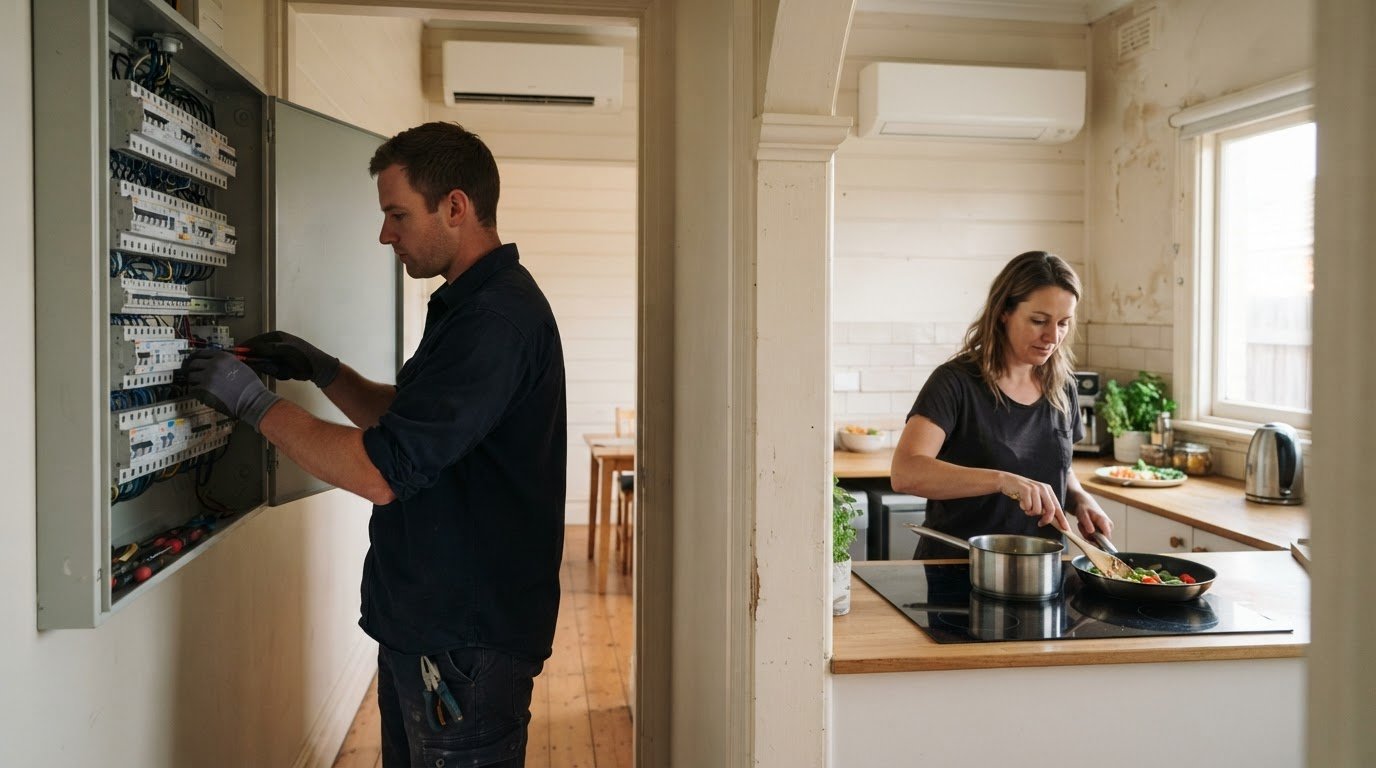
Installer experience matters because battery performance depends on compatible equipment and sound system design. Innovative Electrical Contractors can help ensure your setup meets all necessary standards. Eligible battery products must be accredited by the Clean Energy Council, and rebate-eligible installations must be completed by an installer accredited by Solar Accreditation Australia. Australian home battery installations must comply with AS/NZS 5139. These requirements make accreditation and installation scope important points in due diligence.
Compare written quotes for the equipment, installation work, rebate treatment and warranty terms included. A lower upfront figure may reflect a different inverter or installation scope, so compare like with like. A professional installer can assess your existing solar system, household consumption and site requirements, then explain how the proposed battery will charge and supply power. These details make it easier to judge which option fits your home.
How home batteries store and supply solar electricity
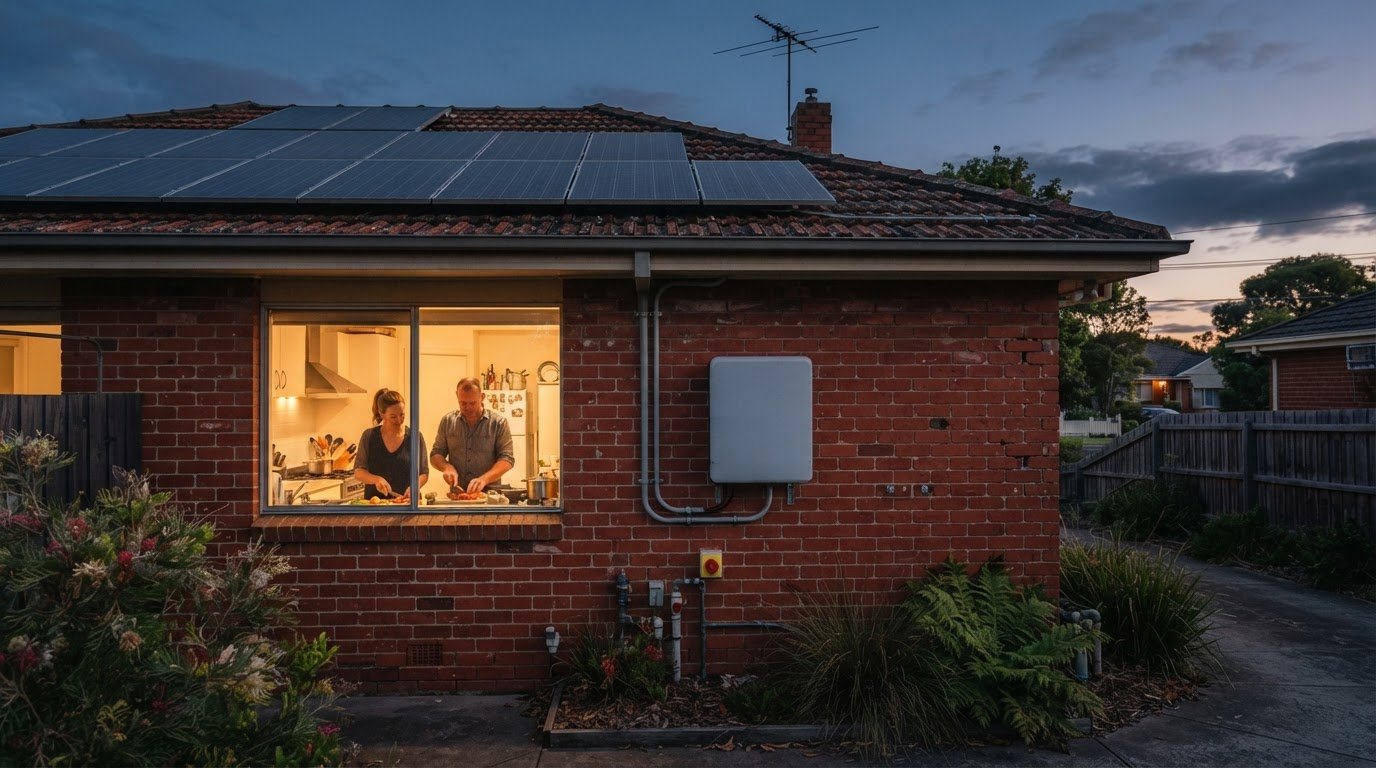
A home battery stores surplus electricity from rooftop solar for use when solar generation falls. It can provide whole-home blackout backup only when the battery and inverter are configured to supply the home’s loads.
Storing surplus solar electricity
During the day, solar panels generate electricity for household use first. When generation exceeds demand, the system can direct surplus power to the battery rather than exporting it straight to the grid. The inverter coordinates the solar system, battery and household electricity supply. Once the battery reaches its configured charge level, remaining surplus can be exported, depending on system settings and the household’s export arrangement.
Supplying household electricity
When rooftop solar generation drops, the battery releases stored energy through the inverter to supply household electricity. For example, solar power collected during the day can run evening lights and appliances after sunset. The system balances supply against current household demand and the battery’s available usable capacity. A battery supports clean energy use by shifting solar electricity to a later time; it does not generate electricity itself.
Whole-home blackout backup
Whole-home backup requires a system designed and configured to supply the home during a grid outage. Battery capacity determines how much energy is available, while inverter output affects which loads can run together. A home with high-demand appliances needs a system designed around those loads, not just a large storage capacity. Available solar generation can also contribute during an outage if the system supports it.
The key distinction is between storing solar for later use and providing backup during an outage. They are related functions, but backup needs to be included in the system design. The Cheaper Home Batteries Program and other incentives affect eligible installation costs; they don’t determine how electricity flows. For a professionally planned home battery installation, align the system design with your household loads and backup priorities.
Innovative Electrical Contractors: Off grid solar,batter and generator's
Innovative Electrical Contractors can help plan and install solar and battery systems for greater energy self-sufficiency. Its off-grid solar, battery and generator systems may suit properties where grid independence is a priority. For homes with existing rooftop solar, a battery installation can be considered alongside the current setup and household electricity use.
Innovative Electrical Contractors installs solar and batteries, including off-grid systems, and plans electrical fit-outs for new homes. The right design depends on how your property uses electricity and what the system needs to supply. For a new build, planning the energy system alongside the home helps align the installation with the project’s requirements.
Contact Innovative Electrical Contractors to discuss your solar and battery installation needs.
Plan an energy system that fits what comes next
Your energy needs may change as you add appliances, work from home or plan a new build. Include those possibilities in the design conversation, alongside your priorities for everyday solar use, backup power or off-grid living. This gives the installer a clearer basis for designing a system around your property, rather than treating the battery as a standalone purchase.
Choosing the best home battery for energy self-sufficiency in 2026 is ultimately about a practical fit for your home and future plans. Innovative Electrical Contractors provides electrical services, commercial electrical work, and off-grid solar, battery and generator systems. For a residential battery project, discuss how solar and storage can work together for your household’s needs.
Discuss your solar and battery plans with Innovative Electrical Contractors, and take the next step towards an energy setup that suits your home.
Frequently Asked Questions
Who should consider a home battery?
A home battery may suit households with rooftop solar that regularly use electricity after solar generation drops. It may also be worth considering if you want stored solar power during an outage, provided the system is designed for backup. For example, a household that uses more electricity in the evening than during the day has a reason to explore storage.
How does an installer determine what size battery you need?
An installer considers your household’s electricity-use pattern, solar generation, existing equipment and the loads you want to supply. Evening consumption helps show how much stored energy may be useful, while appliance demand informs the required power output. If you want backup, the installer also needs to understand which circuits or appliances matter most during an outage.
What are the best home batteries in Australia for energy self-sufficiency in 2026?
There isn’t one best battery for every Australian home. The right choice balances usable storage, power output, efficiency, compatibility with your solar system and how you use electricity. A household with modest evening demand may need a different setup from a larger home seeking backup. Compare complete system specifications and warranty terms rather than choosing by brand name alone.
Which Australian home batteries offer the highest usable capacity and backup power?
Battery capacity and backup power are different measures: usable capacity indicates stored energy, while power output affects how much can run at once. Australian home batteries commonly range from 10 kWh to 50 kWh in capacity, but a larger rating doesn’t automatically mean stronger backup. The system’s inverter and backup configuration also determine which household loads it can supply during an outage.
What is the installed cost of home batteries in Australia in 2026 by capacity?
Installed cost depends on battery capacity, inverter requirements, compatibility with existing solar, and any site or switchboard work. The price depends on the specific installation and is provided in a quote. For a meaningful comparison, check that each quote covers the same work and note whether it includes the battery, inverter, installation and rebate treatment.
What Australian battery rebates, subsidies and incentives are available in 2026?
Eligible households may access the federal Cheaper Home Batteries Program for qualifying batteries installed alongside new or existing rooftop solar. Eligibility also depends on the battery product and installer meeting program requirements. Western Australia has a separate Residential Battery Scheme for eligible households. State support and federal settings differ, so the applicable program depends on the property’s location.

Comments