
Energy upgrades that make an older home more efficient
A full renovation isn’t the only way to improve an older home’s efficiency. The practical answer to how to make an older home more energy efficient is to reduce avoidable energy use, improve insulation and draught sealing, and address heat entering or escaping through windows. A professional energy audit can help identify which changes best suit the home.
Older homes can be less comfortable and harder to heat or cool, but upgrades don’t have to happen all at once. Start with straightforward changes, such as using efficient appliances and LED lighting, then consider improvements to insulation and windows based on the home’s needs.
This guide explains how practical upgrades can reduce energy waste, what to consider before making changes, and how an energy audit can help you prioritise the work. You’ll have a clearer picture of the next steps towards a more comfortable, efficient home.
Table of Contents
1. Energy-efficient appliances and LED lighting
Appliances account for about 30% of household energy use, so their daily settings matter. Start by checking which machines run most often, such as a fridge, washing machine or clothes dryer. When replacing an appliance, compare its energy use with similar models and choose one that suits your household’s needs. A second fridge used only occasionally may be worth switching off, particularly if it is old or poorly maintained.
Small changes to how you use appliances can also cut wasted electricity. Wash clothes in cold water when suitable for the load and detergent, and use the dryer only when needed. Clear dust from refrigerator vents and the clothes dryer exhaust regularly so the motors can move air more easily. These steps won’t replace efficient equipment, but they can help existing appliances work without unnecessary strain.
LED globes are a straightforward lighting upgrade. They use up to 80% less energy than halogen globes and can last up to 25 times longer than traditional incandescent bulbs. Start with lights used for long periods, such as kitchen, hallway and living-room lights. Match the globe’s brightness and fitting to the room, then replace other frequently used globes as they need changing. LEDs are available in different colour temperatures, so consider whether a warm or cooler light better suits each space.
Smart thermostats and automated lighting can help manage heating and lighting around household routines. A smart thermostat can reduce heating and cooling costs by up to 15 per cent, and can begin lowering the temperature at 10 p.m. if that matches the household’s usual bedtime routine. Automated lights can be set to switch off when a room is no longer in use. Choose settings that reflect real patterns, rather than running heating or lights when rooms are empty. For electrical changes, use a suitably qualified person.
2. Insulation and double-glazed windows
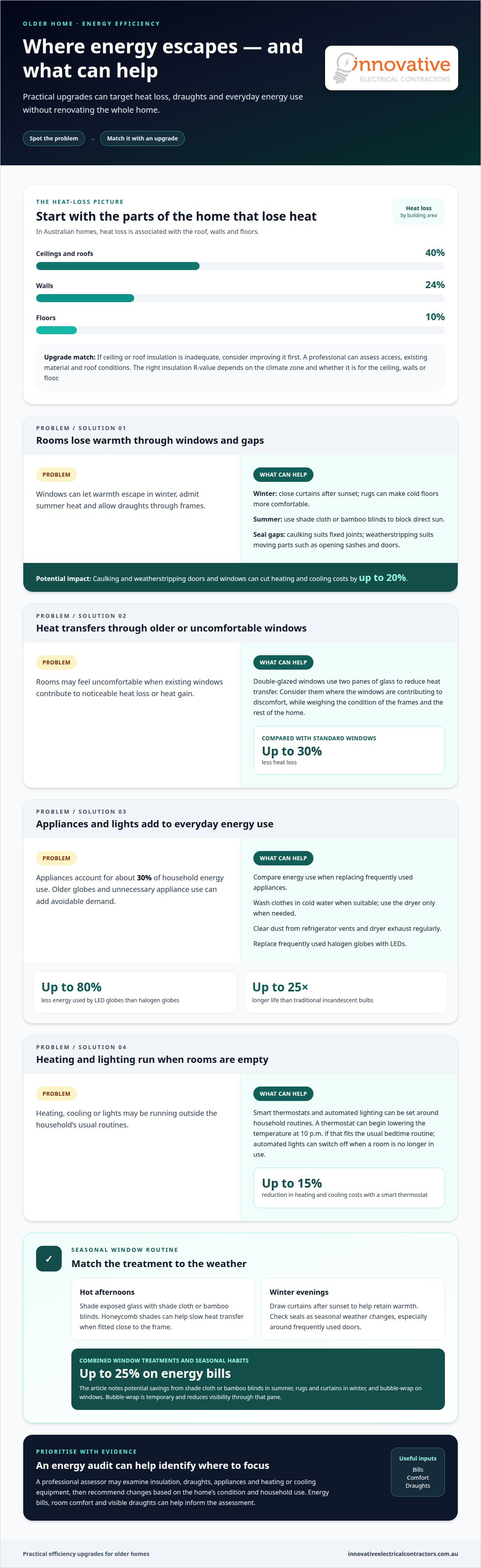
Insulation slows heat transfer, helping rooms stay warmer in winter and cooler during summer. In Australian homes, ceilings and roofs account for 40% of heat loss, while walls account for 24% and floors 10%. Older homes, particularly those built before 1980, may have inadequate insulation or gaps where heated or cooled air escapes.
Improve ceiling and roof insulation first if those areas are poorly covered. A professional can assess access, existing material and roof conditions before recommending an upgrade. The recommended R-value depends on the home’s Australian climate zone and the part of the building being insulated. Ceiling, wall and floor requirements differ, so there isn’t one R-value that suits every home.
Double-glazed windows use two panes of glass to reduce heat transfer through the window. They can prevent up to 30% of heat loss compared with standard windows. Consider them where existing windows contribute to uncomfortable rooms or noticeable heat loss, while weighing the condition of frames and the overall home. Sealing gaps and improving insulation can address other heat-loss paths, too.
An electric storage water heater can also lose heat from its tank and connected pipes. Insulation may help limit this loss, but the unit’s design and access requirements determine suitable treatment. Efficient hot-water systems and reverse-cycle air conditioning can reduce energy use, but there’s no single bill-saving figure that applies to every home. Results depend on the equipment being replaced, household hot-water and heating or cooling habits, and how well the home retains heat. For heating or cooling upgrades, explore air-conditioning options suited to your home.
Choose an R-value based on the home’s climate zone and whether the insulation is for the ceiling, walls or floor. The appropriate value varies across these applications.
3. Reducing heat gain and loss through windows
Windows can admit summer heat and let warmth escape in winter. Notice which rooms become uncomfortable when sunlight hits the glass or draughts come through the frames. Shade cloth or bamboo blinds can block direct summer sun before it warms a room. In winter, close curtains after sunset to help retain warmth. Rugs can also make cold floors more comfortable. When considering how to make an older home more energy efficient, match each window treatment to the room’s exposure and use.
Seal unwanted gaps around window frames and doors to reduce uncontrolled air movement. Caulking suits fixed joints, while weatherstripping can seal moving parts such as opening sashes and doors. Select materials suited to the gap and surface, and avoid blocking drainage or window operation. Caulking and weatherstripping doors and windows can cut heating and cooling costs by up to 20%. Check seals when seasonal weather changes, particularly around frequently used doors.
Honeycomb window shades have cells that trap air between the room and the glass, helping to slow heat transfer. They may suit rooms with exposed windows, especially when fitted close to the frame to limit gaps around the edges. For example, close the shades during hot afternoon sun in a living room, then open them on cooler days to let warmth in.
Combine treatments with seasonal habits. Shade cloth or bamboo blinds in summer, rugs and curtains in winter, and bubble-wrap on windows can save up to 25% on energy bills. Bubble-wrap can press against clean glass as a temporary insulating layer, though it reduces visibility through that pane. Keep locks and handles accessible. If you’re deciding how to make an older home more energy efficient, use a seasonal routine: shade exposed glass during hot afternoons and draw curtains at dusk in winter. Seal draughts around frames as well, so conditioned air is less likely to escape.
4. Professional home energy audits
A professional home energy audit can pinpoint energy waste and help set upgrade priorities. An assessor may examine insulation, draughts, appliances and heating or cooling equipment, then recommend changes based on the property’s condition and household use.
When assessing an older Australian home, review energy bills alongside room comfort and visible draughts. An assessor can inspect accessible areas, including the roof space, and consider how the home is heated, cooled and occupied. Cost-effective upgrades often address obvious sources of waste first, such as draughts, insulation gaps or equipment that no longer suits household needs. The report can turn these observations into practical next steps.
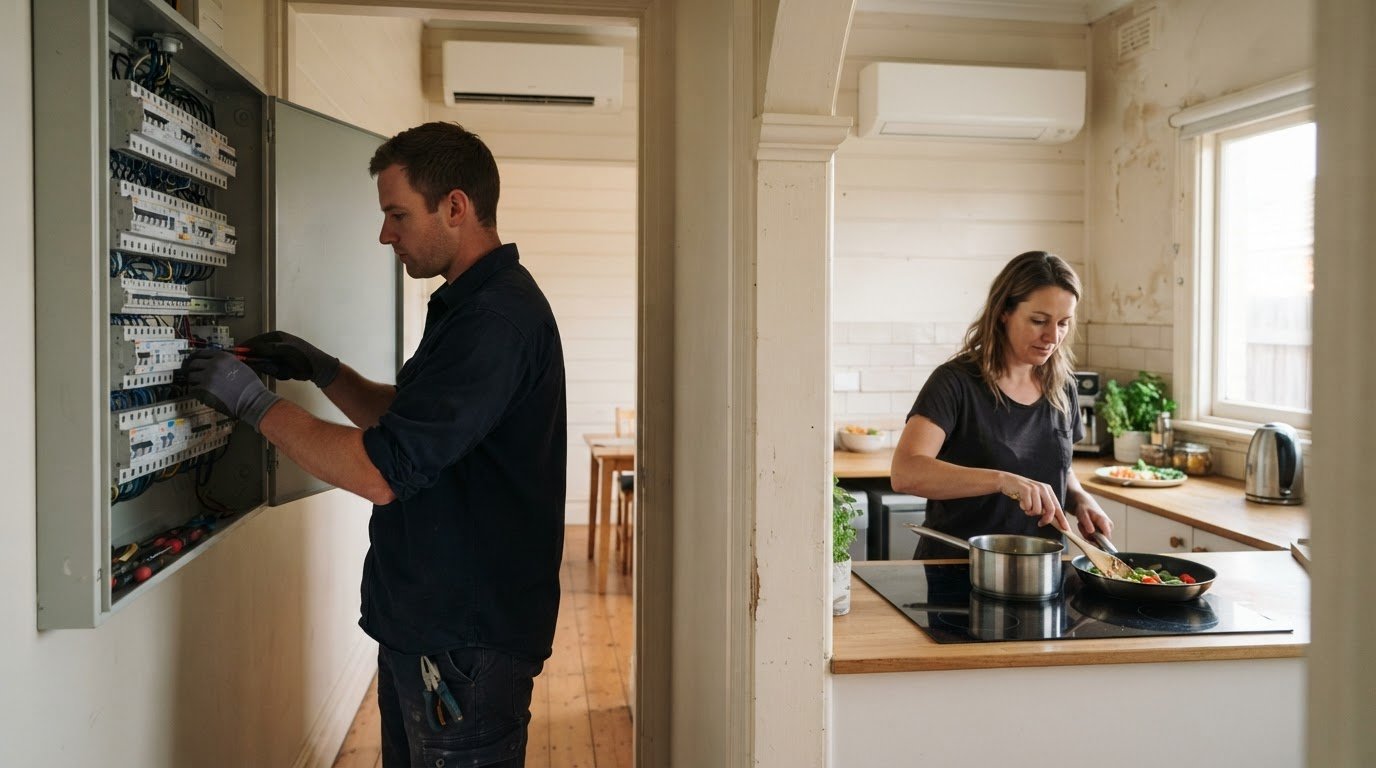
Use the report to compare possible upgrades by expected benefit, disruption and suitability, then plan the work in a sensible order. Address moisture problems before adding insulation or sealing areas, and investigate suspected asbestos before disturbing building materials. Electrical repairs, modifications and upgrades must be carried out by a suitably qualified person; doing this without the appropriate qualification is illegal. These checks can help prevent an existing problem from being concealed during an efficiency upgrade.
For homes with heritage protections, consider how visible changes may affect the property before planning window or exterior alterations. Building requirements can also depend on the work and location, so factor these into the project plan. An audit does not replace a specialist assessment for damp, asbestos or wiring, but it can help identify where closer investigation is needed. For electrical work identified in the upgrade plan, plan electrical upgrades with qualified support.
Innovative Electrical Contractors: New Homes
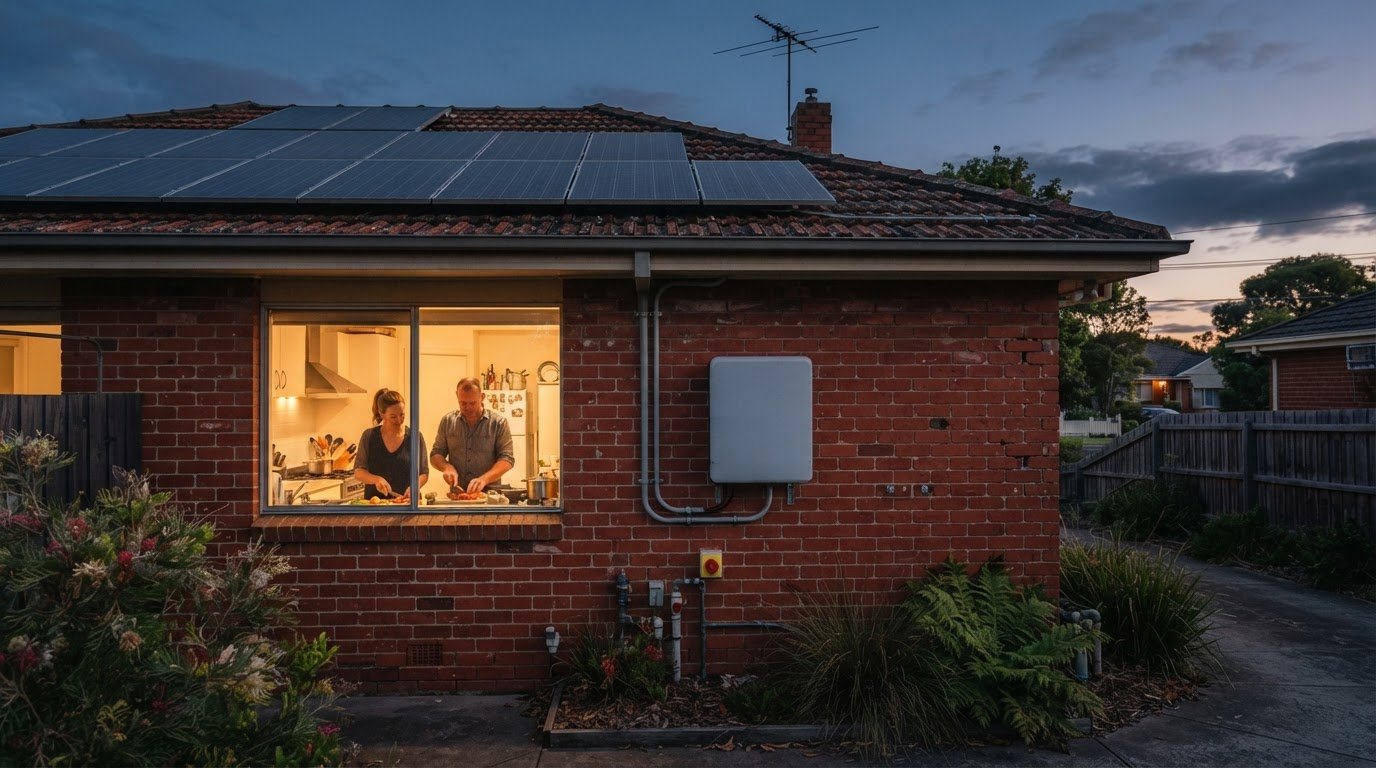
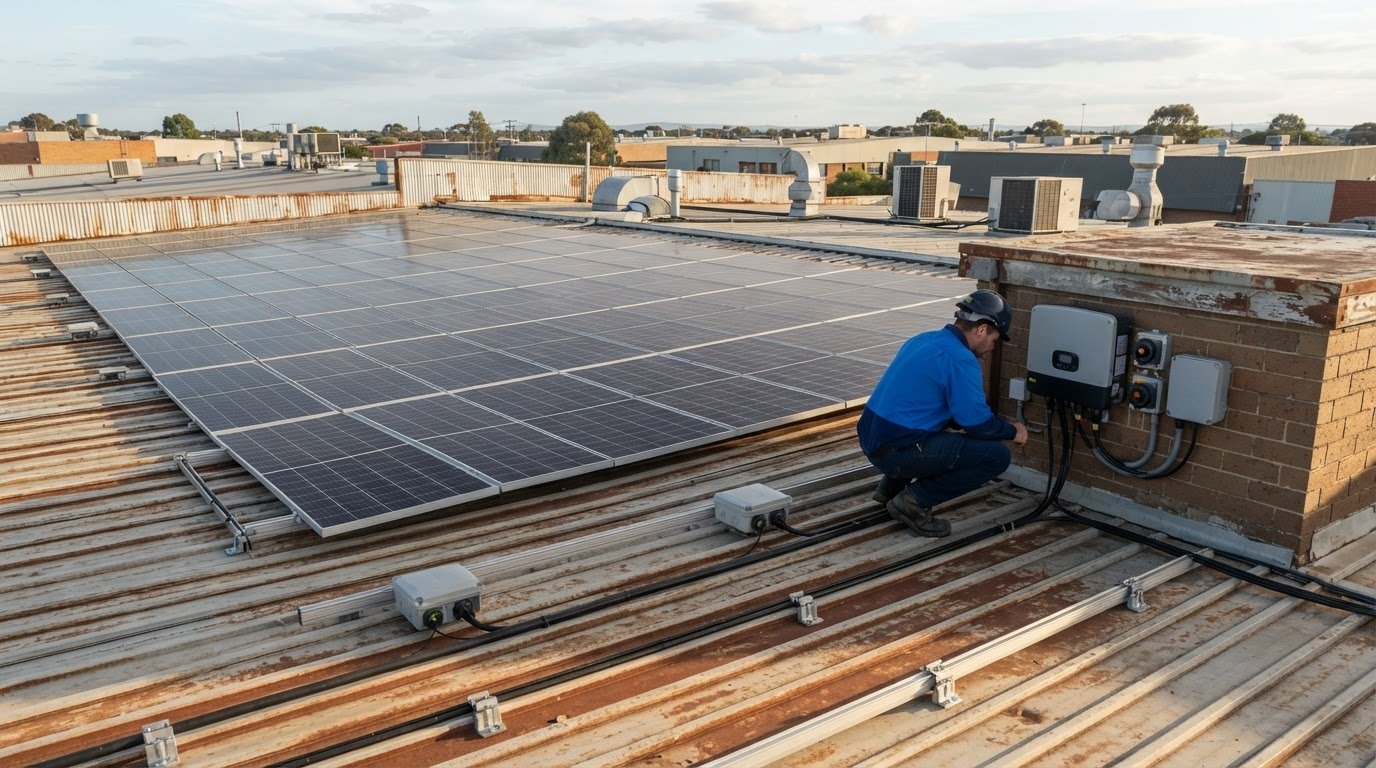
Innovative Electrical Contractors can help with electrical work that supports practical energy upgrades in an older home. If your plans include electrical changes, solar and battery installations, or off-grid power, its electrical services can cover those parts of the project. For a new build, discuss your energy needs early so the electrical planning reflects how you intend to use the home.
Not every efficiency improvement requires electrical work. An energy audit can help you determine whether to seal draughts, improve insulation or update electrical systems. Any electrical work must be carried out by a suitably qualified person.
For electrical upgrades or planning a new home, contact Innovative Electrical Contractors to discuss your project.
Plan your next step with confidence
Treat an efficient home as an ongoing improvement plan rather than a one-off project. Start with the change that addresses a clear comfort or energy concern, then use your experience across different seasons to guide the next decision. Keeping a simple record of room comfort and energy bills can show whether your priorities have changed. It also gives tradespeople useful context when planning related work, rather than approaching each decision in isolation.
Knowing how to make an older home more energy efficient also means considering how each change fits your longer-term plans. Innovative Electrical Contractors provides electrical services, commercial electrical work, and off-grid solar, battery and generator installations for projects that include electrical work.
Contact Innovative Electrical Contractors to discuss your project and take a considered next step towards a more efficient home.
Frequently Asked Questions
How can I draught-proof an older home without affecting ventilation?
Seal unintended gaps, but leave designed ventilation openings clear. Fit weatherstripping to draughty doors and windows, and use door seals where they won’t block required airflow. Don’t seal vents, exhaust outlets or other openings intended to ventilate a room. If you’re unsure whether an opening is intentional, identify its purpose before covering it. This targets draughts without treating every gap as unwanted.
Are secondary glazing or double-glazed windows worth the cost in Australia?
These options may be worthwhile if existing windows make rooms uncomfortable, but suitability depends on the home and your priorities. Secondary glazing adds another pane to an existing window, while double glazing replaces or upgrades the window assembly. Consider window condition, exposure to sun and wind, comfort, appearance and budget. Compare both options with practical window treatments before committing to a larger change.
What Australian rebates or incentives are available for home energy upgrades?
Rebates and incentives depend on your state or territory, the upgrade and the program’s eligibility rules. Programs can change, so check current government information before including a rebate in your renovation budget. Read the conditions carefully, including eligible equipment, property requirements and whether approval is needed before work starts. Don’t assume an incentive applies until you’ve confirmed the terms for your home.
What order should I follow to improve an older home's energy efficiency?
Start with an energy assessment, then identify any safety or moisture issues that could affect the work. Address unwanted draughts and insulation gaps before investing in larger heating or cooling equipment. Next, consider window improvements, efficient appliances or lighting based on your home’s needs. Keep a record of energy bills and room comfort after each stage to help decide what to prioritise next.
Comments