
How to Stay Safe and Comfortable During a Long Power Outage
A barbecue belongs outdoors, never inside a home or garage. Knowing how to survive a long power outage at home starts with switching off hotplates and small appliances, unplugging sensitive electronics and leaving one light on to show when power returns. Keep fridge and freezer doors closed, and use battery-powered devices carefully.
A blackout can disrupt cooking, communication and comfort, but practical steps can help you manage it safely. This guide explains how to check for hazards, assess the outage, conserve phone and power-bank charge, and get emergency updates. You’ll also learn how to cook safely with gas, keep food cool for longer and decide when it may be safer to leave home.
Table of Contents
1. Initial safety checks and identifying the cause of an outage
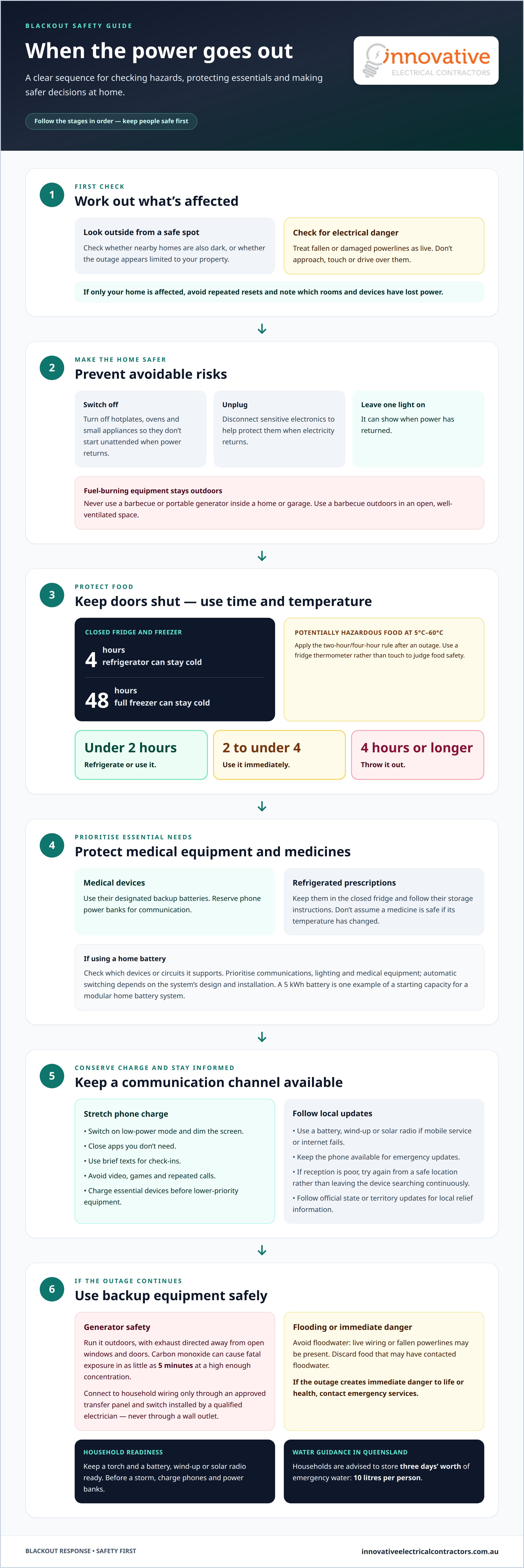
Start with a quick safety check. If the lights go out, look outside from a safe spot: are nearby homes also dark, or is the outage limited to your property? Switch off stove hotplates, ovens and small appliances so they don’t start unattended when power returns. Unplug sensitive electronics, leave one light on, and keep clear of fallen or damaged power lines. Treat every line as live. Don’t approach it, touch it or drive over it.
Protect food by keeping fridge and freezer doors shut. A refrigerator can stay cold for about four hours, while a full freezer can stay cold for up to 48 hours. Use a fridge thermometer rather than touch to judge food safety. The two-hour/four-hour rule applies to potentially hazardous food held between 5 degrees Celsius and 60C: under two hours, refrigerate or use it; longer than two hours but under four, use it immediately; at four hours or longer, throw it out. Apply this rule after an outage when food has been in that temperature range.
For medical devices, use their designated backup batteries and reserve phone power banks for communication. Keep refrigerated prescriptions in the closed fridge and follow their storage instructions. Don’t assume a medicine is safe if its temperature has changed.
Never run a portable generator inside a home or garage. Use it outdoors, with exhaust directed away from open windows and doors. Carbon monoxide can cause fatal exposure in as little as 5 minutes at a high enough concentration. A generator should connect to household wiring only through an approved transfer panel and switch installed by a qualified electrician, never through a wall outlet.
Before a storm, charge phones and power banks, and keep a torch and a battery, wind-up or solar radio ready. If flooding affects your property, avoid floodwater because live wiring or fallen power lines may be present. Discard food that may have contacted floodwater.
2. Assessing the outage and conserving device batteries
Work out whether the outage affects your home, your street or a wider area. Check whether neighbouring homes have lights, then use a battery radio or mobile updates to follow restoration information. If only your home is affected, avoid repeated resets and note which rooms and devices have lost power. A change in indoor temperature can also indicate that heating or cooling has stopped.
Stretch your phone’s charge by switching on low-power mode, dimming the screen and closing apps you don’t need. Use text messages for brief check-ins, and avoid video, games and repeated calls. Keep the phone available for emergency updates. If reception is poor, try again from a safe location rather than leaving the device searching continuously. Charge essential devices from a power bank before using it for lower-priority equipment.
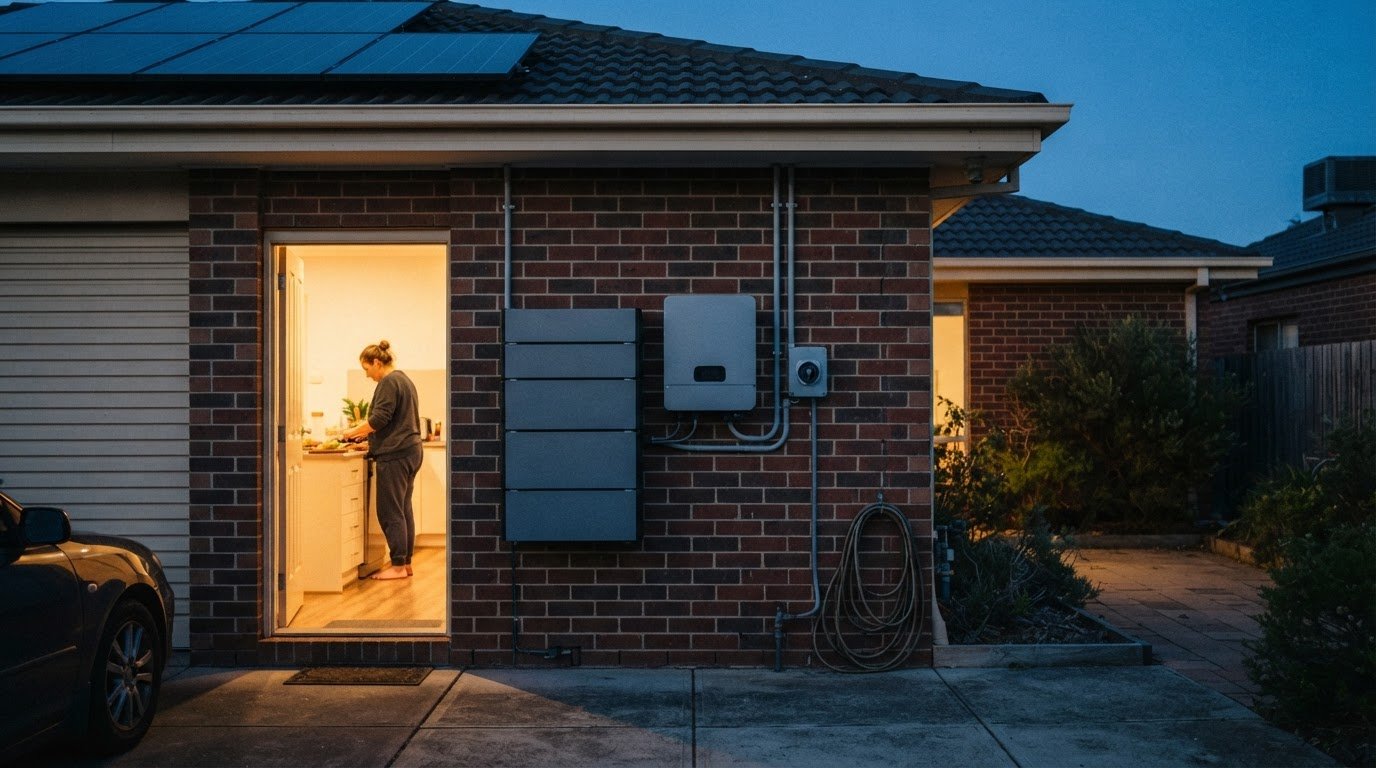
A home battery can keep selected devices or circuits running, depending on its capacity and setup. A 5 kWh battery is one example of a starting capacity for a modular home battery system. Check which loads it supports, then prioritise essentials such as communications, lighting and medical equipment. Automatic switching depends on how the system is designed and installed, so understand which circuits receive backup power before an outage.
Solar panels paired with a compatible battery can help replenish stored energy when conditions allow. Their contribution depends on available sunlight, system design and household demand. During an outage, reduce non-essential use so stored power lasts longer. Solar and battery systems can be planned around the circuits and devices a household needs to prioritise.
For financial assistance or emergency support during an extended outage, follow official state or territory emergency updates for local relief information. If the outage creates an immediate danger to life or health, contact emergency services.
3. Communicating and receiving emergency information
Keep a battery, wind-up or solar radio in your emergency kit so you can follow local updates if mobile service or internet access fails. Use brief text messages to tell household members where you are and whether you need help. Agree on a meeting place, such as a neighbour’s home, in case you become separated or must leave.
Write emergency contacts and important addresses on paper, not only in a phone. Include family, neighbours, medical contacts and the address of your usual meeting place. A printed list remains useful if a device loses charge, breaks or cannot connect. Keep it with a waterproof torch and first aid kit, where household members can find everything quickly.
Prepare supplies around the needs of everyone at home, including children, older people and anyone relying on medication or mobility equipment. Queensland households are advised to store three days’ worth of emergency water, equating to 10 litres per person. Add drinking water, essential medicines and spare batteries to the kit, then keep it somewhere easy to reach.
For lighting, use a waterproof torch or battery-powered lights. Don’t leave candles unattended, especially near children or pets. Charge phones from a power bank, and use a battery-powered radio for updates. An electric battery stove can boil water or prepare a small meal indoors when backup battery power is available. Keep fuel-burning cooking equipment outdoors to avoid carbon monoxide poisoning.
Include communication and safe exits in your household plan. Make sure everyone knows how to open electric gates or garage doors manually, and write down the steps somewhere accessible. During an outage, unplug sensitive equipment if needed to protect it, but keep emergency communication devices ready. Check on neighbours who may need help, and share clear updates without relying on a single phone or contact.
4. Cooking with gas during an outage
Don’t assume a gas cooktop will work when electricity fails. Check the appliance instructions for its ignition and operating method, and don’t improvise with matches or alter a gas connection. If the cooktop won’t operate as directed, choose another safe option rather than trying to bypass its controls.
A barbecue can cook a simple meal during a blackout, but use it only outdoors in an open, well-ventilated space. Never bring it inside the house or into a garage, even with windows or doors open. Set it on a stable outdoor cooking surface, away from doors, windows and anything that could catch fire. Keep children and pets clear while it’s lit, and follow the barbecue’s operating instructions.
Portable gas camping stoves also belong outdoors, not inside a home or garage. Use the stove as its instructions direct, on a steady surface where it won’t tip. Keep the flame away from dry leaves, packaging and other flammable items. Don’t use a camping stove as an indoor heater or leave it burning unattended.
Plan a short menu before opening the fridge or freezer. Choose ingredients that need little preparation, and gather your cookware and utensils before lighting a burner. This limits food handling time and helps avoid repeated fridge-door openings. Keep raw ingredients separate from ready-to-eat food, and cook only what you can safely manage with the equipment available.
If gas cooking isn’t safe or practical, use ready-to-eat food rather than taking risks with an indoor flame. For a longer-term backup plan, plan your home’s backup power around the appliances and essential circuits you need during an outage.
Innovative Electrical Contractors: New Homes
Innovative Electrical Contractors plans electrical systems for new homes, including solar and battery installations and off-grid solar, battery and generator systems. If you’re building or updating a home, planning backup power early helps you account for essential circuits, lighting and the devices you may need during an outage.
The right setup depends on how you use electricity and which household needs matter most. A planned system can account for how stored energy, solar panels and a generator work together, rather than treating backup power as an afterthought. Innovative Electrical Contractors also provides electrical services for homes and businesses, supporting projects that need practical, carefully planned electrical work.
For a new-home project or a backup-power plan, contact Innovative Electrical Contractors to discuss your needs.
Build a backup plan before the next outage
A practical plan for how to survive a long power outage at home begins before the lights go out. Identify which household needs depend most on electricity, then consider whether your current setup can support them. Planning ahead gives you time to make considered choices for your home or business rather than deciding under pressure.
For longer-term electrical planning, Innovative Electrical Contractors provides Electrical Services and Commercial Electrical, along with off-grid solar, battery and generator systems. These options can form part of a broader plan for how your property uses and stores power.
Take the next step by discussing your electrical project with Innovative Electrical Contractors. A clear plan can help you feel better prepared for the next interruption.
Frequently Asked Questions
How Do You Stay Safe And Comfortable When the Power’s Out?
Stay in a room where you can move safely, keep warm and reach essential supplies. A plan for how to survive a long power outage at home should account for children, older household members and anyone who needs help moving around. Wear several light layers, reduce draughts around doors and windows, and keep a torch within reach. Check on neighbours who may need practical support.
What Are the First Things You Should Do When the Power Goes Out?
First, note when the outage began and which rooms or essential devices are affected. Look outside from a safe place to see whether nearby homes are also without electricity. Keep a written record of any medical equipment that may need backup power, and make sure household members know where to gather. Don’t try to repair wiring or electrical equipment yourself.
What Should You Do After the Power Comes Back On?
Once electricity returns, check that essential lights and devices work normally before reconnecting other equipment. Inspect plugs and cords for visible damage, and keep damaged or wet items disconnected. If a circuit trips again or you notice burning smells, sparks or unusual heat, stop using the affected equipment and seek qualified electrical help. Restock used emergency supplies and recharge backup devices.
How to prepare an emergency kit for a long power outage in Australia?
Pack supplies that let your household manage without mains electricity: a waterproof torch, a battery, wind-up or solar radio, a first aid kit, spare batteries and essential medicines. Add written emergency contacts and household instructions, including how to open an electric garage door manually. Store the kit somewhere dry and easy to reach, then review its contents when medicines or household needs change.
How much drinking water and non-perishable food should each person store for an outage?
Queensland households are advised to store three days’ worth of emergency water, equating to 10 litres per person. Food needs depend on household size, dietary requirements and whether meals can be prepared without electricity. Choose familiar, shelf-stable foods that can be eaten with little or no preparation, and include options suitable for children or anyone with specific dietary needs.
How to keep a fridge and freezer food-safe during an extended power outage?
Keep both doors closed and use a fridge thermometer to judge temperatures rather than relying on touch. A refrigerator can stay cold for about four hours, and a full freezer for up to 48 hours, if doors stay shut. Apply the two-hour/four-hour rule to potentially hazardous food held between 5 degrees Celsius and 60C, and discard food that may have contacted floodwater.

Comments