
Off-grid solar and battery systems: an Australian planning guide

Updated: Oct 2
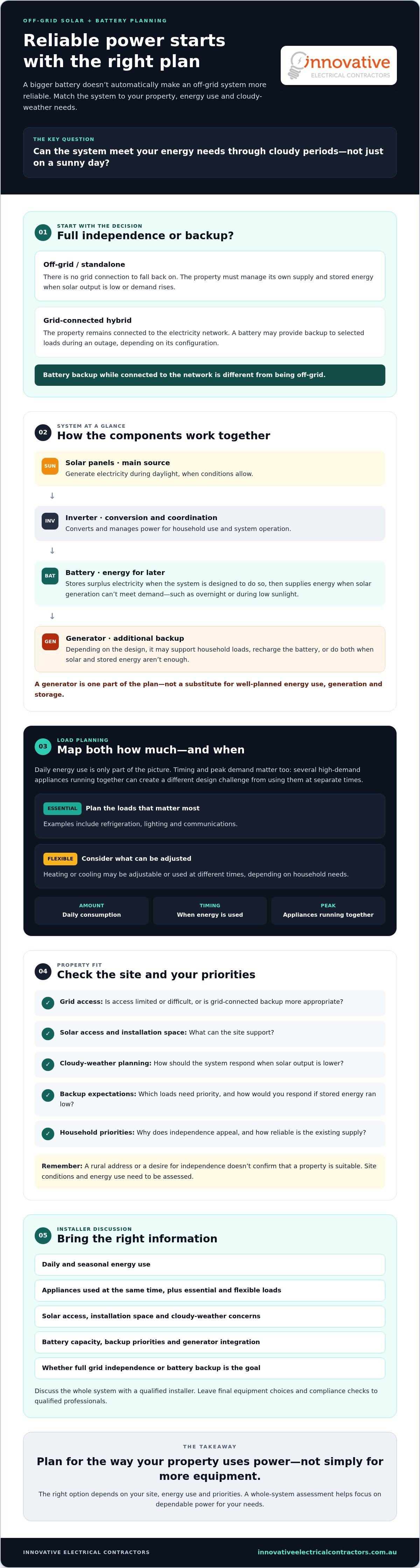
Off grid solar and battery systems searches often begin with a question about battery size. But a bigger battery doesn’t automatically make an off-grid system more reliable. Careful load planning does. If you’re considering a standalone solar and battery system for your Australian property, the key question is whether it can meet your energy needs through cloudy periods, not simply how much solar or storage you can install.
It’s reasonable to be concerned about battery capacity, backup duration and relying on a generator when solar output drops. A true off-grid system has no grid connection to fall back on. A grid-connected hybrid system can provide battery backup while remaining connected to the network. The right option depends on your site, energy use and priorities.
This guide explains how to assess whether going off-grid suits your property, which details shape system design and how to compare standalone and hybrid options. It also covers what to discuss with Innovative Electrical Contractors or another qualified installer, including daily and seasonal loads, cloudy-weather planning, battery capacity and generator integration. A whole-system approach helps you focus on dependable power for the way you use it, rather than oversized equipment that may not solve the right problem.
Key Takeaways
Check whether your property’s circumstances and priorities justify disconnecting from the electricity grid, or whether grid-connected backup may meet your needs.
Map when energy is used as well as how much. Daily consumption and appliances running at the same time both shape system design.
Assess solar access, critical loads and backup priorities before discussing panel capacity, battery storage or generator requirements with an installer.
Assess off-grid solar and battery options for your property based on its actual needs, rather than assuming one system type suits every home.
Gather energy-use details and site information for your installer discussion. Leave final equipment choices and compliance checks to qualified professionals.
Table of Contents
Is an off-grid solar and battery system right for your property?
Going off-grid can offer greater energy independence, but it also means your property must meet its electricity needs without relying on the grid as its routine supply. Reliability comes from matching the system to the site and the way energy is used, with a realistic plan for periods when solar generation is lower.
An off-grid setup is a type of stand-alone power system. Solar panels supply energy when conditions allow, batteries store surplus electricity, and a generator may provide backup when needed. A grid-connected solar and battery system works differently because it remains connected to the electricity network. A battery may supply selected loads during an outage, depending on its configuration, but that doesn’t make the property off-grid.
What does off-grid mean compared with grid-connected solar?
With a standalone system, the household needs to manage its own supply and stored energy. There’s no routine grid supply to fall back on when solar output is low or demand rises. A grid-connected system can draw from the network when required, while solar and a battery may help meet on-site demand. If you’re considering off-grid solar and battery systems for your property, clarify whether you want full independence or backup during interruptions. Those are different goals with different design considerations.
Which properties and households should assess off-grid living?
Properties with limited or difficult grid access may have a practical reason to explore standalone power. Other households may value self-sufficiency enough to take on the planning and energy-management responsibilities. Neither a rural address nor a desire for independence confirms that a property is suitable. Engaging an experienced installer like GridFree Solar for a professional site assessment helps ensure solar access, available installation space, energy use and backup expectations are properly evaluated.
Start by separating essential loads from flexible uses. Essential loads might include refrigeration, lighting and communications. Heating or cooling may be adjustable or used at different times, depending on household needs. This distinction matters because an off-grid system must support both how much energy a property uses and when it uses it. Running several high-demand appliances together can create a different design challenge from using those appliances at separate times.
Consider the reliability of any existing supply, why independence appeals to you, and how you’d respond if stored energy ran low. A generator can form part of an integrated backup plan, but it doesn’t remove the need to plan consumption and assess site conditions. The right design depends on the property’s loads, solar conditions and the level of backup you expect. Discuss those priorities with a qualified installer before deciding whether standalone or grid-connected power better fits your circumstances.
How solar, batteries and generators work together off-grid
An off-grid system is a connected set of components, not a collection of independent devices. Solar panels generate electricity during daylight. An inverter converts and manages that power for household use, with surplus energy directed to battery storage when the system is designed to do so. The battery supplies energy when solar generation can’t meet demand, such as overnight or during periods of low sunlight.
If solar and stored energy aren’t enough, a generator may provide additional supply. Depending on the design, it may support household loads, help recharge the battery, or do both. It’s a backup component, not a fix for undersized generation, storage or poorly planned energy use. Its role and integration need to be considered as part of the whole system.
What each component contributes to a standalone power system
Think of solar as the main source, the battery as stored energy for later, and the inverter as the equipment that coordinates power conversion and system operation. A generator can help cover extended periods when solar output is low, but when and how it runs depends on system design and household priorities. The components need to work together to serve the property’s loads safely and reliably.
Why seasonal conditions and energy timing matter
Adding up daily energy use is only part of sizing a system. Peak demand matters too. A household might use a similar amount of electricity across two days, but running a pump, kettle and other high-demand appliances at once creates a different load from using them at separate times. The system must be designed for both the energy consumed and when it’s needed.
Solar generation also changes with conditions at the site. Roof or panel orientation, shading and weather can affect available output. Seasonal changes mean the same installation may produce different amounts at different times of year. A design based only on ideal sunny-day output may leave less energy available during cloudy spells.
There’s no universal battery size or backup duration that suits every property. How long stored energy lasts depends on the loads being supplied, usable battery capacity and system configuration. Discuss which appliances must keep running, what can be reduced, and when you’d expect a generator to assist. Ask the installer to explain the assumptions behind their estimates, including how the system is intended to operate during low-generation periods.
Installation and wiring must be assessed against current Australian requirements, with applicable standards and safety details confirmed by a qualified professional. For a joined-up discussion of off-grid solar, battery and generator installations, consider how your site conditions, loads and backup priorities fit together.
Off grid solar and battery systems Melbourne: what to assess
Before comparing equipment, gather the information that will shape the design: energy use, peak demand, site conditions and backup priorities. This turns a broad enquiry into a practical discussion about what the system needs to support.
How to assess off-grid system size, battery capacity and backup needs
A reliable design starts with evidence about the property, not a guess at panel or battery size. Work through four steps: record energy use, identify critical loads, assess site conditions, then decide what backup you expect. This gives an installer a useful brief and makes it easier to understand why a particular system has been proposed.
Start with an honest inventory of energy use
Gather electricity bills and interval data if available, then note appliance specifications and typical usage patterns. Separate essential circuits, such as refrigeration or communications, from flexible loads that could be reduced or deferred. Include high-demand equipment and when it usually operates. For example, a household may use an oven and washing machine at different times or run them together. The daily energy total may be similar, but the simultaneous demand is different.
Next, record site factors that could affect generation or installation, such as available panel locations, shading and orientation. Share any seasonal changes in occupancy or energy use as well. A property used more heavily during a period of lower solar output may need a different design basis from one with steady, year-round use.
Set battery autonomy and generator expectations
Battery capacity alone doesn’t tell you how long a property can operate independently. Ask how the proposed capacity relates to usable stored energy, which loads it is expected to supply and the operating conditions assumed. Clarify what happens during low-generation periods: are all circuits supported, or are some loads prioritised while others are reduced?
Discuss the generator’s role before equipment is selected. Ask what conditions may trigger its use, which loads it would support and how its operation fits the overall design. A generator can contribute to backup planning, but it shouldn’t be treated as a substitute for matching solar generation and battery storage to the property’s needs. Looking at established industry models from providers like Texas Engineered Solar LLC, who combine solar energy systems with standby generator solutions, shows how these technologies can be engineered together rather than treated as an afterthought.
When comparing proposals for off grid solar and battery systems Melbourne, ask each installer to document their assumptions. A useful design discussion should explain the consumption figures, critical loads, site conditions, backup priorities and expected system operation. If a recommendation is based on estimated rather than measured use, ask how that affects the design. Clear reasoning helps you assess the proposal and identify what may need adjusting before installation.
How to compare off-grid, hybrid and grid-connected options
Choose based on the outcome you need, not the system label. A standalone system is designed to operate without routine grid supply. A hybrid system remains connected while combining solar and battery storage. A grid-connected solar system relies on the network and may or may not include a battery. Outage support depends on the system’s configuration, so don’t assume solar panels or a battery will keep every circuit running.
This comparison assumes a typical property with access to the electricity network. Actual performance and backup depend on site conditions, equipment and system design.
What trade-offs should you compare before choosing?
Ask how each option handles a grid outage and extended periods of low solar generation. Consider whether you can shift flexible energy use to times when solar power is available, or whether key loads must be supported regardless of conditions. Compare proposals using the same consumption assumptions, site details and backup priorities. Otherwise, differences in recommended equipment may reflect different assumptions rather than a better fit.
Questions to ask before accepting a system proposal
Ask the contractor to explain which loads the system supports, what could limit that support and how the design responds to low generation. Request a clear explanation of the proposed battery, inverter and, where relevant, generator selection. Also confirm who is responsible for the electrical work, commissioning and system documentation, and what ongoing support is included. These details help you compare the whole solution, not just individual components.
A qualified electrical and solar contractor can assess how grid access, energy use and backup expectations affect your options. To discuss an integrated solar, battery and generator approach for your property, talk with the electrical and solar team.
Plan an off-grid solar and battery installation with confidence
A clear process helps turn your energy goals into a system design that suits your property. It typically starts with an energy-use review and site assessment, followed by system design, installation and commissioning. Qualified professionals need to assess final equipment choices and applicable compliance requirements against the property and current rules.
Prepare useful information for an installer
Bring together details that show how you use energy and what the site can support. Useful information includes:
Recent electricity bills, interval data if available, and appliance specifications.
A list of essential loads, plus appliances that can be reduced or used at different times.
Notes on roof or ground-mount options, shading, access and existing electrical infrastructure.
Your backup priorities, including questions about when a generator may operate.
This information gives the installer a practical starting point. If you’re comparing proposals for off grid solar and battery systems Melbourne, make sure each one uses the same energy information and backup expectations. That makes differences in system scope and design easier to understand.
What a clear proposal and handover should explain
A written proposal should set out what’s included, the assumptions behind the design and how the system is intended to operate. Check which loads it supports, how solar and stored energy are expected to be used, and what role a generator may play. Ask the installer to explain equipment selection in relation to your site, energy use and backup priorities.
Before agreeing to the work, clarify who is responsible for installation and commissioning, what system documentation you’ll receive, and what user guidance and ongoing support are included. Ask how the handover will help you understand normal operation and what to do if the system indicates a fault. Compare these details alongside the equipment listed in each proposal.
Good planning continues after installation. Use the solar battery maintenance guide as a reference for understanding routine care and keeping useful system information to hand.
For an integrated assessment of your solar, battery and generator requirements, discuss an off-grid power solution with a qualified contractor.
Make your next step a well-planned one
Choosing an off-grid system starts with your property’s real energy needs. Review when and how you use electricity, identify essential loads, and consider site conditions and backup expectations. Then compare standalone, hybrid and grid-connected options against what you need, rather than assuming full independence is the only path.
Battery capacity alone can’t promise a particular backup duration. A reliable design needs to account for energy use, solar generation, system operation and the role of any generator. Ask an installer to explain the assumptions behind their proposal, what the system is designed to support and how it will be commissioned.
If you’re researching off grid solar and battery systems Melbourne, Innovative Electrical Contractors provides off-grid solutions combining solar, batteries and generator systems. Its electrical work spans residential, commercial and industrial projects, supporting a whole-property approach to planning.
Bring your energy information and backup priorities to the discussion. Discuss an off-grid solar and battery solution and take a considered next step towards a system designed around your property.
Frequently Asked Questions
How does an off-grid solar and battery system work?
An off-grid system uses solar panels to generate electricity, an inverter to manage and convert power, and batteries to store surplus energy for later use. Solar power can supply household loads directly when it’s available. Stored energy can then help supply loads when generation falls, such as overnight. Depending on the design, a generator may provide additional backup during extended periods of low solar output.
Can an off-grid solar system power a whole house?
It can, if the system is designed around the home’s energy use, peak demand and backup priorities. The design needs to account for which appliances may run together, not just total daily consumption. A household may need to adjust flexible uses, such as heating or cooling, during periods of limited generation. Ask an installer which circuits the proposed system is designed to supply and under what conditions.
How much battery storage does an off-grid home need?
There’s no single battery capacity that suits every off-grid home. The right amount depends on energy use, which loads need support, how much usable energy the battery provides and how long you expect to manage without sufficient solar generation. Ask the installer to explain the assumptions behind the proposed capacity, including seasonal conditions and likely consumption. Battery size alone can’t guarantee a particular backup duration.
Do off-grid solar systems need a generator?
Not every system needs a generator, but one may be included as backup when solar generation and stored energy aren’t enough to meet the property’s needs. Whether it’s appropriate depends on site conditions, energy use and how much backup you expect. Ask when the generator may operate, which loads it will support and how it fits into the overall design. It shouldn’t replace careful system sizing.
Is off-grid solar reliable during cloudy weather?
Cloudy weather can reduce solar generation, so reliability depends on system design, stored energy, energy use and backup arrangements. A battery can help supply loads when panels generate less, but its contribution depends on available usable energy and what the household is running. Ask how the design accounts for periods of low solar output, which loads take priority and whether generator support is part of the plan.
Can I convert my existing grid-connected solar system to off-grid?
Possibly, but existing panels and equipment may not be suitable for standalone operation without changes. A qualified professional needs to assess the current inverter, battery compatibility, electrical infrastructure and how the system would operate independently from the grid. Don’t assume that adding a battery makes an existing system off-grid. Request an assessment of the complete setup, including any equipment or electrical work needed for the proposed operation.
What should I check before choosing an off-grid solar installer?
When comparing off grid solar and battery systems Melbourne proposals, assess installers on how clearly they explain the design, not just the equipment list. Ask for written assumptions, supported loads, expected system operation, generator role, commissioning details and handover documentation. Check relevant qualifications and current accreditation requirements for the work, and clarify who is responsible for electrical installation and ongoing support. A clear proposal should relate equipment choices to your site and energy needs.
Comments