
Nabers ratings and electrical efficiency in buildings
Updated: Nov 3
A building’s NABERS result reflects how efficiently it operates, not just how efficiently it was designed. For Australian offices, the NABERS rating’s electrical efficiency requirements centre on measured energy use, with ratings running from zero to 6 stars. The result compares operational performance, rather than relying on equipment specifications alone.
When looking for ways to improve efficiency, it is understandable to focus on lighting, heating and cooling. But a NABERS rating also reflects how a building is used, so equipment upgrades are only part of the picture.
This guide explains what NABERS measures, how operational energy use shapes a rating and how electrical changes can affect star performance and greenhouse gas emissions. It also explains why the rating matters when assessing an existing building and how to weigh upgrades in context. This helps clarify what the rating says about day-to-day performance and where electrical efficiency fits.
Table of Contents
Building energy efficiency and operational energy use
Buildings use approximately 40% of the world’s energy, making operational efficiency a key sustainability concern. NABERS helps building owners understand actual energy performance and compare it with similar buildings.
Comparing building energy use
NABERS Energy ratings compare a building’s operational energy use with that of comparable buildings, adjusting for factors that affect consumption. These include floor area, operating hours, climate, equipment density and the greenhouse intensity of the energy source.
This makes the result more useful than comparing raw bills alone. For example, a building with longer operating hours may use more electricity without necessarily being less efficient. A consistent comparison helps owners identify opportunities to improve efficiency and track sustainability across a portfolio.
Office, tenancy and whole-building ratings
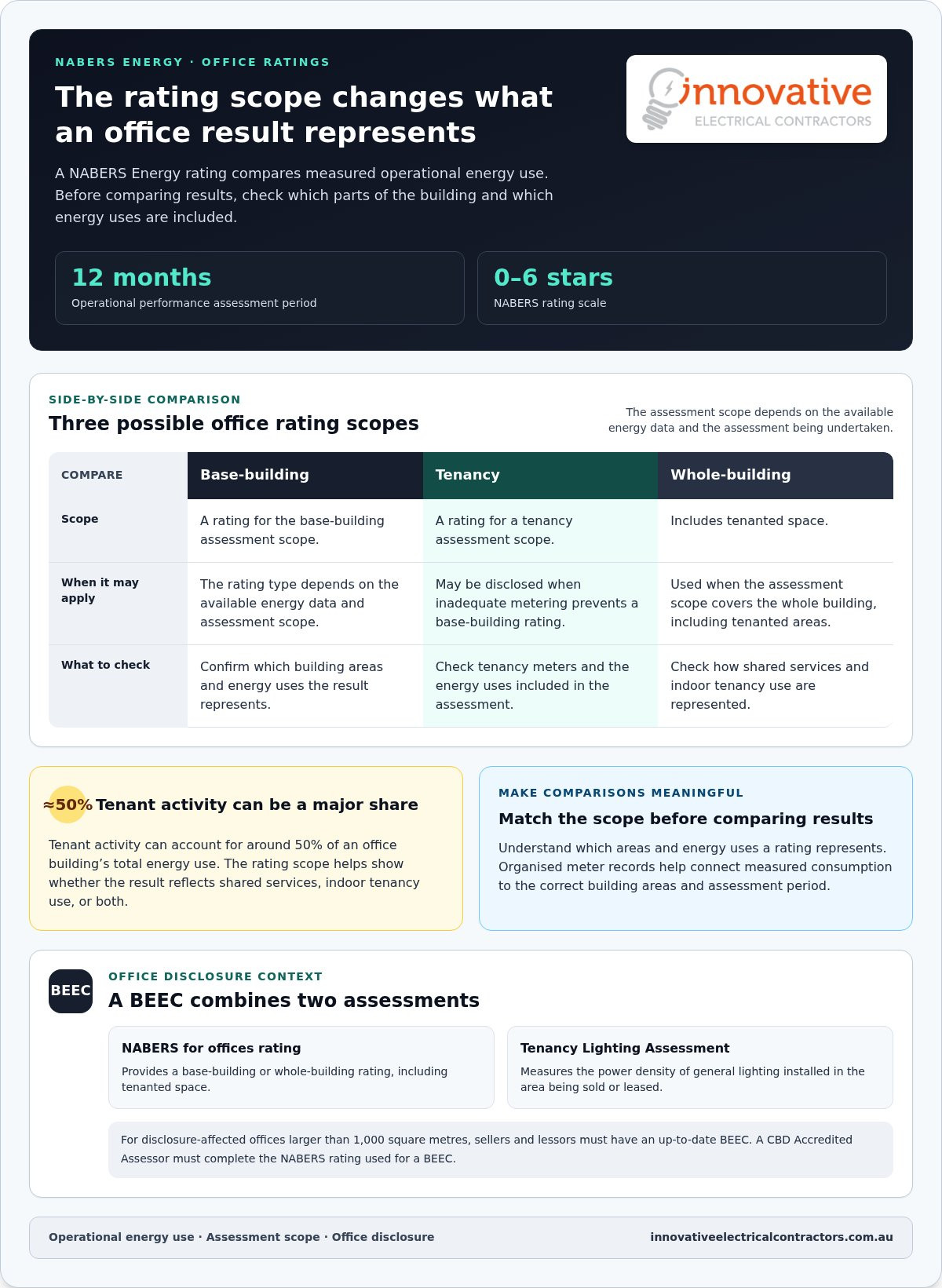
An office rating can cover a base building, a tenancy or the whole building, depending on the available energy data and assessment scope. A whole-building rating includes tenanted space. A tenancy rating may be disclosed when inadequate metering prevents a base-building rating.
Building Energy Efficiency Certificates
A Building Energy Efficiency Certificate (BEEC) combines a NABERS for offices rating and a Tenancy Lighting Assessment. The lighting assessment measures the power density of the general lighting installed in the area being sold or leased.
For disclosure-affected offices larger than 1000 square meters, sellers and lessors must have an up-to-date BEEC under the Building Energy Efficiency Disclosure Act (2010). The NABERS component provides a base or whole-building rating, including tenanted space. A CBD Accredited Assessor must complete the NABERS rating used for a BEEC.
Requirements across building types and jurisdictions
NABERS uses national rating methods, but the relevant rating type depends on the building. Office disclosure requirements apply to eligible transactions under the Commonwealth scheme. This does not mean every building type faces the same disclosure rule. The state or territory does not change the NABERS star scale.
How do NABERS Energy requirements differ by building type and state or territory? The rating scope varies by building type, but NABERS comparisons use a national approach. For offices, the BEEC requirement applies to transactions affected by disclosure rules, rather than creating separate state or territory star scales.
How do NABERS ratings compare with mandatory Australian building energy disclosure requirements? A NABERS rating measures operational performance; a BEEC combines an office rating with a tenancy lighting assessment. The certificate is required for office sales and leases affected by disclosure rules above the stated threshold.
How do NABERS Energy Ratings work?
A NABERS Energy rating uses operational evidence to show how a building performs against its benchmark. Understanding the NABERS rating’s electrical efficiency requirements helps building teams see how measured electricity use contributes to the result.
NABERS assesses building performance over a 12-month period, according to NABERS. An office assessment uses energy records, including electricity, gas and diesel bills for at least the previous 12 months. These records connect measured consumption with the building and its operating conditions. Keeping meter records organised helps make the comparison meaningful, particularly where tenancies or shared services use separate meters. Accurate records also help teams interpret the NABERS rating’s electrical efficiency requirements against actual use, rather than assumptions about equipment.
Apartment common-property energy use can account for up to 60% of total building energy consumption and 25% of administrative fund levies. Rating methods can change over time, so building teams should check how current metrics affect their assessment. That shift makes the relationship between actual energy use and the benchmark central to understanding an energy rating.
Rating environmental measures
NABERS rates energy and water efficiency, while its broader tools also cover waste and indoor environment. This helps building owners consider more than electricity when planning sustainability improvements. For example, adjusting cleaning schedules can reduce unnecessary equipment run-time, while efficient equipment and lighting practices can support lower energy use. The rating puts operational performance in a broader built-environment context.
Data accuracy and rating obligations
Accurate electricity data means complete records are matched to the correct meters, building areas and assessment period. Missing bills or mixed readings from tenancies and shared services can distort measured consumption and weaken comparisons with the benchmark. Inaccurate records can produce a misleading rating, while incomplete disclosure can leave a required BEEC without its necessary NABERS component.
For building teams, the practical response is to keep energy accounts and meter boundaries organised, then reconcile them across the assessment period. If lighting or electrical systems need attention, commercial electrical services can support work that improves operational efficiency.
Operational changes and equipment upgrades
Operational changes can reduce electricity use without altering a building’s layout. Review when lighting, ventilation and other electrical equipment operate in different spaces. For example, lights left on in an empty tenancy add load without serving occupants. Aligning schedules with actual use can remove that unnecessary demand. Compare energy data before and after changes to see how measured consumption shifts.
Equipment upgrades can also make a measurable difference. Replacing halogen lights with LED globes can reduce energy use by 75%. Lighting changes matter across large offices, where fittings operate through long working hours. Match replacement choices to how each space is used, including meeting rooms, corridors and work areas. Record the upgrade date and affected circuits so the change can be considered alongside the building’s energy records.
Heating, cooling and ventilation equipment also affect electrical demand. Compare system schedules with occupancy patterns, then identify areas operating outside required hours. Meeting rooms used intermittently may need different controls from a continuously occupied work area. Correct operation helps avoid powering equipment unnecessarily, while planned maintenance can keep electrical systems working as intended. In facilities featuring specialised food service tenancies, mechanical specialists like Air Flow M&E Pte Ltd provide addition and alteration services for commercial kitchen exhaust systems to support efficient, compliant airflow. Compare consumption across operating periods to see whether a change has altered the building’s load.
Consider the wider environmental impact, not just electricity savings. The greenhouse intensity of an energy source affects how energy use relates to carbon emissions, so both consumption and the energy supply mix matter. A department managing several sites can compare upgrades across its portfolio and prioritise spaces with clear opportunities to reduce demand. Coordinate changes with tenants, especially where lighting and equipment are in leased areas. Keep records of the work and operational adjustments, then assess their effect against measured energy use. This connects practical upgrades to sustainability decisions rather than relying on equipment labels alone.
Star ratings and greenhouse gas emissions
A NABERS Energy star rating relates a building’s operational performance to its energy benchmark and associated greenhouse gas emissions. Three stars represents an average rating. A six-star NABERS Energy for offices rating indicates half the greenhouse gas emissions of a five-star building. Star performance can therefore help owners interpret emissions alongside energy use.
Benchmarks matter because the rating compares measured performance against a standard that can change. NABERS updated its Energy benchmarks in July 2025 using the 2024 National Greenhouse Accounts emission factors. This refresh affects how energy use translates into a rating. Owners reviewing results across different assessment periods should consider the benchmark applying to each rating, rather than treating star scores as directly comparable without context.
Certification has a separate eligibility threshold. NABERS Carbon Neutral Certification is available only to buildings with current NABERS Energy ratings of four stars or above. A strong energy rating is a prerequisite for this certification, not the certification itself. Building teams can use the rating to understand operational performance, then consider measures that address energy use and emissions before pursuing separate certification.
Government requirements also show how star ratings can inform building expectations. New Australian Government buildings must achieve a 4.5-star NABERS Energy rating. This requirement applies to new government buildings, not every commercial building. For owners, the useful lesson is to distinguish a rating benchmark from a specific government requirement and understand which applies to their building.
To improve a rating, connect operational measures to actual energy use. Review lighting and electrical equipment schedules, then consider upgrades that reduce consumption during occupied and unoccupied periods. Track the work against the building’s energy records so its effect can be assessed in context. If you’re planning electrical changes to support efficiency, discuss electrical efficiency upgrades.
Innovative Electrical Contractors: Commercial Electrical
Innovative Electrical Contractors supports businesses planning electrical work that aligns with operational efficiency goals. Its Commercial Electrical and Electrical Services can help address building systems, lighting and equipment that contribute to electricity use.
Consider the team when planning electrical upgrades, reviewing inefficient systems or making changes across commercial spaces. Solar & Battery solutions may also suit sites considering how on-site energy supply fits broader energy plans. The right work depends on the building’s systems, operating patterns and upgrade priorities.
For a practical next step, outline the areas you want to improve and the electrical changes under consideration. Contact Innovative Electrical Contractors to discuss your commercial electrical needs, or visit innovativeelectricalcontractors.com.au.
Make your next efficiency decision count
Use your NABERS assessment to plan the next electrical improvement, not simply as a score to file away. Identify the building systems you can influence, then set a clear priority for future work. This could mean reviewing equipment use, planning electrical upgrades or considering how on-site energy could fit your operations.
The NABERS rating’s electrical efficiency requirements can help frame those choices, but practical improvements need to suit the building and its day-to-day use. Innovative Electrical Contractors provides Commercial Electrical, Electrical Services, and off-grid solar, battery and generator installations for businesses planning their next step.
Discuss the electrical work that fits your building’s priorities with Innovative Electrical Contractors. A considered plan can help turn efficiency goals into practical action.
Frequently Asked Questions
What is NABERS?
NABERS is Australia’s rating system for the environmental performance of buildings and tenancies. It rates areas including energy and water, helping people compare operational performance within relevant building types. Ratings can reflect a building’s current performance or a planned performance outcome. For owners, the rating provides a consistent way to understand how operations compare with an applicable benchmark.
How can you improve your rating?
Start by identifying which systems drive energy use, then prioritise changes that address those loads. For example, review control settings and how equipment responds to occupancy instead of replacing equipment without considering how it is used. After a change, compare subsequent energy records with the building’s usual operating pattern. Keeping a clear record of changes helps explain what may have influenced a later assessment.
How long does a rating last?
A NABERS rating is valid for twelve months. It represents a defined period of building performance, not a permanent assessment of the property. Building operators can plan renewals around reporting and leasing needs, and use successive ratings to monitor operational changes. A major refurbishment can also affect whether a previous rating remains suitable for use.
What are the benefits of having a good NABERS rating?
A strong rating can help owners communicate a building’s measured environmental performance to tenants and other stakeholders. It can also support portfolio comparisons and inform decisions about future upgrades. For office buildings, a rating may form part of a Building Energy Efficiency Certificate when disclosure rules apply. It is useful evidence for planning, but does not replace building-specific operating decisions.
What is a NABERS rating and how does it measure electrical efficiency in Australia?
A NABERS rating scores measured building performance against comparable buildings, so electricity use is considered in the context of how the property operates. The assessment accounts for factors such as building area, operating hours, climate, equipment density and the greenhouse intensity of the energy source. This puts consumption in context rather than judging performance from electricity bills alone.
Which NABERS rating tools cover electricity use in commercial buildings?
NABERS Energy tools assess electricity performance for relevant building types, including offices, hotels and public hospitals. The office tool is used for office energy assessments, while hotel and hospital ratings apply to those building categories. Disclosure arrangements differ by type: hotel rating disclosure is voluntary, and public hospital ratings are disclosed at the discretion of relevant State Health Departments.

Comments