
Inverter vs Microinverter System: Cost and Warranty Comparison for 2026

Could a lower-cost inverter deliver better value for your roof? The answer depends on more than the equipment price. This inverter vs microinverter system cost and warranty comparison looks beyond headline claims to how each setup may perform in real conditions and what its warranty covers.
It’s reasonable to weigh the potentially higher upfront cost of microinverters against their panel-level operation and warranty terms. But shading, roof orientation, system design and future battery plans can all affect which option makes sense. No setup guarantees the same result on every roof.
In this guide, you’ll learn the practical differences between string inverters and microinverters, and how to compare Australian solar quotes on consistent terms. We’ll cover total system cost, performance considerations and warranty details, including the difference between parts coverage and replacement work. You’ll also see how roof layout, monitoring preferences and plans for solar and battery storage can shape the decision. Inverter choice is one part of a complete system design, so the best fit is the one matched to your property and energy needs.
Table of Contents
Inverter vs microinverter system: what changes in a solar installation?
How roof conditions, shading and monitoring affect inverter performance
Inverter vs microinverter system cost: compare lifetime value, not just equipment
Inverter warranty comparison: check coverage, exclusions and who handles claims
Which inverter system suits your property? A practical decision framework
Inverter vs microinverter system: what changes in a solar installation?
An inverter converts the direct current (DC) electricity produced by solar panels into alternating current (AC), which household appliances use. In a grid-connected system, it also helps manage the flow of solar generation within the system design. The Solar inverter overview explains the broader role of this equipment and the different configurations available.
The main difference is where conversion happens. A string system groups panels and sends their output to a central inverter. A microinverter system places conversion equipment at individual panels. Both approaches make solar generation usable in the home, but their layouts affect system design and monitoring.
How a string inverter system works
Think of a string as a chain of connected panels. Their combined DC output travels to one central inverter, which converts it to AC.
Simple layout: Solar panels in a string → central inverter → household electrical system
The number and arrangement of strings, the inverter’s capabilities and panel compatibility all influence how the system operates. These details need to work together in the design. A central inverter doesn’t automatically include panel-level optimisers. Optimisers are an optional component that can be paired with a compatible string-inverter setup; they are not the same as microinverters.
This architecture keeps conversion equipment centralised. Check that the quote clearly identifies the included components and panel arrangement, rather than treating all string systems as identical.
How a microinverter system works
With microinverters, conversion equipment is installed at individual panels. Each unit converts its panel’s DC output to AC at the panel, rather than sending DC from a group of panels to one central inverter.
Simple layout: Each panel → its own microinverter → household electrical system
This changes the system architecture, but doesn’t guarantee extra energy. Actual generation depends on the complete design and conditions at the property. Panel-level conversion may also support monitoring of individual panels, depending on the equipment and monitoring system selected. That can provide a more detailed view than system-level information, but it is a capability of a particular setup, not an automatic feature of every system.
Compare the equipment and functions specified in each quote. A string inverter and a microinverter system place conversion in different locations, while a string system with optimisers is a separate configuration. Understanding the difference gives you a clearer foundation for the inverter vs microinverter system cost and warranty comparison, and for assessing how the equipment fits your roof and wider solar plans.
How roof conditions, shading and monitoring affect inverter performance
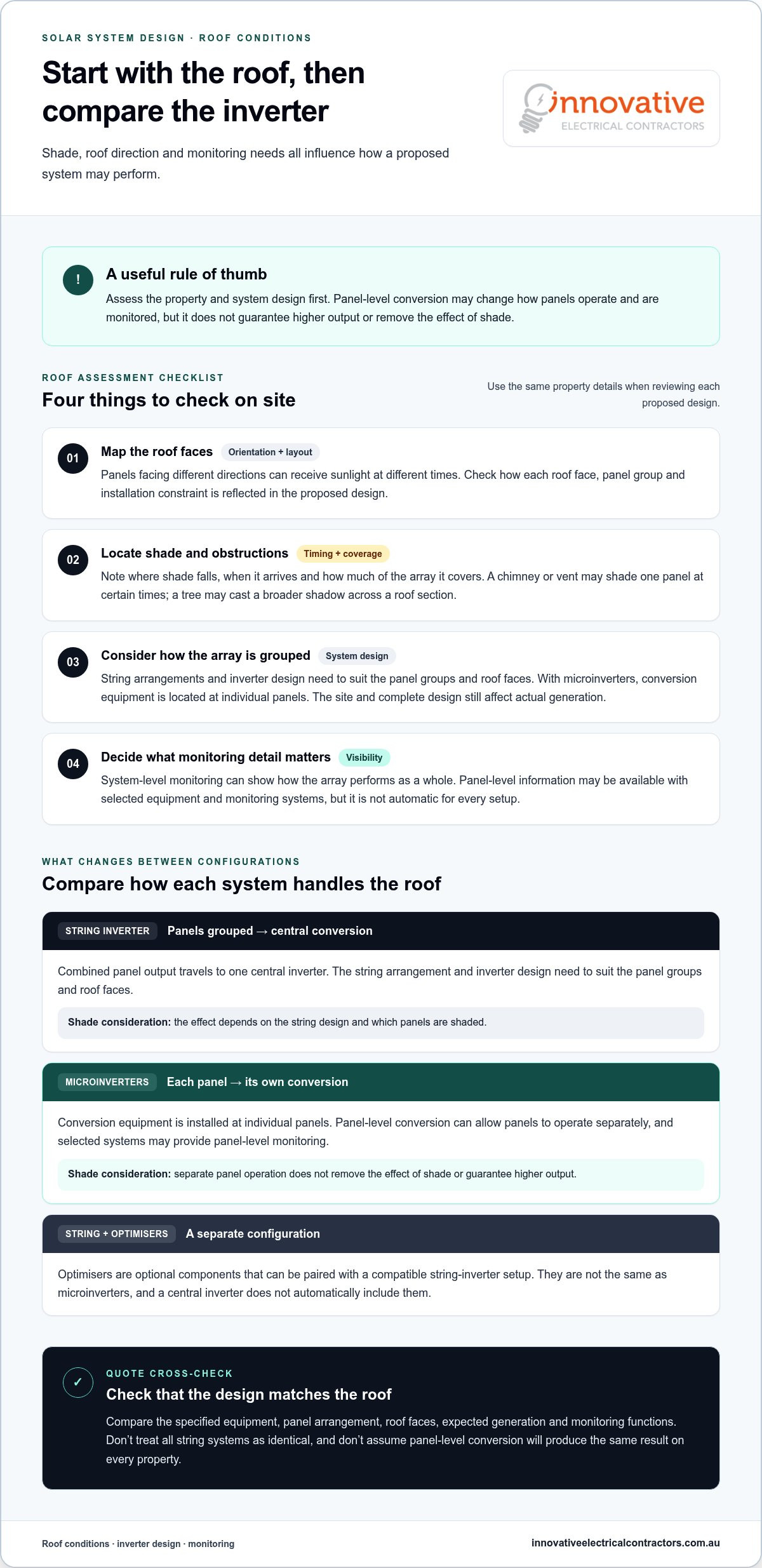
Inverter performance can’t be judged separately from the roof it serves. A clear, single roof face presents a different design task from panels spread across several directions or partly shaded by a chimney or nearby tree. The timing and extent of shade matter too. A short morning shadow may affect a different part of the day’s generation than shade that falls across panels for longer.
Roof conditions shape performance more than a blanket claim about inverter technology. Start with the site, then consider how each proposed system responds to its conditions.
When shading or a complex roof may influence the choice
Consider where shade falls, when it arrives and how much of the array it covers. A vent or chimney might shade one panel at certain times, while a tree could cast a broader shadow across a roof section. The impact depends on the system design and site conditions, so panel-level conversion shouldn’t be treated as a guarantee of higher output.
Roof orientation matters too. Panels facing different directions can receive sunlight at different times, and roof sections may have distinct shading or installation constraints. A site-specific design should account for each roof face and model expected generation using the proposed equipment. For a broader overview of inverter types and their trade-offs, EnergySage’s solar inverter comparison offers additional context, though Australian project decisions still need to reflect the property and chosen system.
What panel-level monitoring can and cannot tell you
System-level monitoring can show how the array is performing as a whole. Depending on the selected equipment, panel-level monitoring may add visibility into individual panels or sections. If one panel’s reported output differs from others, that information can help narrow down where to investigate, particularly when panels face different directions or experience varying shade.
Monitoring provides information, not a performance upgrade. It doesn’t generate extra electricity, explain every cause of a change or replace inspection and maintenance. Read the monitoring capabilities alongside the system design rather than assuming every inverter offers the same level of detail. This roof-first approach makes the inverter vs microinverter system cost and warranty comparison more relevant to your project. For a solar or battery installation tailored to your property, discuss your solar project with Innovative Electrical Contractors.
Inverter vs microinverter system cost: compare lifetime value, not just equipment
A lower headline total doesn’t always mean a better-value solar system. Quotes can differ in panel count, system capacity, inverter layout, electrical work and monitoring. Compare what each proposal includes, then consider how access, servicing and future plans could affect ownership over time.
A fair comparison uses equivalent system scope, consistent assumptions and the same time horizon. Otherwise, totals may look comparable while describing different systems. Any savings or additional generation depend on the roof, system design and how electricity is used, so don’t treat either outcome as automatic.
What belongs in an apples-to-apples solar quote comparison?
Start with the array: check the panel count and total system capacity. Then note whether the design uses a central inverter, microinverters or a string inverter with optimisers. Review the electrical work and included monitoring as well. These details help show whether the quotes are genuinely like for like.
Use a simple comparison table to record the scope and assumptions:
Separate equipment from installation and monitoring where the quote allows. Record what each proposal assumes about future access or service as well. A difference in the headline total may reflect different design choices or scope, not simply a price premium for one inverter type.
How to think about lifetime cost and future changes
Look beyond the initial installation. Consider how a fault might be identified, where equipment is located and what access could involve if a component needs attention. Replacement work may involve labour as well as equipment, so include those possible implications in your comparison without assuming when a replacement will be needed.
Monitoring: Note what performance information the system provides and how useful that detail is to you.
Diagnosis and access: Consider how a fault could be isolated and whether equipment placement may affect service work.
Expansion: If you may add panels or integrate a battery later, consider how each proposed design fits those plans.
Usage: Match expected generation and system design to your household’s energy patterns, not a generic output claim.
In an inverter vs microinverter system cost and warranty comparison, lifetime value depends on the whole installation and its assumptions, not one component in isolation. Inverter selection is one part of a complete solar and battery design. Explore solar and battery installation solutions tailored to your property and plans.
Inverter warranty comparison: check coverage, exclusions and who handles claims
A warranty headline can make two solar quotes look easy to compare. The details are in the conditions: which equipment is covered, what remedy is offered and who pays for the work if a fault occurs. Compare the current manufacturer documents for the exact equipment models in each proposal, not a general warranty summary or a figure remembered from another product.
Warranty length alone doesn’t describe the full scope of coverage. A stated term doesn’t tell you whether the warranty covers labour, removing and reinstalling equipment, shipping or claims administration. Nor does it establish how long a product will operate. Treat warranty duration and coverage as related but separate parts of your decision.
How to read string inverter and microinverter warranty terms
Read the warranty for each relevant component. A string inverter, microinverters and any power optimisers are distinct equipment, and their coverage terms may differ within one system. Confirm that the model in the quote matches the warranty document, then check the coverage period, what the manufacturer will provide if a valid claim is accepted and any limits on that remedy.
Check exclusions and claim steps closely. The document may explain what evidence is required, how a fault is assessed, where a claim must be lodged and whether registration or other conditions apply. A longer stated term doesn’t guarantee a longer service life, and it doesn’t mean repairs will have no out-of-pocket costs.
Questions to resolve before comparing warranty value
Use this checklist to compare the terms across quotes:
Covered equipment: Which exact components and models are named?
Remedy and costs: Does the coverage address the replacement unit, shipping, removal, reinstallation and labour, or only some of these?
Claim handling: Who lodges and manages the claim, and what evidence or fault diagnosis is needed?
Conditions: Are registration deadlines, maintenance requirements or transfer rules stated?
Also distinguish a manufacturer warranty from rights under Australian Consumer Law. A manufacturer’s written warranty is separate from statutory consumer guarantees, which may also apply depending on the circumstances. The warranty document doesn’t, by itself, explain the full legal position; for consumer information, refer to the Australian Competition and Consumer Commission.
Ongoing system care is another practical consideration. Keep records of the installation and equipment, and follow the relevant maintenance guidance. The solar battery maintenance guide covers care considerations for a solar and battery system.
For an inverter vs microinverter system cost and warranty comparison, consider warranty terms alongside the proposed system scope and likely servicing requirements. Innovative Electrical Contractors can tailor a solar and battery installation to your property and project plans.
Which inverter system suits your property? A practical decision framework
There’s no single inverter setup that suits every property. A straightforward, unshaded roof and a preference for centralised equipment may point towards a string system. A roof with varying shade, several orientations or a strong need for panel-level insight may make microinverters worth considering. These are starting points, not automatic recommendations: the proposed design, warranty terms and your plans all matter.
Use your roof and priorities to narrow the options
Think about what matters most to your household. If you value simpler, centralised equipment and your roof layout is relatively straightforward, compare string-based designs. If you want potential panel-level performance information, or the roof has complex shading, consider how a microinverter design addresses those conditions. Neither configuration removes the effect of shade, and neither guarantees a particular generation outcome.
Include battery plans in the decision. If storage may be part of the project now or later, the system design needs to account for your energy priorities and how the components work together. Don’t assume either inverter architecture is automatically compatible with every battery or expansion plan. Compare the complete proposed system, not the inverter in isolation.
Turn the comparison into a project plan
Before assessing proposals, gather the information that can shape the design. Then work through these steps:
Map roof conditions. Note the roof faces, approximate panel areas, recurring shade and nearby obstructions. Include areas that receive sun at different times of day.
Define monitoring needs. Decide whether system-wide generation information is enough or whether panel-level visibility is a priority. Monitoring options depend on the selected equipment.
Compare quote scope. Line up panel count, system capacity, inverter architecture, included electrical work and monitoring. Different scopes can make headline totals misleading.
Review warranty terms. Compare documents for the exact equipment, including exclusions, claim handling and any labour or access costs that may sit outside product coverage.
Bring your energy-use goals into the same discussion. For example, a household aiming to use more solar electricity during the day may have different priorities from one planning around battery storage or future changes to the property. If you’re planning a new home, consider electrical and energy systems as part of the broader design.
The inverter vs microinverter system cost and warranty comparison is most useful when it reflects your roof, energy needs, quote scope and expectations for ongoing care. Professional solar and battery system design brings those factors together without assuming one technology is always the answer. To discuss a system shaped around your property and plans, discuss a tailored solar or battery installation with Innovative Electrical Contractors.
Make your next solar decision with confidence
Your inverter choice is part of a bigger decision: how your solar system will support the way you use energy now and your plans for later. Before committing, bring your roof details, household priorities and any battery plans together in one project brief. That gives the system design a clear starting point and keeps the inverter vs microinverter system cost and warranty comparison focused on what matters to your property.
Innovative Electrical Contractors provides solar and battery installations for residential and commercial projects, including off-grid systems that combine solar, battery storage and generator systems. The next step is to discuss your requirements and shape a system around them.
Discuss a tailored solar or battery installation and move forward with a design shaped around your property and energy plans.
Frequently Asked Questions
Is a microinverter system better than a string inverter system?
Not for every property. A microinverter system may suit a roof where panel conditions vary, while a string system may suit a simpler layout and a preference for centralised equipment. For example, if an extension or tall tree shades only one roof area, compare how each proposed design is expected to respond to that specific pattern. The best choice depends on the installation, monitoring needs and priorities, not a universal ranking.
How much more does a microinverter system cost than a string inverter system?
There’s no reliable single difference for every Australian installation. The inverter vs microinverter system cost and warranty comparison depends on the equipment, system size, roof access, electrical work and what each quote includes. Compare proposals with the same panel count and capacity, and separate equipment from installation and monitoring. A higher total may reflect a different scope or design, so compare the complete system rather than the inverter line alone.
Can microinverters improve solar output on an unshaded roof?
They can’t be assumed to produce more energy on every clear, unshaded roof. Any difference depends on the panels, system design, operating conditions and how generation is modelled. If two proposals claim different output, compare the assumptions behind their estimates, including roof direction and panel layout. Panel-level conversion may offer design or monitoring features that matter to some households, but those features aren’t the same as a guaranteed increase in generation.
What happens if one microinverter or a string inverter fails?
If one microinverter stops working, the panel connected to it may be affected while other panels may continue operating, depending on the system. If a central string inverter fails, conversion for the panel groups connected to it may be interrupted. In either case, the actual impact depends on system configuration. Check the monitoring information for a change, then use the equipment documentation and warranty process to guide fault reporting and next steps.
Do microinverters always come with a longer warranty?
No. Warranty periods vary by manufacturer, model and product terms, so don’t assume every microinverter has a longer warranty than every string inverter. Compare current documents for the exact equipment in the proposal. For instance, a quote may include different coverage terms for an inverter and other system components. Also check whether labour, removal, reinstallation and shipping are covered, as a long product warranty may not include those costs.
Does Australian Consumer Law cover solar inverter failures?
Australian Consumer Law includes consumer guarantees that may apply to products and services, and these rights are separate from a manufacturer’s written warranty. Whether a particular inverter failure qualifies for a remedy depends on the circumstances, including the product and how it was supplied. A warranty term doesn’t automatically define or replace those rights. For guidance on a specific issue, consult the Australian Competition and Consumer Commission or seek independent legal advice.
Can I add a battery to either inverter system?
Possibly, but compatibility depends on the existing equipment and the battery system being considered. For example, a household adding storage later needs a design that manages both solar generation and battery charging, rather than assuming any battery can connect to any inverter. Before choosing an initial system, note whether battery storage is a near-term plan or a future possibility. That gives the design a clear requirement to address from the outset.


Comments