
How to Child-Proof Electrical Outlets and Switchboards Safely
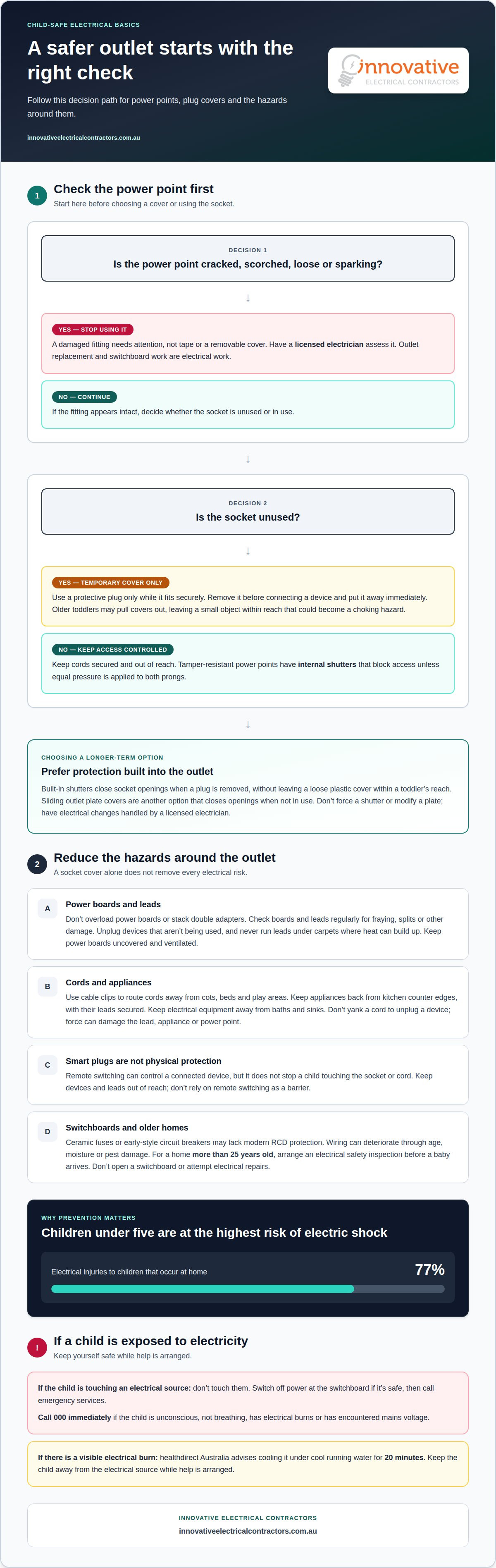
Plastic outlet covers can be removed by older toddlers, so they are not a set-and-forget safety measure. For more reliable protection, tamper-resistant power points have internal shutters that block access unless equal pressure is applied to both prongs. Child-proofing electrical outlets and switchboards also involves managing cords and addressing hazards around the switchboard.
It makes sense to look for a simple way to protect curious children, but no single cover removes every electrical risk. This guide explains the limits of plastic plug covers, practical steps to reduce hazards at home, and the Australian standards and safety measures that apply.
You’ll learn how to make outlets and cords less accessible, what to look for in tamper-resistant power points, and when electrical work needs a licensed professional. The goal is a safer home, with practical steps you can take and a clear sense of when to seek expert help.
Table of Contents
Are plastic outlet plug covers safe to use in Australia?
Plastic covers can be pulled out by older toddlers and may become choking hazards if left within reach. Tamper-resistant power points have internal shutters that block access unless equal pressure is applied to both prongs. To make Australian power points safer without blocking ventilation, keep socket openings clear, use built-in shutters, secure cords and leave power boards uncovered.
Choose protection that stays in place. Use protective plugs in unused sockets only while they fit securely, and put them away immediately after removal. Built-in shutters close socket openings when a plug is removed. Unlike loose covers, they don’t leave a small plastic object within a toddler’s reach.
Keep boards and cords clear. Don’t overload power boards or stack double adapters. Inspect boards and leads regularly for fraying, splits or other damage, and unplug devices that aren’t being used. Never run leads under carpets, where heat can build up.
Secure reachable cables. Use cable clips to route cords away from cots, beds and play areas. Keep appliances back from kitchen counter edges, with their leads secured. Don’t pull plugs out by yanking the cord, as force can damage the lead, appliance or power point.
Treat smart control as an extra, not a barrier. A smart plug can let an adult switch a connected device remotely, but it doesn’t prevent a child touching the socket or cord. Keep devices and leads out of reach, and don’t rely on remote switching for physical protection.
Arrange upgrades for damaged fittings. Cracked, scorched, loose or sparking power points need attention, not tape or a removable cover. Outlet replacement and switchboard work are electrical work. Have a licensed electrician assess whether tamper-resistant points or switchboard changes suit the home.
If a child receives an electrical burn, healthdirect Australia advises cooling visible burns under cool running water for 20 minutes. Keep the child away from the electrical source while help is arranged.
Electrical injury risks to children at home
If a child is touching an electrical source, don’t touch them. Switch off power at the switchboard if it’s safe, then call emergency services. Call 000 immediately if the child is unconscious, not breathing, has electrical burns or has encountered mains voltage.
Focus on risks for under-fives. In Australia, the risk of electric shock is highest for children under five, and 77% of electrical injuries to children occur at home. Curious toddlers may push fingers or small objects into accessible sockets, pull cords or reach appliances near water. Keep electrical equipment away from baths and sinks, and keep leads out of play spaces.
Look beyond power points. A loose cord can let a child pull an appliance down, while damaged insulation can expose live parts. Keep cords away from beds and cots, secure loose leads, and replace frayed or damaged cables. Wrapping damaged leads with tape doesn’t protect against electric shock.
Check older switchboards. Look for ceramic fuses or early-style circuit breakers, which may lack modern RCD protection. Older power points may not have built-in shutters, and wiring can deteriorate through age, moisture or pest damage. For a home more than 25 years old, arrange an electrical safety inspection before a baby arrives.
Act on warning signs promptly. Flickering lights, tripped circuits and warm power points can indicate a wiring fault or overloaded outlet. Cracked, scorched or sparking fittings need attention. Don’t open a switchboard or attempt electrical repairs; professional electrical safety work can address faults and assess whether an upgrade is needed.
Get help after contact or injury. Keep others away from the electrical source while emergency help is on its way. Don’t touch a child who remains in contact with a live source; switch off power first, if safe. Promptly report any suspected exposure to mains electricity to emergency services.
Socket covers and tamper-resistant outlets
Choose protection that suits each socket and remains effective during everyday use. Compare removable covers with built-in shutters before deciding what to use around young children.
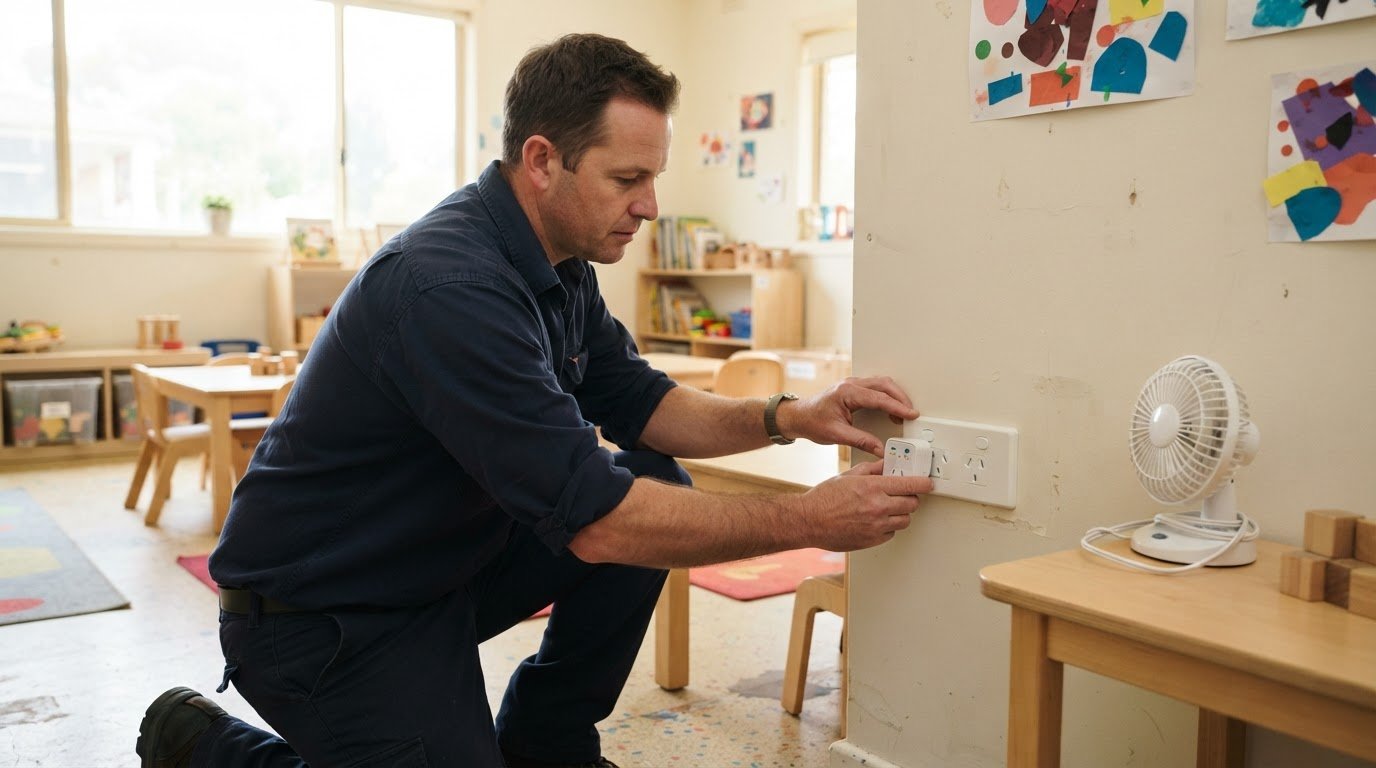
Assess plastic plug-in outlet coversUse plug-in covers only as a temporary barrier for unused sockets, and remove them when the socket is needed. Older toddlers may pull covers out, leaving small objects within reach that could become choking hazards. Put each cover away immediately after removal. Check for cracks or wear, and replace damaged covers rather than relying on a loose fit.
Compare sliding covers and tamper-resistant outletsConsider sliding outlet plate covers, which close socket openings when they are not in use. Another option is tamper-resistant power points, whose internal shutters block access unless equal pressure is applied to both prongs. Both reduce access to exposed socket openings, but work differently. Don’t force a shutter or modify the plate; electrical changes should be handled by a licensed electrician.
Fit protective plugs only in unused sockets, and remove them before connecting devices. A plug-in cover is a physical barrier, not a replacement for supervision or sound wiring. Don’t leave removed covers on floors, tables or near cots. For power boards, use a cover designed to enclose the board while allowing cords through its opening, and keep the board ventilated.
Check covers and outlet plates during regular household safety checks. Look for loose fittings, cracks, scorch marks or signs of heat, and stop using a damaged socket. Don’t tape over a fault or try to replace a power point yourself. A licensed electrician can assess the wiring and install a suitable replacement, including a tamper-resistant point where appropriate.
Australian electrical standards and regulations
Australian advice for parents is practical: limit access to electrical hazards, use safety switches, and keep appliances and cords away from children. Household electrical work must be completed by a licensed electrical contractor, not attempted as a do-it-yourself safety measure.
Use the Wiring Rules as the standard. Australian electrical safety is governed by AS/NZS 3000, known as the Wiring Rules. They set requirements for electrical installations, including the electrical system in a home. Outlet covers are not a substitute for compliant wiring or correctly installed power points. A licensed electrician can assess existing fittings and wiring against the standard.
Include safety switches in your safety plan. A residual current device, or RCD, detects a fault current and cuts power within milliseconds. Safety switches should be installed on all circuits to help protect families from electric shock. Test each safety switch every three months by pressing its test button, then arrange attention if it fails to operate.
Know the South Australian requirements. The South Australian Government recommends that every household have at least one RCD on power circuits. RCDs can be an important part of electrical safety in homes undergoing building work. These requirements are specific to South Australia, so don’t assume they describe every state or territory’s rules.
Choose compliant electrical equipment. Electrical equipment bought from overseas suppliers may not meet Australian safety requirements. Look for the Regulatory Compliance Mark (RCM) on equipment before use. Don’t insert unfamiliar devices into an outlet if they appear damaged, fit poorly or show exposed wiring. Remove unsafe appliances from children’s reach.
Leave installation and alterations to a professional. Replacing or modifying power points, changing switchboard components, or repairing wiring involves electrical work. Don’t remove outlet covers or switchboard panels to inspect the wiring yourself. For help with household electrical safety work, arrange an electrical services assessment with a licensed electrician.
Innovative Electrical Contractors: Commercial Electrical
Innovative Electrical Contractors provides electrical services for homeowners who need help with household power points or switchboards. Contact the team when fittings are damaged, a switchboard needs an upgrade, or you want an electrician to assess an electrical fault. Electrical work should be handled by a licensed professional, not attempted as a DIY safety fix.
For homes with young children, an assessment can identify practical electrical issues, such as worn outlets or switchboard concerns, and help determine suitable next steps. The right work depends on the condition of the existing installation and the changes required. Commercial Electrical is also available for business premises, while Solar & Battery and off-grid solar, battery and generator systems meet separate energy needs.
Contact Innovative Electrical Contractors to discuss your electrical safety needs.
Make your next safety step count
A child’s habits and access change as they grow, so home safety is an ongoing task rather than a one-off setup. Build a simple routine around new furniture, play areas and devices: notice what has moved within reach, secure loose leads and keep switchboards closed. If a fitting becomes damaged or electrical work is needed, leave the repair or upgrade to a licensed electrician.
For tailored help with child-proofing electrical outlets and switchboards, Innovative Electrical Contractors can assess the electrical work your home needs and explain practical next steps. The aim is to address specific risks in your home, not add unnecessary changes.
Contact Innovative Electrical Contractors to discuss electrical safety work for your home. A few careful changes can help make everyday spaces safer as your family grows.
Frequently Asked Questions
Can I cover all outlets at once or should I prioritise certain rooms?
Prioritise sockets and cords in areas children use most, such as bedrooms, living rooms and play spaces. A practical approach to child-proofing electrical outlets and switchboards starts with spots near cots, beds, low furniture and reachable power boards. Keep protection consistent throughout the home, then reassess as furniture moves or children become able to reach new areas.
What is an RCD and why does it matter for baby-proofing?
An RCD, also called a safety switch, monitors electrical current and disconnects power when it detects a fault. It helps reduce electric shock risk, but does not stop a child touching a power point, cord or appliance. Include it as one part of child-proofing electrical outlets and switchboards, alongside managing access and maintaining safe fittings. Test safety switches every three months using the test button.
What Australian safety standards apply to child-proofing power points and switchboards?
AS/NZS 3000, known as the Wiring Rules, governs electrical safety in Australian installations. It applies to the electrical installation, not removable covers as a substitute for compliant work. For electrical equipment, look for the Regulatory Compliance Mark (RCM), particularly on products bought from overseas. Requirements can vary between states and territories, so check which local rules apply to your home.
Are plug-in power point safety covers safe to use in Australian homes?
Plug-in covers can limit access to unused sockets, but toddlers may remove them, and loose covers can become choking hazards. Use covers that fit securely and keep them out of children’s reach after removal. They do not protect a socket while a device is plugged in. Manage cords and supervise children near connected appliances, especially in play areas.
Can a licensed electrician install child-resistant power points in Australia?
Yes. A licensed electrician can replace a standard power point with a tamper-resistant model and assess whether the existing installation suits the change. Electrical work at home should be completed by a licensed electrical contractor. Don’t remove a plate or attempt the installation yourself. The electrician can consider the socket’s location, condition and wiring when selecting a suitable replacement.
How much does it cost to replace power points with child-resistant models in Australia?
The cost depends on the job and is provided after a quote request. Key factors include the number of power points, the condition of existing wiring, the replacement type and the labour involved. Replacing a fitting is electrical work and should be completed by a licensed electrician. An assessment helps establish the work required before a quote is prepared.
Comments