
Green Star Building Certification and Electrical Standards Explained
Updated: Nov 3
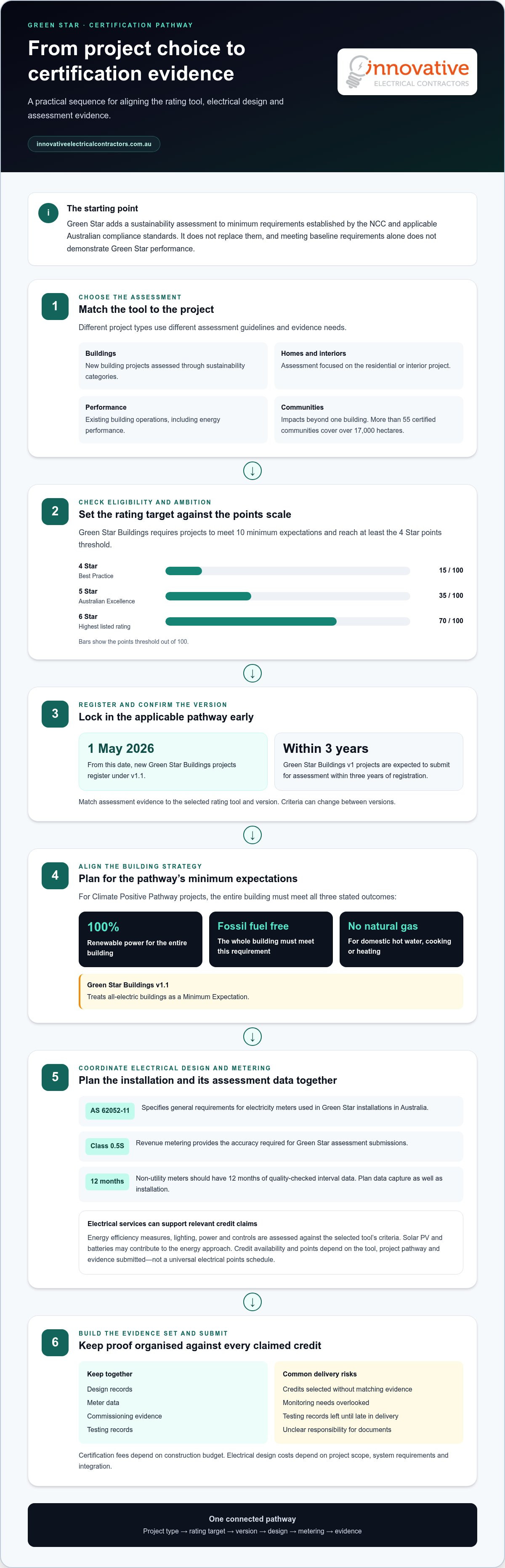
Green Star is broader than an electrical checklist. Green Star building certification electrical standards sit within a sustainability rating that assesses buildings across eight categories, with 4, 5 and 6 Star certification levels. Electrical design and metering can contribute to the assessment, but certification covers the wider project.
It’s easy to assume Green Star applies only to new commercial buildings. In Australia, its tools also cover homes, interiors, building performance and communities, so the right pathway depends on the project type.
This guide explains what Green Star is, how certification works and which tools may apply. You’ll also learn about relevant electrical standards, eligibility basics and how electrical planning can support a building’s performance goals. It offers a clear starting point for anyone planning a project or making sense of its sustainability requirements.
Table of Contents
Green Star certification process
Green Star assessment considers sustainability outcomes alongside electrical design. Since 1 May 2026, new Green Star Buildings projects register under v1.1, with assessment evidence matched to the selected rating tool.
Green Star and minimum compliance
Green Star adds sustainability assessment to the minimum requirements established by the NCC and applicable Australian compliance standards; it doesn’t replace them. Meeting baseline requirements alone does not demonstrate Green Star performance.
For Climate Positive Pathway projects, the entire building must be powered by 100% renewables, be fossil fuel free, and use no natural gas for domestic hot water, cooking or heating. Green Star Buildings v1.1 treats all-electric buildings as a Minimum Expectation.
Referenced electrical standards
AS 62052-11 specifies general requirements for electricity meters used in Green Star installations in Australia. Identifying the applicable meter standard early helps teams plan for assessment evidence and building performance monitoring.
Class 0.5S revenue metering provides the accuracy required for Green Star assessment submissions. Non-utility meters should have 12 months of quality-checked interval data, so teams need to plan for data capture as well as installation.
Electrical service credits and points
Green Star credits assess electrical services, lighting, power and controls against the sustainability criteria of the selected rating tool. Credit availability and points depend on the tool, project pathway and evidence submitted, rather than a universal electrical points schedule.
Energy efficiency measures and controls can support relevant credit claims, while solar PV and batteries may contribute to a project’s energy approach. The Climate Positive Pathway sets a specific outcome: the whole building must use 100% renewable power and be fossil fuel free.
Certification delivery, costs and risks
Delivery begins with choosing the rating tool, registering the project and aligning design decisions with the credits pursued. Green Star Buildings v1 projects are expected to submit for assessment within three years of registration. Keep design records, meter data and commissioning and testing evidence organised against each claimed credit.
Certification fees depend on construction budget, while electrical design costs depend on project scope, system requirements and integration. Electrical work is priced after a quote request. Common risks include choosing credits without matching evidence, overlooking monitoring needs and leaving testing records until late in delivery. Assigning clear responsibility for documents helps prevent gaps.
Green Star tools for buildings, homes, interiors, performance and communities
The Green Building Council of Australia provides rating tools for different project types, rather than one assessment for every asset. Start by selecting the appropriate tool: commercial buildings, homes, interior fit-outs, operating assets and communities each have different assessment guidelines and evidence needs.
Electrical requirements therefore vary with the rating tool, building type and project version. State context can affect the applicable building requirements, while Green Star criteria follow the selected tool and version. For example, Green Star Buildings v1.1 requires projects to report nature-related metrics in line with TNFD’s draft guidance.
Buildings: Green Star Buildings assesses new building projects through its sustainability categories.
Homes and interiors: These tools focus assessment on the relevant residential or interior project.
Performance: A performance pathway assesses an existing building’s operational results, including energy performance.
Communities: Community-scale assessment considers impacts beyond an individual building. More than 55 Green Star communities have been certified, covering over 17,000 hectares.
Lighting energy and controls are assessed under the selected tool’s energy and performance criteria. Because requirements depend on the project pathway, design teams should document lighting loads, control strategies and how these are addressed in the project’s energy assessment. This shows how lighting choices support energy efficiency without assuming a universal control specification.
Version changes can also alter the assessment approach. Green Star Buildings v1.1 aligns embodied carbon reporting with NABERS and introduces a Nature Positive Pathway from 1 January 2028. For projects pursuing a 5 or 6 Star rating and registering from 2028, that pathway requires a 10% net biodiversity gain. These criteria influence the project evidence and design actions needed to achieve the intended rating.
For a project with electrical design requirements, commercial electrical planning can help connect the building’s systems with its broader performance objectives.
Green Star Buildings certification eligibility
Eligibility depends on project type, registration pathway and ability to meet Green Star Buildings criteria. For projects involving Green Star building certification electrical standards, the starting point is still the rating tool’s overall eligibility rules. The Green Building Council of Australia requires projects to meet 10 minimum expectations and achieve at least the points threshold for a 4 Star rating. A building’s environmental goals and evidence plan should shape its pathway.
Green Star Buildings offers three star ratings, each with a different points threshold. The rating reflects the points achieved across the assessment, while minimum expectations remain essential for certification.
4 Star: 15 out of 100 points, representing Best Practice.
5 Star: 35 out of 100 points, representing Australian Excellence.
6 Star: 70 out of 100 points, representing World Leadership.
Points alone aren’t enough. A submission must show that the project meets the tool’s minimum expectations and evidence requirements for every claimed credit. For Green Star building certification electrical standards, connect relevant electrical design decisions to the project’s documented credit claims. Plan records alongside the design work instead of leaving submission documents until the end.
The Climate Positive Pathway applies to Green Star Buildings projects seeking 5 or 6 Star certification that registered from 1 January 2023. Its environmental requirements need to inform design and supporting evidence. The selected rating and registration timing therefore matter before teams commit to credit strategies, including those involving electrical systems.
An optional Apartments Pathway is available for eligible Class 2 multi-unit residential projects. Eligible types include build-to-sell, build-to-rent, affordable housing, community housing and mixed-tenure housing. This option gives qualifying residential projects an assessment approach suited to apartments.
Project age and code context don’t automatically rule out registration. Projects subject to NCC 2019 or an older version may register for Green Star Buildings v1.1, but must follow v1.1 requirements. Where a credit baseline prescribes it, that includes using NCC 2022 or the latest version. Aligning the pathway, star rating and submission guidelines early helps teams plan how Green Star building certification electrical standards fit the project’s certification evidence.
What electrical standards and Australian Standards are referenced by Green Star certification?
Green Star references technical standards within particular assessment criteria, rather than replacing Australian building requirements with one universal electrical code. AS 62052-11 specifies general requirements for electricity meters used in Green Star installations. This gives project teams a named standard to consider when selecting metering equipment and organising assessment evidence.
Metering supports building performance monitoring, while energy management provides a wider operational framework. ISO 50001 is identified as the energy management framework for Green Star buildings. In practice, teams can connect meter selection, data collection and energy management planning, so the building’s performance can be assessed against its intended outcomes.
Some referenced modelling criteria concern connected building systems, not electrical equipment alone. AS 1668.2:2012 provides the fresh-air basis for Green Star reference-building modelling, with a permitted increase of up to 20%. Green Star Buildings modelling may require a 50% improvement in proposed-building fresh airflow for the Minimum Expectation, or a 100% improvement for credit achievement. These figures help explain why ventilation design and building energy modelling must be considered together.
NCC JV3 modelling also links building services to occupant comfort. The proposed building must achieve a Predicted Mean Vote between -1 and +1 across at least 95% of occupied-zone floor area, for at least 98% of annual operating hours. This is a modelling criterion, not a meter specification. Separating equipment standards from modelling benchmarks helps teams assign each requirement to the right design evidence.
For a commercial project, map each cited standard to its relevant system, design record and assessment evidence. That makes it easier to identify where metering, energy management or modelling information supports a credit submission. To plan the electrical scope around these requirements, discuss your electrical project.
Innovative Electrical Contractors: Commercial Electrical
Innovative Electrical Contractors provides Commercial Electrical and Electrical Services for projects where electrical design needs to support wider building performance goals. On a Green Star project, this can involve coordinating practical electrical requirements with the project team’s design and documentation process.
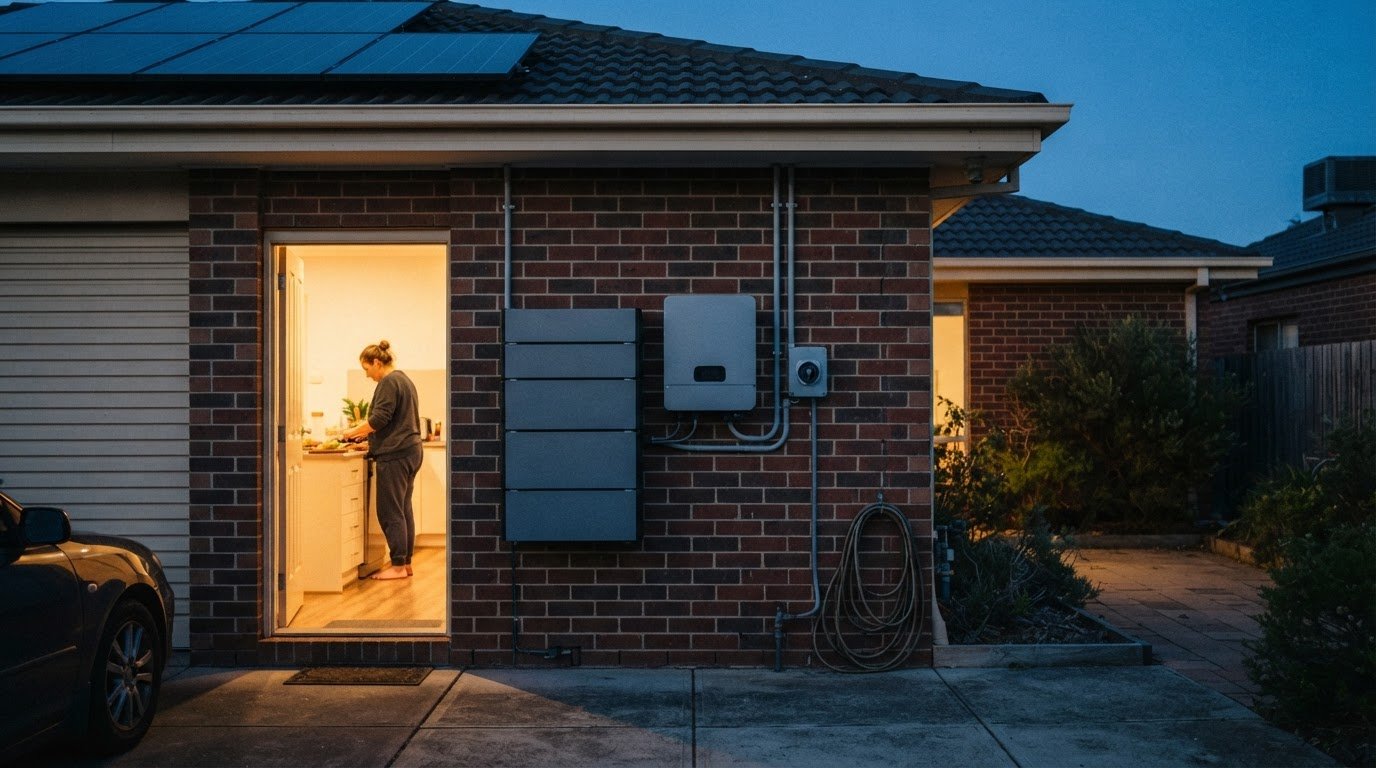
Planning a renewable energy system? Solar & Battery installations can support projects considering on-site energy generation and storage. Off-grid solar, battery and generator systems are also available for projects designed around independent power needs.
Discuss the electrical scope, intended systems and assessment priorities early in the project. Clear coordination can help align electrical work with the building’s design and operational needs, while leaving Green Star credit decisions to the project’s assessment team.
Contact Innovative Electrical Contractors to discuss your commercial electrical project.
Plan the electrical scope with confidence
Use the project’s intended Green Star rating pathway to guide the next design conversation. Turn the selected credits into a practical electrical brief: identify the systems involved, the information each must produce, and who will keep design, installation and operational records aligned. This gives the project team a shared basis for coordinating electrical design with energy and assessment priorities before decisions become difficult to change.
Building owners and project teams should avoid treating electrical choices as isolated equipment decisions. Consider how responsibilities, documentation and operational aims fit together. On active refurbishment and construction sites, practical site clearance is equally vital, with JD Rubbish Removal offering efficient waste collection across Melbourne to keep worksites organised. Green Star building certification electrical standards provide a useful planning reference, linking project intentions with the evidence needed to demonstrate performance.
To discuss the electrical scope for your project, speak with Innovative Electrical Contractors. A clear brief is a strong starting point, and a considered next step can help keep your project moving with purpose.
Frequently Asked Questions
What is Green Star?
Green Star is Australia’s sustainability rating system for buildings and other project types, established by the Green Building Council of Australia in 2003. It assesses environmental performance through project-specific criteria, rather than focusing on a single feature such as electricity use. For example, a project team can use its chosen rating tool to plan how energy, materials and other sustainability outcomes will be assessed.
Where can I see the full requirements?
Consult the Green Building Council of Australia’s guidance for the rating tool and version used by your project. The relevant tool documents explain credit criteria, minimum expectations, evidence and submission guidelines. Start with the project’s registered tool and version, then match each planned credit to its criteria. This clarifies which design records, calculations and supporting documents belong in the assessment submission.
What is Green Star building certification in Australia, and which rating tools cover electrical systems?
Green Star building certification assesses a project’s sustainability against the criteria of its selected Green Star rating tool. Electrical systems may be relevant to tools for buildings, homes, interiors and building performance, as well as broader community assessments. A new building’s energy design and an existing asset’s operational performance, for example, involve different assessment contexts. The project type helps determine which tool applies.
What commissioning, testing, and documentation are required for Green Star electrical systems?
Organise commissioning and testing evidence, design records and meter data against each claimed credit. The article gives no specific commissioning or testing procedures.
Comments