
GoodWe vs Sungrow Commercial Three-Phase Solar Inverters: How to Choose in 2026

What if the “better” commercial inverter is simply the one that fits your site? In a goodwe vs sungrow commercial three phase solar inverters comparison, brand reputation matters less than how each option suits your site loads, proposed capacity and plans for expansion. Comparing model ranges can be difficult, particularly when monitoring, battery compatibility and maintenance also affect the decision.
This guide explains how to compare the technical factors that shape commercial system performance and assess current GoodWe and Sungrow options on a like-for-like basis. Inverter sizing, operating requirements and plans for storage or expansion matter more than a headline specification alone.
We’ll also cover monitoring, system compatibility and practical maintenance considerations. Use these points to identify an inverter approach that fits your site and longer-term energy plans. Inverter selection is part of commercial electrical and solar system design, so assess it alongside site loads and the wider energy system, not as a standalone brand choice.
Table of Contents
GoodWe vs Sungrow commercial three-phase solar inverters: what should businesses compare?
Compare GoodWe and Sungrow commercial inverter specifications side by side
GoodWe vs Sungrow: assess reliability, support and compliance for commercial sites
Use this checklist to choose the right commercial three-phase inverter
Plan a commercial solar installation around the inverter that fits your site
GoodWe vs Sungrow commercial three-phase solar inverters: what should businesses compare?
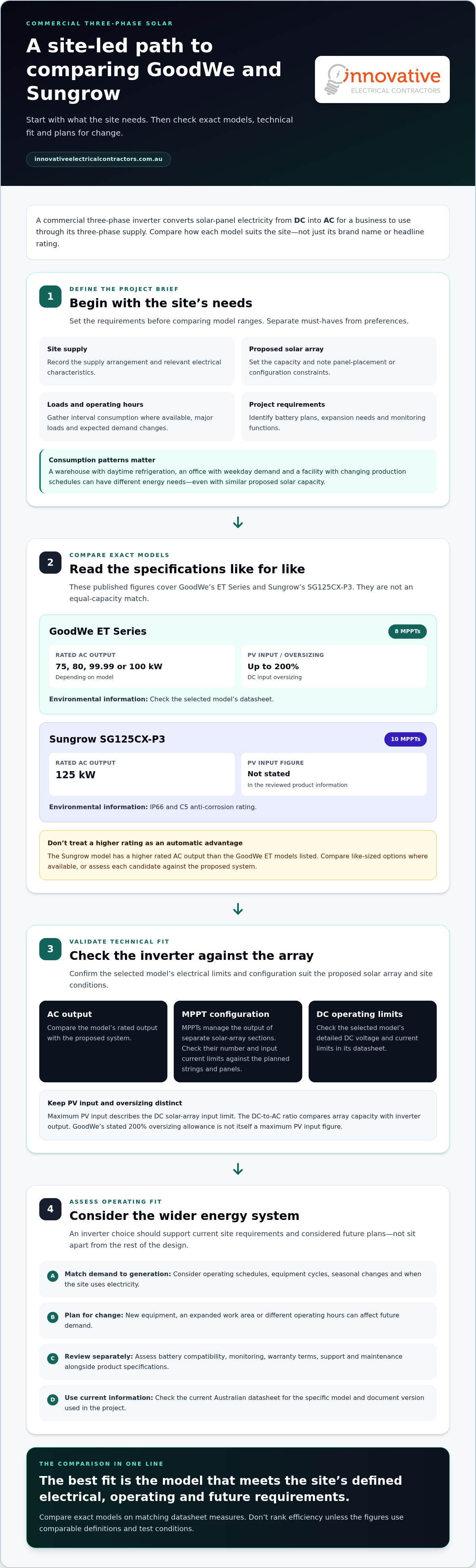
Choose an inverter by how well it suits the site, not by brand name alone. The goodwe vs sungrow commercial three phase solar inverters comparison is most useful when you first define what the system needs to do. A warehouse with daytime refrigeration, an office with weekday demand and a facility with changing production schedules can have very different energy needs, even if their proposed solar capacity is similar.
Definition: A commercial three-phase inverter converts the direct current (DC) electricity produced by solar panels into alternating current (AC) electricity that a business can use through its three-phase supply.
That conversion is only one part of the inverter’s role. Its operating range and configuration affect how the solar array connects and how the system responds to changing sunlight. For a general overview of inverter functions, including DC-to-AC conversion and maximum power point tracking, see the Solar Inverter Wikipedia page.
Why commercial three-phase systems need a project-led comparison
Business consumption often follows operating schedules, equipment cycles and seasonal changes. Start with when the site uses electricity, not just its total consumption. Daytime demand may align well with solar generation, while evening operations or planned shifts can change the value of storage and the way the system should be sized.
Allow for likely changes, too. New equipment, an expanded work area or different operating hours can affect future demand. Consider inverter selection alongside the array, electrical infrastructure and any battery plans, rather than treating it as a standalone brand decision.
Which details should be fixed before comparing brands?
Build a clear project brief before comparing model ranges. Separate requirements the site must meet from preferences that can guide the final choice. This makes datasheets easier to compare and avoids assuming that a familiar brand or nominal capacity is automatically suitable.
Site supply: Record the supply arrangement and relevant electrical characteristics for the proposed connection.
Solar capacity: Set the proposed array size and note any design constraints that affect panel placement or configuration.
Load information: Gather interval consumption where available, operating hours, major loads and expected changes in demand.
Project requirements: Identify battery plans, expansion needs and monitoring functions, separating essential features from preferences.
Use this brief to compare current Australian model datasheets, since product ranges and specifications can change. Check that each shortlisted inverter’s electrical limits and configuration suit the proposed array and site conditions. Then compare preferences such as monitoring and how the system will fit into day-to-day operations.
A project-led comparison gives GoodWe and Sungrow models the same test: how well does each option meet the site’s defined needs? Commercial and industrial electrical experience helps bring the supply, loads and solar design together, so the inverter supports current requirements and a considered path for future plans.
Compare GoodWe and Sungrow commercial inverter specifications side by side
A useful comparison starts with the exact model, not a brand-wide claim. The figures below are published product information for GoodWe’s ET Series and Sungrow’s SG125CX-P3. They show some meaningful differences, but you should still check the current Australian datasheet for the specific model and document version used in a project.
These products aren’t an equal-capacity match: the Sungrow model has a higher rated AC output than the GoodWe ET models listed. Compare like-sized options where available, or assess how each candidate fits the proposed system instead of treating a higher rating as an automatic advantage. Maximum efficiency figures are omitted because the reviewed information doesn’t establish matching definitions and test conditions. Don’t rank products by efficiency unless the figures are comparable.
How to compare power, inputs and operating limits
Rated AC output is the inverter’s stated output capacity. Maximum PV input describes the DC solar array input limit, while the DC-to-AC ratio compares array capacity with inverter output. GoodWe’s stated 200% oversizing allowance is not itself a maximum PV input figure. Check the model-specific limits against the proposed array design.
MPPTs manage the output of separate solar-array sections. Compare their number and input current limits with the planned strings, panel characteristics and roof layout. If a datasheet field is unavailable or defined differently, mark it as not directly comparable rather than estimating.
Which monitoring and integration details matter?
Monitoring affects how a business reviews generation, detects faults and tracks system performance. Compare current manufacturer documentation for reporting functions, communications and monitoring access. Then check how the proposed inverter fits with the selected battery, meter and site energy-management design. Compatibility depends on the specific equipment and configuration, so don’t infer it from a brand name alone.
GoodWe’s ET Series is a hybrid range, with a stated battery voltage range of 300-800 V. That figure shouldn’t be compared directly with a string inverter that has no equivalent battery input specification. Treat storage integration as a system-design question alongside inverter choice and site requirements.
For project-specific commercial solar and electrical planning, see commercial solar and electrical solutions as part of a complete site design.
GoodWe vs Sungrow: assess reliability, support and compliance for commercial sites
Specifications describe what an inverter is designed to do. Warranty documents set out the manufacturer’s coverage and conditions. Neither tells the full story of how reliably a complete solar system will serve a business over time. For a fair goodwe vs sungrow commercial three phase solar inverters assessment, weigh these as separate parts of the decision.
Inverter efficiency measures conversion performance, warranty coverage defines specific manufacturer obligations, and whole-system reliability depends on design, installation, operating conditions and ongoing maintenance.
What to check in warranty and ongoing support
Compare the current Australian warranty document for each shortlisted model. Record its stated duration, start point, registration requirements, conditions and service process. Pay close attention to exclusions and use the document’s own wording, since coverage can depend on the exact terms and circumstances.
Coverage: Note the model and document version, then compare the stated term and applicable conditions.
Service process: Understand how faults are reported, assessed and handled under the documented process.
Monitoring: Consider what system information is available and whether it can help identify performance changes or fault indications.
A longer stated warranty is not, by itself, proof of better reliability. Monitoring can make issues more visible, but it doesn’t replace suitable system design, installation and maintenance. Also consider how fault visibility fits the site’s operating needs and who will use the information to plan a response.
How Australian grid and installation requirements affect selection
Grid connection is part of the project design, not a brand-level assumption. The applicable AS/NZS 4777 series requirements and current amendments should be considered for the installation. The relevant network service provider may also set project-specific connection requirements, so an inverter’s suitability depends on the site and proposed system configuration.
Commercial and industrial electrical design brings the inverter, site supply and solar system together. A qualified design and installation process can assess equipment against project requirements, including the connection arrangement and intended operation. This is particularly important where the site has specific load patterns, planned expansion or battery integration.
Review the applicable standard and current amendments for the project.
Include the relevant network service provider’s connection requirements in system planning.
Align the selected inverter and installation design with the site’s electrical and operating needs.
For a sound comparison, keep product performance, warranty terms, support processes and connection requirements in separate columns. This gives decision-makers a clearer basis for weighing options and helps ensure the final choice supports the complete commercial energy system, rather than relying on one headline measure.
Use this checklist to choose the right commercial three-phase inverter
A consistent selection process makes GoodWe and Sungrow proposals easier to compare. Start with the site’s actual energy use, then assess models against the same design assumptions. This helps distinguish a genuine fit from differences caused by proposal scope or incomplete project information.
A practical five-step comparison process
Document consumption and operating patterns. Review interval consumption, operating hours, daytime demand and major loads. Include seasonal or production changes that could affect when the site uses electricity.
Record supply and site characteristics. Note the supply arrangement, relevant electrical characteristics and any constraints that shape the installation. Set out the solar objectives and proposed array capacity.
Define storage and backup needs. State whether batteries are planned now, whether backup power is required and which loads would need support. These requirements can change the system architecture.
Shortlist suitable current models. Compare the latest manufacturer datasheets against the project design. Check that each candidate’s verified output, PV input limits and configuration suit the proposed array.
Review proposals on equal terms. Compare monitoring, warranty conditions, equipment integration and connection requirements using the same assumptions. Review design inclusions, exclusions and future-expansion provisions before deciding.
Keep a simple comparison record: list each project requirement, the evidence provided for each model and any unresolved design assumption. If one proposal assumes a different array size or battery arrangement, align those inputs before weighing the options. That makes the goodwe vs sungrow commercial three phase solar inverters decision clearer and more useful for the business.
For wider project context, the commercial electrical services guide explains how electrical work fits into property projects.
How to plan for batteries and future system changes
Battery plans affect more than storage capacity. Consider what the battery needs to do: shift solar energy to later use, support selected loads during an outage, or contribute to a broader energy-management plan. Backup objectives can influence inverter architecture, equipment selection and the design of the wider electrical system.
Separate confirmed needs from possible future changes. A planned production-line upgrade is different from a general hope that the site may expand one day. Record likely changes and the timeframe where known, then assess whether the design can accommodate them. Don’t assume that choosing a larger inverter automatically makes later expansion straightforward. System compatibility and design limits still matter.
The solar battery maintenance guide covers practical considerations for caring for a battery investment over time.
Innovative Electrical Contractors brings commercial electrical and solar installation experience to project planning, including battery systems. The commercial solar system design information explains how site loads, solar and battery plans, and electrical requirements fit together.
Plan a commercial solar installation around the inverter that fits your site
The right inverter is the one that fits the verified model specifications, site design and operating priorities. GoodWe and Sungrow both offer commercial options, but a product comparison is only useful when it reflects the actual installation, not a brand-wide assumption. The final decision should support how the business uses power and how the complete solar system is intended to operate.
What a project-specific assessment should bring together
A site assessment connects energy needs with the physical and electrical conditions of the property. Consider consumption patterns, suitable installation areas and existing electrical infrastructure as parts of the same design. This helps identify practical constraints early and gives the inverter comparison a clear project context.
Solar generation, battery storage and backup needs also influence one another. For example, a business planning to store surplus solar or support selected loads during an outage needs those goals reflected in the system design, rather than added as assumptions after inverter selection.
Clear assumptions make proposals easier to compare. They should show the design basis, proposed system components and any exclusions, so differences between options are visible. The goodwe vs sungrow commercial three phase solar inverters decision can then rest on a consistent view of the project and its priorities.
From inverter comparison to a coordinated installation
A considered project pathway starts with the business’s objectives and site requirements. The installer can bring together available site information, assess the electrical infrastructure and develop a system design around the intended solar, battery and backup functions. Review proposed components as a coordinated system, not as isolated products.
Professional installation puts the selected equipment in the context of the wider commercial electrical system. A joined-up approach keeps project requirements, equipment choices and the installation plan aligned. It also gives the business a clear basis for understanding what the proposed system is designed to do, without relying on unsupported assumptions about performance or outcomes.
Useful details to bring to an initial project discussion include:
Recent electricity consumption information and typical operating patterns.
Major electrical loads and any known changes to site operations.
Available roof or other installation areas and relevant site constraints.
Whether battery storage, backup power or future system changes are priorities.
Innovative Electrical Contractors provides commercial electrical work and solar and battery installations. Sharing these project details helps turn a brand comparison into a practical design conversation shaped around your requirements.
Ready to discuss your site, energy goals and system options? Discuss your commercial solar project.
Turn your inverter comparison into a clear project plan
Turn site priorities into a practical project brief. Note the information that will shape the design, including operating needs, electrical infrastructure, battery plans and possible changes to the site. This gives the project discussion a useful starting point and keeps the inverter decision connected to the system you need.
The goodwe vs sungrow commercial three phase solar inverters choice doesn’t need to be made on reputation alone. A project-specific review can identify which verified model suits your requirements and how it fits into the wider installation. Innovative Electrical Contractors brings commercial and industrial electrical experience together with solar and battery installation capability, including off-grid systems using solar, batteries and generators.
Ready to put your site requirements into a coordinated plan? Discuss your commercial solar project.
Frequently Asked Questions
Is GoodWe or Sungrow better for a commercial three-phase solar system?
Neither brand is automatically better for every site. In the goodwe vs sungrow commercial three phase solar inverters decision, the stronger option is the current model that matches the project’s electrical design, operating needs and documented requirements. For example, a site with a particular export constraint may prioritise different inverter capabilities from a facility focused on battery integration. Compare specific models and project proposals, rather than relying on brand reputation alone.
What should I compare when choosing a commercial solar inverter?
Compare more than rated output. Check the model’s PV input limits, MPPT arrangement, operating range, protections and any power-factor or export-control functions relevant to the design. Then look at monitoring, warranty terms and system integration separately. Check that each proposal covers the same solar array and electrical work. This helps reveal whether apparent differences come from the inverter or from different project assumptions.
Can GoodWe and Sungrow inverters work with commercial solar batteries?
Some models can be used in battery systems, but compatibility depends on the exact inverter, battery and system arrangement. A hybrid inverter may connect directly to supported storage, while another design may use a separate battery inverter. Review manufacturer compatibility information, electrical limits and control requirements for the specific components. Clarify whether the battery is intended for energy shifting, backup supply or another purpose, as that affects the system configuration.
How do I size a three-phase inverter for a commercial site?
Use interval consumption and load information, not annual electricity use alone. Identify when demand peaks, how much solar generation the site can use, and whether export limits affect the design. Assess the proposed panel array and inverter output together against model-specific input limits. A design review should consider major equipment and planned changes, then document why the selected capacity suits the site’s operating profile.
Do commercial three-phase solar inverters need network approval in Australia?
Grid-connected commercial solar systems generally need to follow the connection process set by the relevant distribution network service provider (DNSP). Requirements can depend on the proposed system, inverter and export arrangement, so the process is specific to the site and network. The design also needs to address applicable Australian requirements, including the relevant AS/NZS 4777 series provisions. Consider network requirements before finalising the system design and connection arrangements.
Are GoodWe and Sungrow inverter warranties the same in Australia?
No, warranty terms can differ by manufacturer, model and applicable Australian documentation. Compare the exact documents for the shortlisted units, including the coverage period, conditions, any registration steps and how a service request is handled. Don’t assume a warranty for one product in a brand’s range applies to another. Keep the relevant document with the installation records so the business can refer to the correct terms if support is needed.
Can a commercial solar system be expanded later?
Expansion may be possible, but it depends on the original design and the site’s future electrical capacity. Check available roof or installation space, inverter input capacity, switchboard provisions and network export conditions. Adding panels, another inverter or battery storage later may involve compatibility and control considerations, particularly if new equipment differs from the original system. Recording likely growth plans during initial design can make future options clearer without assuming expansion will be straightforward.
Comments