
Fujitsu vs ActronAir ducted reverse-cycle: which runs more efficiently?

The brand with the higher efficiency rating on paper might not use less energy in your home. A fair fujitsu vs actron air ducted reverse cycle running efficiency comparison starts with models of similar capacity, then considers how each system is designed, installed and operated. A rating alone can’t account for every property or household routine.
It’s understandable to want a clear answer about which brand will cost less to run. The useful answer depends on more than the name on the unit: zoning, controls, ductwork and correct system sizing all affect energy use. Australia’s Zoned Energy Rating Label (ZERL) helps you compare heating and cooling efficiency across hot, average and cold climate zones, including estimated annual energy consumption. This guide explains how to compare Fujitsu and ActronAir models on a like-for-like basis, interpret the relevant figures and account for factors that affect performance. It also covers what property and system details to gather before choosing a ducted reverse-cycle system, so your decision reflects your needs rather than broad brand claims.
Table of Contents
Fujitsu vs ActronAir ducted reverse-cycle efficiency: what are you comparing?
Which specifications reveal Fujitsu vs ActronAir ducted system efficiency?
Fujitsu vs ActronAir: how to make a fair running-efficiency comparison
How to estimate ducted reverse-cycle running efficiency for your home
Choosing and installing a ducted reverse-cycle system with confidence
Fujitsu vs ActronAir ducted reverse-cycle efficiency: what are you comparing?
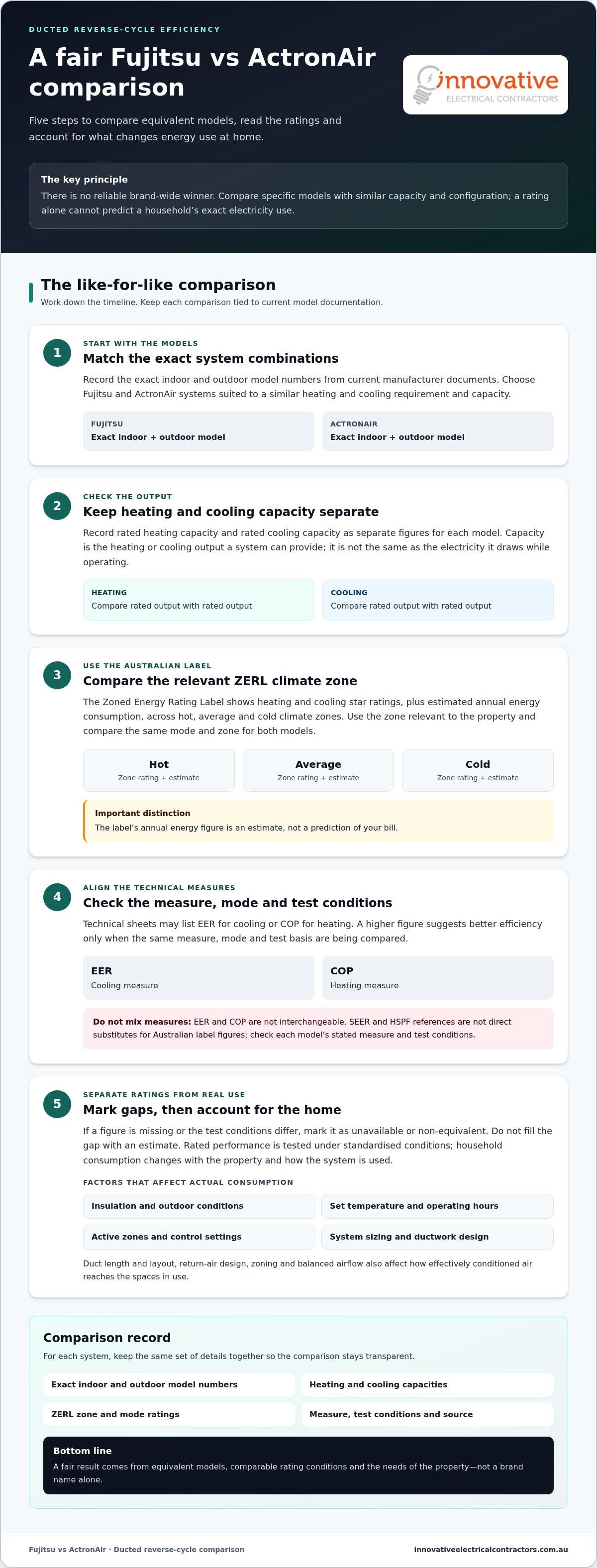
There isn’t a reliable brand-wide answer to which system uses less energy. A fujitsu vs actron air ducted reverse cycle running efficiency comparison needs to focus on specific models with similar capacity and configuration, while accounting for the design and installation in the property.
Running efficiency describes how much useful heating or cooling a system delivers for the electricity it consumes. Capacity is the heating or cooling output a system can provide; it isn’t the same as the electricity it draws while operating. Actual consumption also depends on insulation, outdoor conditions, set temperature, operating hours, active zones and the ductwork carrying conditioned air through the property.
Rated efficiency is measured under standardised test conditions; household energy use is the electricity recorded during real operation. The rating helps you compare systems consistently, but your meter reflects changing weather, building needs and operating habits.
What does running efficiency mean in a ducted reverse-cycle system?
A reverse-cycle air conditioner uses heat-pump operation to provide both heating and cooling. Its rated performance gives you a controlled point of comparison, while household energy use changes with outdoor temperatures and demand. Australian air conditioners display a Zoned Energy Rating Label, which shows ratings and estimated annual consumption across hot, average and cold climate zones. Choose the zone relevant to the property, but remember that the label estimate isn’t a prediction of your bill.
Efficiency terms can also vary between rating systems. The Seasonal Energy Efficiency Ratio (SEER) reference explains SEER alongside EER and HSPF, but those terms aren’t direct substitutes for Australian label figures. Check the measure and test conditions in each model’s current documentation. Without equivalent models and comparable data, naming a brand winner would be guesswork.
Why compare exact Fujitsu and ActronAir models?
A brand name covers systems that may differ in output, configuration and intended application. Comparing a smaller unit with a higher-capacity system, for example, won’t show which equivalent option uses electricity more efficiently. Start with models suited to a similar heating and cooling requirement, then compare like with like, including indoor and outdoor unit combinations where the documentation specifies them.
Installation matters too. Duct length and layout, return-air design, zoning and control settings affect how effectively conditioned air reaches the spaces in use. A strong rating can’t, on its own, account for an unsuitable design or poorly balanced airflow.
Model ranges and published specifications can change. Before drawing a conclusion, record the exact model numbers, capacity, rating measure and test conditions from current manufacturer documents. This gives you a sound basis for comparison instead of relying on broad brand claims or figures from unlike systems.
Which specifications reveal Fujitsu vs ActronAir ducted system efficiency?
Compare figures that describe the same type of performance under comparable conditions. In Australia, the Zoned Energy Rating Label (ZERL) displays heating and cooling star ratings for hot, average and cold climate zones, alongside capacity and estimated annual energy consumption for each zone. Start with the zone relevant to the property, then use each manufacturer’s current technical documents to check capacity and any additional efficiency measures.
Technical sheets may also list EER for cooling or COP for heating. These ratios describe cooling or heating output relative to electrical input under stated test conditions. A higher number suggests better efficiency only when the same measure, mode and test basis are being compared. Don’t compare one model’s EER with another’s COP, or assume a rating from another market uses Australian test conditions. The U.S. Energy Information Administration (EIA) on HVAC efficiency standards provides context on US rating standards, not Australian requirements.
How to read ducted system ratings and technical data
Record the exact indoor and outdoor model numbers, rated heating and cooling capacities, rating measure, test conditions and source document. The ZERL provides a useful climate-zone view, while a manufacturer’s technical sheet can supply further model-specific detail. If a figure is missing or the test conditions differ, mark it as unavailable or non-equivalent rather than filling the gap with an estimate.
What ratings do not tell you about day-to-day energy use
A rated efficiency figure helps compare tested performance, but it can’t predict the exact electricity use or bill for a particular home. Outdoor temperature, set temperature, operating hours and active zones all affect how much the system runs. Duct losses or restricted airflow can also reduce how effectively heating or cooling reaches the rooms.
Energy consumption and bill cost are different measures. A bill also depends on the household’s electricity tariff and billing arrangements, so a model rating alone can’t establish what a household will pay. For a sound fujitsu vs actron air ducted reverse cycle running efficiency comparison, keep verified performance figures separate from estimates of actual use. When planning an installation, consider air-conditioning installation for your property alongside the system’s rating, duct design and controls.
Fujitsu vs ActronAir: how to make a fair running-efficiency comparison
A useful comparison starts with the building, not the brand. First establish the heating and cooling capacity the property needs, then identify Fujitsu and ActronAir systems suited to that same requirement. Comparing different brand tiers or similar-sounding product ranges can put systems with different outputs, configurations or intended uses side by side, making their efficiency figures difficult to interpret.
Match system capacity and configuration before comparing brands
Look beyond nominal capacity. Compare the ducted arrangement, indoor and outdoor unit combination, zone layout and control options where manufacturers publish relevant details. An oversized or undersized system may affect comfort and operation, so a close capacity match is a starting point, not proof that two installations will perform identically. Let the building’s heating and cooling needs guide the shortlist.
Use a transparent evidence table, not a brand ranking
Record the manufacturer document beside every figure, including the date you checked it. The table below provides a consistent format for reporting evidence without filling gaps with guesses. Enter the exact model details and ratings from current manufacturer documentation for both brands.
Use the same reporting method for both brands. Keep published ratings separate from measured household electricity use or a modelled estimate. If capacity, rating method or test conditions don’t align, label the figures “non-equivalent” rather than ranking them. That makes the comparison’s limits clear and shows what evidence is still needed.
No reliable brand winner can be named without comparable, model-specific evidence for systems suited to the same building needs. Once the evidence is matched, state only what it supports: one model may have a stronger rating for a particular mode or climate zone, but that doesn’t establish a universal winner. A fair answer to the fujitsu vs actron air ducted reverse cycle running efficiency question depends on the exact models, their published data and the property they’re being considered for.
How to estimate ducted reverse-cycle running efficiency for your home
A useful estimate combines the system’s published information with the way your household actually uses it. It won’t predict an exact bill, but a consistent record helps you compare options and spot assumptions that could skew the result. For broader selection context, the Australian air conditioner buying guide covers factors to consider when choosing a system.
A practical process for comparing likely energy use
Gather the system documents. Write down each exact indoor and outdoor model number, rated heating and cooling capacity, relevant Zoned Energy Rating Label figures and the manufacturer’s stated test conditions. Note the document name and date beside each figure. If a rating or capacity isn’t available, mark it as unavailable rather than estimating it.
Describe the property and its use. Note the rooms served, zone arrangement and relevant insulation or building features. Keep a simple operating diary over a representative period, recording the hours the system runs, the selected temperature and active zones. Include periods when no heating or cooling is needed so the record reflects actual use.
Compare equivalent options and state your assumptions. Put systems with similar capacity and configuration side by side. Keep published rating data separate from measured electricity use or any estimate you calculate. Record the weather and usage period, along with assumptions about future operating habits. If the inputs differ, flag the comparison as limited rather than forcing a ranking.
Operating choices that can change efficiency
Your diary is most useful when it reveals patterns. A household that runs the system for long periods has a different energy-use profile from one that uses it briefly in selected areas. Set temperatures also matter: choosing a moderate, comfortable setting and using a schedule that matches occupancy can help avoid unnecessary operation. There’s no universal schedule for every household, so use your own routine as the reference.
Zoning can direct conditioned air to the areas in use, but it doesn’t guarantee greater efficiency. The outcome depends on the system design, zone configuration, controls and how the zones are operated. A poorly matched layout or restricted airflow may affect comfort and performance, even if the controls seem straightforward.
If performance changes or rooms aren’t reaching a comfortable temperature, the system’s condition, airflow and controls may need assessment. Innovative Electrical Contractors provides air-conditioning installation and maintenance. For a new system, air-conditioning installation suited to your property brings the building’s requirements and operating habits into the planning. Any estimate depends on the quality of its inputs; it isn’t a guaranteed bill or promise of savings.
Choosing and installing a ducted reverse-cycle system with confidence
A sound decision brings together verified model information, the property’s heating and cooling needs, and a system design that suits the building. Fujitsu and ActronAir ratings can help you compare suitable models, but brand preference alone can’t account for capacity, duct routes, zone use or how the controls fit your routine. The aim is a well-matched system, not a brand-wide verdict.
What a project-specific system assessment should account for
Start with the property. Its layout, the rooms to be conditioned and their expected use help shape the required capacity and zone plan. Duct routes and return-air arrangements affect how conditioned air moves through the building, while control choices influence how occupants operate the system. Consider electrical requirements as part of the overall installation, rather than as a separate afterthought.
These factors work together. A system that looks suitable on a rating sheet may not be the best fit if its capacity or configuration doesn’t align with the building. For new builds, planning climate control early can help coordinate it with other electrical needs. The electrical planning guide for new homes provides relevant context for that process.
Turn the comparison into a practical next step
Before choosing, gather the exact indoor and outdoor model numbers, rated heating and cooling capacities, comparable rating figures and their test conditions. Add your operating assumptions, such as which zones you expect to use and when the system will typically run. This makes it easier to distinguish manufacturer ratings from estimates of household use and identify information that doesn’t line up.
Installation quality matters because system design must be translated into correctly arranged ductwork, suitable airflow and controls that work as intended. Commissioning involves checking the installed system’s operation and settings, so issues can be identified before the system is relied on day to day. It supports a considered installation, but doesn’t guarantee a particular level of energy use or savings.
Innovative Electrical Contractors provides air-conditioning installation for residential and commercial properties, with a solution tailored to the building and its needs. The air-conditioning installation service considers model data, layout, duct design and controls together. A clear assessment can make efficiency trade-offs easier to understand, whether you’re weighing the fujitsu vs actron air ducted reverse cycle running efficiency question or comparing other suitable options.
Make your next system decision with confidence
The most useful outcome of comparing Fujitsu and ActronAir isn’t a brand label. It’s a clearer brief for the property: what comfort it needs, how the spaces are used and which trade-offs matter to you. That gives you a practical foundation for weighing fujitsu vs actron air ducted reverse cycle running efficiency against how your home or workplace will actually operate.
For a new build or broader upgrade, consider air conditioning alongside electrical and renewable energy requirements so the property’s needs stay in view as decisions take shape. Innovative Electrical Contractors provides air-conditioning installation for residential and commercial customers, as well as wider electrical and renewable energy services for property projects.
To plan an air-conditioning installation, discuss your property and requirements with Innovative Electrical Contractors.
Frequently Asked Questions
Is Fujitsu more efficient than ActronAir for ducted reverse-cycle air conditioning?
Neither brand is automatically more efficient across every ducted model. The fujitsu vs actron air ducted reverse cycle running efficiency result depends on the specific systems being compared, their rated capacity and the test basis for the published figures. A model that performs well for one property or climate zone may not be the best match elsewhere. Compare current documentation for models suited to the same requirements before deciding.
How can I compare the running efficiency of two ducted air conditioners?
Start with each system’s full model details, then compare the same heating or cooling mode and equivalent rating information. For example, if you’re assessing heating, don’t use one system’s cooling figure as the comparison. Check the relevant climate-zone rating and note differences in capacity or test conditions. If the documents don’t provide equivalent data, treat the result as inconclusive rather than ranking the systems.
Does a higher efficiency rating always mean lower electricity use?
No. A higher rating indicates better performance under the applicable test method, but electricity use also depends on the amount of heating or cooling demanded. A system run for longer periods or used to condition more rooms may consume more power than a higher-rated system used briefly in a smaller area. Ratings help compare equipment; they don’t account for every household’s day-to-day use.
Can ducted zoning reduce reverse-cycle air-conditioning energy use?
It can help direct heating or cooling to selected areas, which may avoid conditioning unoccupied rooms. The benefit depends on how the zones are designed and used, and whether the system operates properly with that arrangement. For instance, regularly closing zones without considering the system’s design may affect airflow. Zoning should suit the household’s room-use patterns, rather than being treated as a guaranteed way to cut energy consumption.
What affects the running efficiency of a ducted reverse-cycle system?
System sizing and installation are important, but the building itself also shapes performance. Large windows, limited insulation or rooms exposed to strong afternoon sun can increase heating or cooling demand. So can frequent changes to the set temperature or running the system in areas that don’t need conditioning. If performance seems to have changed, airflow obstructions, control settings and the system’s condition are useful points to assess.
Can I estimate ducted air-conditioning running costs from the efficiency rating alone?
No. A rating doesn’t tell you the exact electricity the system will use in your home, and it can’t calculate a bill on its own. A cost estimate also needs an energy-use estimate based on operating hours and conditions, plus the applicable electricity tariff and billing arrangements. Treat any result as an informed estimate, not a promised bill or saving, and keep the assumptions visible so you can revise them.


Comments