
Commercial Solar: A Guide for Australian Businesses

Updated: Oct 2
Could the biggest solar system that fits on your roof be the wrong choice for your business? If you're comparing commercial solar installation options, the right design depends on more than available roof space. Your site, electricity use and operating hours all matter.
Before committing, you need to know whether your premises are suitable, how proposed systems differ and what installation could mean for day-to-day operations. Price alone won’t show whether a proposal fits your business or what support is available after installation.
This guide explains what information helps assess a commercial site, how to compare system designs and proposals, and what to check about warranties, support and installation planning. It also covers the main project stages, so you can discuss site requirements, electrical work and potential disruption before approving a plan. Innovative Electrical Contractors can help coordinate these considerations around your business’s needs.
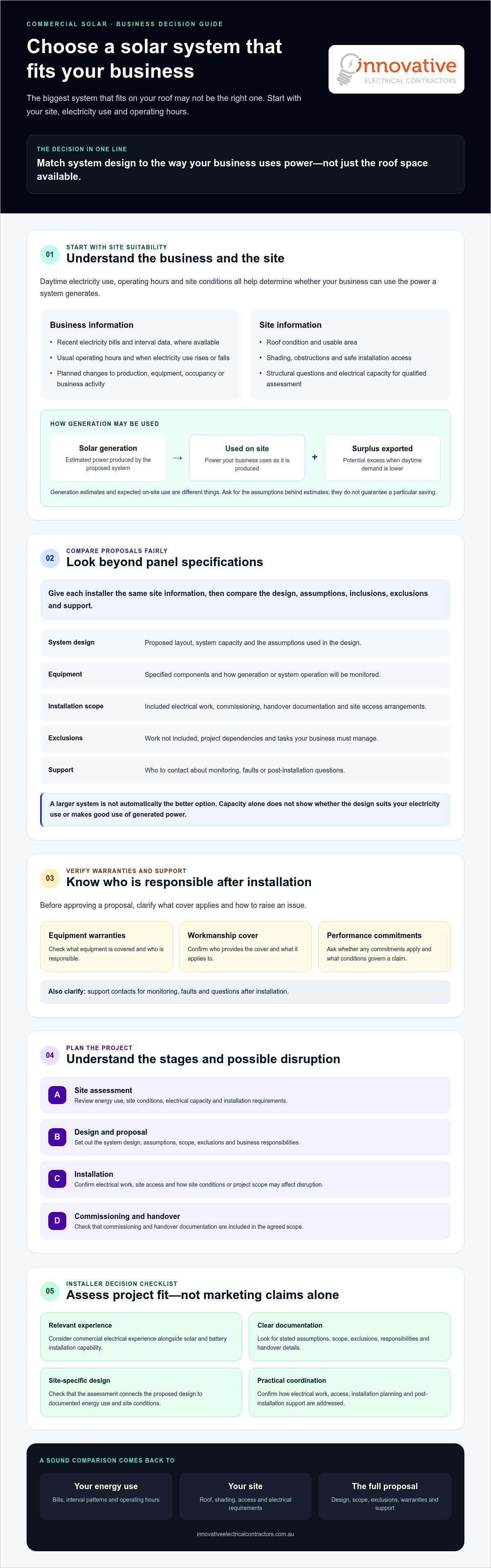
Key Takeaways
Assess daytime electricity use, operating hours and site conditions before deciding whether solar suits your business.
Compare commercial solar installation melbourne proposals against the same assumptions, including system design, equipment, scope, exclusions and support.
Check who is responsible for equipment warranties, workmanship cover and any performance commitments, and understand the conditions for making a claim.
Plan each project stage, from site assessment and design to installation and commissioning, and confirm how site conditions and scope may affect disruption.
Use a practical installer checklist to assess experience, documentation and project fit instead of relying on marketing claims alone.
Table of Contents
Is commercial solar installation right for your business? Start with site suitability
How to compare commercial solar installation proposals on more than panel specifications
Commercial solar warranties and support: what business buyers should verify
What happens during commercial solar installation and commissioning?
Choosing a commercial solar installer: a decision checklist and next steps
Is commercial solar installation right for your business? Start with site suitability
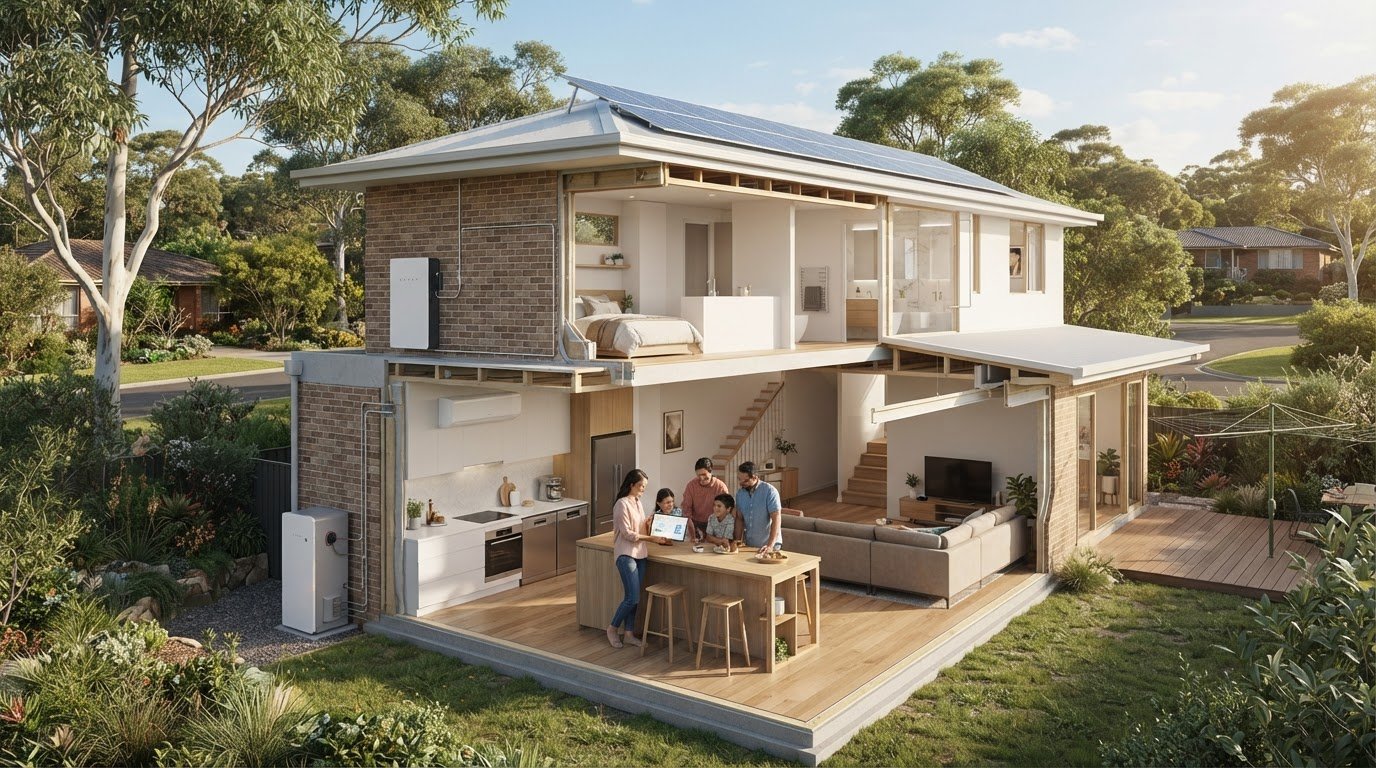
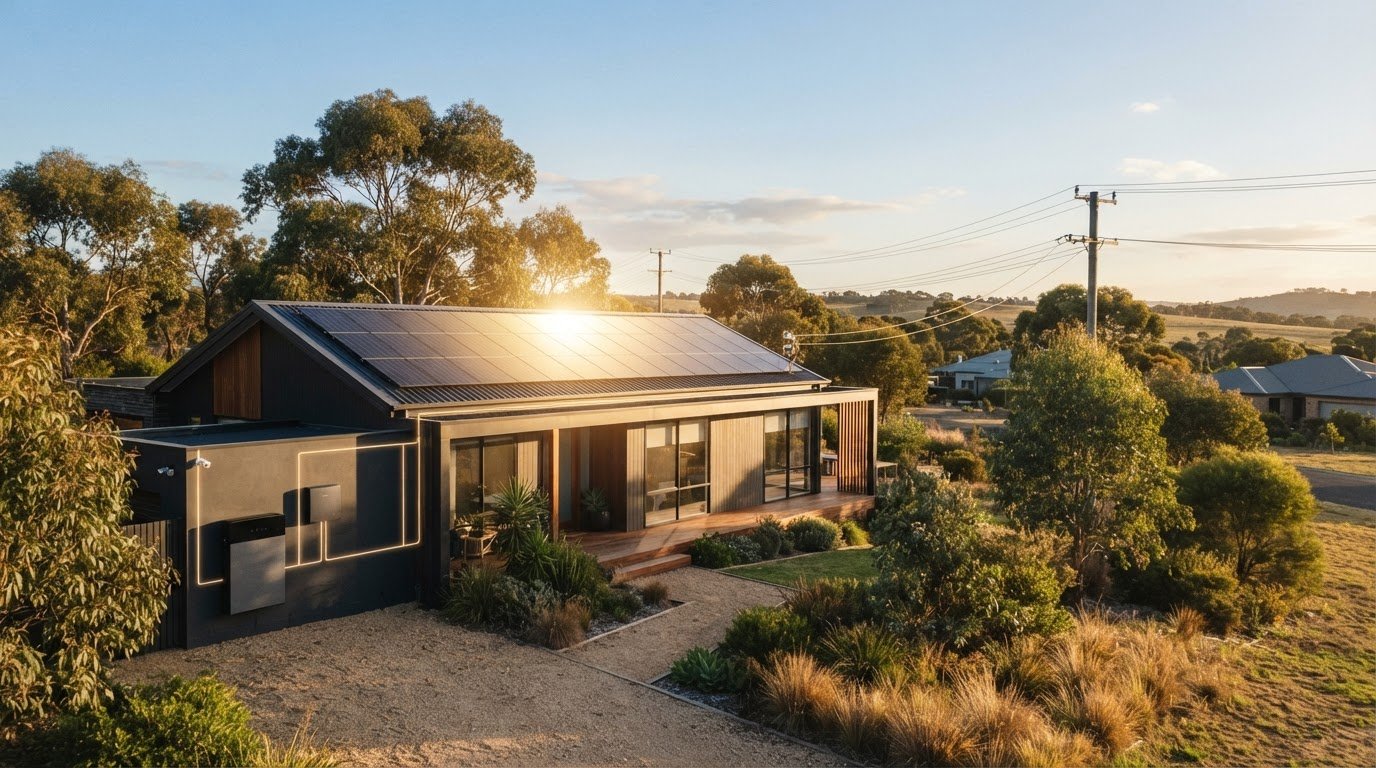
Commercial solar installation means designing and installing a solar system for a business site. Whether it’s a good fit depends on more than roof size. Daytime electricity use, operating hours and site conditions all affect how much of the generated power your business may be able to use directly. For businesses researching commercial solar installation melbourne, reviewing actual energy use is a practical place to start. Solar power in Australia provides broader context, but your site’s own data should guide its system design.
Recent electricity bills can show overall consumption and charges, while interval data, if available, can reveal when usage rises and falls. Compare that pattern with operating hours. A business that uses more power during sunny periods may use more solar generation on site; a business with lower daytime demand may export more to the grid. These records can inform a proposal, but they don’t guarantee a particular saving.
What information helps assess a commercial solar site?
Gather several recent electricity bills, interval data where available, usual operating hours, and any planned changes to production, equipment or occupancy. Note the roof’s condition, usable area, shading and access, as well as any structural questions that need assessment. Ask a qualified professional to assess electrical capacity and site-specific installation requirements. Together, this information helps an installer consider the business and site as a whole.
How do energy use and system size fit together?
A suitable system should reflect both the site’s physical limits and the business’s load profile, rather than simply filling all available roof space. Ask the designer to distinguish estimated generation from the electricity your business is expected to use as it is produced, and from any surplus expected to be exported. Request the assumptions behind generation and performance estimates so you can compare proposals consistently.
Quick site-suitability checklist:
Roof: Is its condition and usable area understood, and have structural questions been identified for assessment?
Shading and access: Have potential obstructions and safe installation access been considered?
Switchboard: Has a qualified professional assessed electrical capacity and any site-specific requirements?
Future demand: Could planned changes to operating hours, equipment or business activity affect electricity use?
Commercial electrical experience alongside solar and battery installation capability can support coordinated project planning. Look for a site assessment that connects the design to documented energy use and clearly stated assumptions.
How to compare commercial solar installation proposals on more than panel specifications
A larger system isn’t automatically the better option. Capacity alone doesn’t show whether a design suits your site, matches your electricity use or makes good use of the power it generates. To compare commercial solar installation melbourne proposals fairly, give each installer the same site information and ask them to state their assumptions, scope and exclusions clearly.
Which system and installation details should a proposal include?
Look beyond panel specifications. Check the proposed layout, equipment details, monitoring approach and assumptions behind estimated generation. Confirm whether the scope includes required electrical work, commissioning and handover documentation, and how site access will be arranged. Each proposal should set out dependencies, exclusions and tasks your business must manage.
How can businesses compare proposals fairly?
Give each installer the same bills, interval data and site details, then compare estimated generation and performance on a like-for-like basis. Check whether proposals explain how much power is expected to be used on site versus exported, and whether export limits, connection requirements and relevant approvals have been considered. Ask for unclear assumptions to be explained in writing before deciding.
Applicable Australian standards, network requirements and incentive eligibility can depend on the project and its equipment. Ask the installer to identify what applies to your proposed system and how relevant requirements will be addressed. Check incentive details against current scheme rules rather than assuming eligibility or value from a headline estimate. The Clean Energy Council's guide to buying solar also offers useful prompts for reviewing quotes, installers and contract details.
Keep a comparison sheet and record questions as you review each offer. An installer with commercial electrical and solar experience may be able to coordinate those parts of project planning; ask how the proposed scope reflects your site’s requirements. You can also review commercial electrical and solar services as one point of reference when assessing installer capability.
Commercial solar warranties and support: what business buyers should verify
A warranty headline doesn’t tell you who will handle a fault or what evidence you’ll need to make a claim. For commercial solar installation melbourne proposals, review the actual warranty documents alongside the installation scope. Separate equipment warranties from installer workmanship cover and any performance commitments. These may come from different parties and have different conditions.
What should a commercial solar warranty comparison cover?
Check which parts of the system are covered and whether each has a separate warranty document. Record the stated duration, start date, conditions, exclusions, and any maintenance or claim evidence requirements. Ask who receives a claim first, who assesses it and who coordinates any manufacturer or distributor escalation. Treat performance estimates as separate from a performance commitment, and ask for the terms of any commitment in writing.
Confirm the equipment’s exact make and model, who supplied it, and which business is responsible for warranty support. Distributor assistance depends on the documented supply chain and confirmed service arrangements, so don’t rely on verbal assurances or assume a particular brand’s warranty applies. To see how specialised component and hardware distributors operate across the region, discover SM Solar. Ask for current documents that match the equipment in the proposal, and clarify whether any warranty can be transferred if the premises or business changes ownership.
What does dependable after-installation support look like?
Before approving the project, ask how monitoring issues, faults and service requests are reported and assessed. Confirm the contact point, the steps for logging a request and any limitations on the support offered. Get these details in writing, so you know who to approach if the system stops reporting data or appears to be operating differently than expected.
Request handover information your staff can use, including system operation guidance, shutdown procedures and instructions for accessing monitoring. Check that the documents identify the installed equipment and explain where to find relevant manuals and warranty terms. Keep copies with your site records and make sure the people responsible for the system know where they are.
Before signing, check that you have:
Separate, current warranty documents for the specified equipment and installation workmanship.
Written details of duration, conditions, exclusions, maintenance requirements and claim evidence.
A clear explanation of who handles claims and any manufacturer or distributor escalation.
Documented support contacts, reporting steps and service limitations.
Handover documents covering operation, shutdown and monitoring access.
An installer’s commercial electrical and solar experience may help coordinate installation and handover responsibilities. Ask the proposed installer to confirm its workmanship cover and after-installation support terms rather than relying on assumptions.
What happens during commercial solar installation and commissioning?
A commercial solar project moves through several stages, from initial discovery to system handover. The installer gathers site and energy information, assesses the premises, then develops a design and confirms the work scope. Any required approvals and network coordination should be addressed before installation is scheduled. The order and duration depend on site conditions, project scope and approval processes, so ask for a project-specific programme rather than assuming a fixed timeframe.
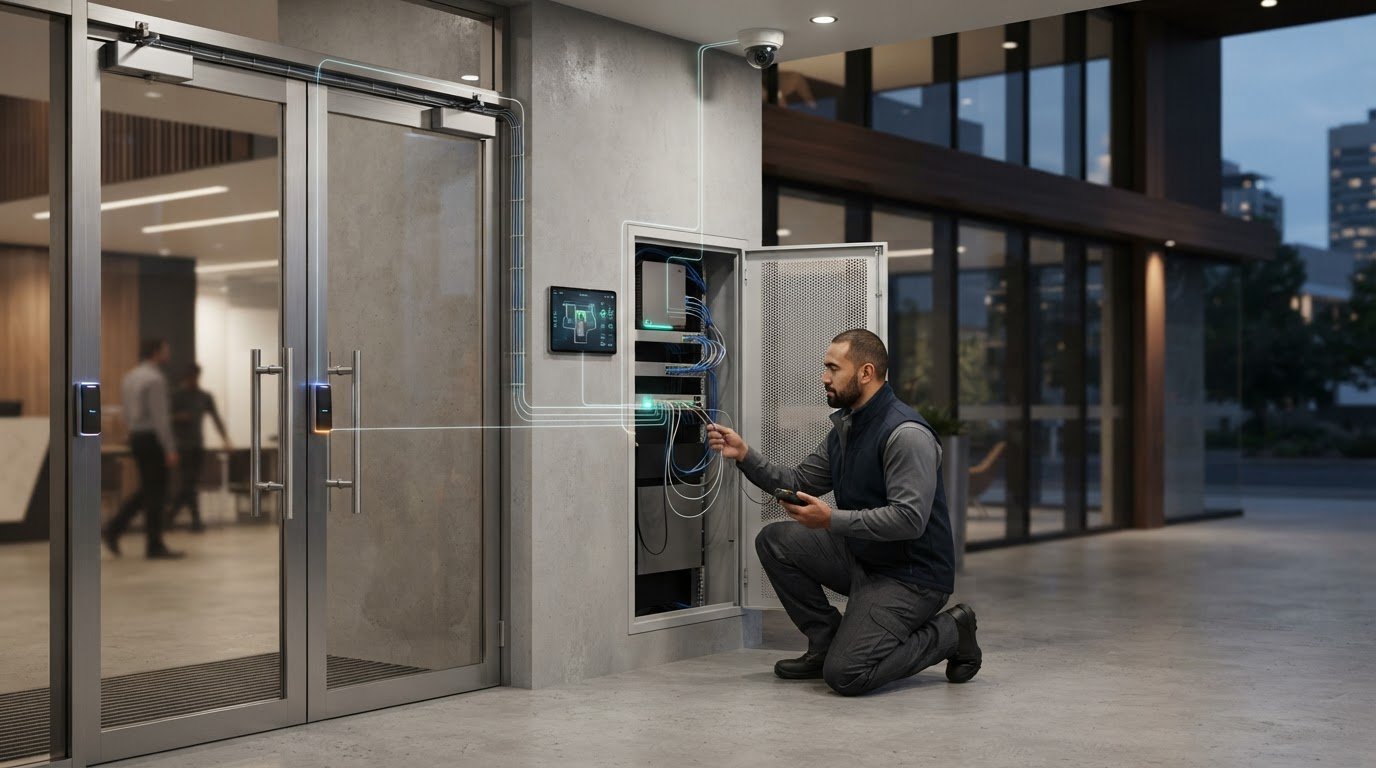
Installation planning should account for how the business operates. Work may involve deliveries, access to electrical areas or temporary changes to how parts of the site are used. Ask the installer to explain planned activities and timing, so site managers can coordinate with staff and affected teams. Identify practical constraints early rather than discovering them on installation day.
How should a business prepare for installation?
Nominate a site contact to coordinate access and questions. Before work begins, agree on site access, safety requirements, work areas and delivery arrangements with the installer. Explain operational constraints, such as busy periods or areas that need to remain available, and discuss any planned shutdowns. Confirm in writing who is responsible for approvals, network coordination and project documentation before agreeing on a schedule.
What should happen at handover?
Once the system is installed, commissioning involves checks to confirm it has been set up and is operating as intended. Ask the installer to explain which checks are performed, how monitoring is configured and what happens if an issue is identified. Request commissioning records and relevant approval information as part of the handover, alongside equipment details and operating instructions.
Handover should leave nominated staff able to access monitoring and understand routine operating checks. Make sure they know where to find system documents and who to contact about faults, warranty claims or maintenance enquiries. Confirm those support processes, including any limitations, so responsibilities are clear after the installation team leaves.
Before the work is scheduled, confirm:
Who is the site contact, and how will access and safety requirements be managed?
Which areas or business activities could be affected, and how will teams be notified?
Who is coordinating approvals, network matters and required records?
What documents, monitoring access and support information will be provided at handover?
Clear coordination between commercial electrical and solar work can help keep project responsibilities visible from planning through handover. To discuss commercial solar and electrical services, ask a provider how its proposed process would fit your site’s operating needs.
Choosing a commercial solar installer: a decision checklist and next steps
The right installer should explain how its proposal fits your site, not just promote equipment or headline performance claims. Assess capability against the complexity of your project, including your electrical setup, operating requirements and any planned expansion. Reputable providers such as Tally Energy Group emphasise custom solutions matched to actual energy consumption. A clear scope, realistic project plan and documented support arrangements are more useful decision tools than marketing language alone.
Ask who will assess the site, prepare the design, carry out the installation and commission the system. Confirm the relevant licences, qualifications, insurance and any current accreditation for the work, then verify these before deciding. Request written details of project exclusions, warranty responsibilities and after-installation support. The answers should make clear who is accountable at each stage.
Use this checklist to compare providers:
Relevant experience: Can the installer explain its experience with projects of a similar type and complexity?
Site assessment: Has the proposal been informed by the actual premises, electrical requirements and business operations?
Scope clarity: Are inclusions, exclusions, dependencies and your business’s responsibilities set out in writing?
Project delivery: Is it clear who manages design, installation, commissioning and required documentation?
Support: Are warranty contacts, claim pathways and after-installation processes documented?
How can a business move from comparison to a project brief?
Bring together site information, electricity bills or interval data, operating constraints and plans for future changes. Include practical details such as access arrangements and business activities that could affect installation. A concise brief gives potential installers a consistent basis for assessing the project and identifying questions to resolve before finalising a proposal.
Consider how the solar project fits with broader electrical needs, particularly if the site may change or expand. Innovative Electrical Contractors provides commercial electrical services and solar and battery installations for businesses. Its stated capabilities also include industrial electrical work and off-grid solutions involving solar, batteries and generators. For related reading, see this guide to solar battery maintenance and the overview of commercial and industrial electrical solutions.
Once you’ve reviewed the checklist and gathered your project details, you can discuss a commercial solar project and outline your site requirements.
Make your next solar decision with confidence
A suitable commercial solar system starts with a clear view of your site, electricity use and operating needs. Compare proposals using consistent assumptions and a clearly defined scope, rather than relying on system size or panel specifications alone. Before approving work, confirm who is responsible for installation, commissioning, warranties and support.
For businesses considering commercial solar installation melbourne, careful planning helps connect the design to day-to-day operations and clarify project expectations. Site suitability, proposal detail and delivery quality all matter. Checking each one can help you choose a solution that fits your business, not just the roof.
Innovative Electrical Contractors provides commercial and industrial electrical services, as well as solar and battery installations for businesses. These capabilities may support coordinated planning across a project’s electrical and solar work. Before proceeding, discuss your site requirements, the proposed scope and the support arrangements you need.
Discuss your commercial solar requirements and take a considered next step for your business.
Frequently Asked Questions
Is commercial solar suitable for every business site?
No, suitability depends on the site and the business’s electricity use. Consider roof condition, usable area, shading, access and electrical capacity alongside operating hours and daytime demand. Recent bills and interval data can help show when electricity is used, while planned changes may affect future requirements. A qualified professional can assess site-specific constraints before you compare system designs.
How do I compare commercial solar installation proposals?
Compare proposals using the same site and energy information, then check system design, equipment, estimated generation, installation scope, exclusions and support. If you’re comparing commercial solar installation melbourne proposals, ask each installer to explain assumptions about on-site use, exported electricity, network requirements and approvals. Request written clarification for anything unclear, so you can assess the full project scope rather than relying on system capacity or headline claims alone.
What warranties should a commercial solar installation include?
Check the equipment manufacturer’s warranties separately from the installer’s workmanship cover and any performance commitments. Confirm what each covers, its duration and conditions, exclusions, maintenance requirements and evidence needed for a claim. Ask who receives a claim first and who coordinates any escalation to a manufacturer or distributor. Request current warranty documents that match the equipment specified, and confirm support responsibilities in writing before signing.
Can a business add battery storage to commercial solar?
Solar can often be paired with battery storage, but suitability depends on the site, electrical setup and business energy needs. A battery may store surplus solar electricity for later use, but the system design should account for when the business uses power and what it expects from storage. Ask an installer to assess compatibility, required electrical work, monitoring and battery warranty terms before deciding.
How long does commercial solar installation take?
There’s no single timeline for every commercial project. The overall programme can depend on site conditions, design, project scope, approvals and network coordination. Ask the installer for a project-specific schedule that separates assessment, design, approval steps, on-site installation, commissioning and handover. Confirm what could affect key dates and how access, deliveries or disruption to business activities will be coordinated before work is scheduled.
What should a business check before signing a solar installation proposal?
Before signing, make sure the proposal reflects your site and energy information, and clearly states the design, equipment, inclusions, exclusions and your responsibilities. Check estimated generation assumptions, approval and network requirements, installation arrangements, commissioning documents and handover details. Review warranty and support terms, and verify the installer’s relevant qualifications, insurance and current accreditation. Resolve unanswered questions in writing so expectations are clear before the project proceeds.
Comments