
Brivis vs Braemar: Converting Ducted Gas Heating to Reverse Cycle

Updated: Oct 2
What if the Brivis or Braemar name on your ducted gas heater matters less than the ductwork behind it? It’s a common first question, and for good reason: replacing a whole-home heating system can raise concerns about comfort, running costs and disruption. With a brivis vs braemar ducted gas heating conversion to reverse cycle, the existing brand helps identify what’s installed, but it doesn’t determine whether the ducts are suitable or which replacement system will work best.
This guide explains what may be retained, altered or replaced when you switch from ducted gas to reverse-cycle air conditioning. You’ll learn why duct condition, your heating and cooling needs, and electrical supply matter more than the old heater’s brand. We’ll also compare system designs and outline what to ask an installer about performance, installation scope and disruption before you commit. An assessment of your home and existing setup can help clarify the options.
Table of Contents
Brivis vs Braemar ducted gas heating: what does conversion to reverse cycle involve?
How reverse-cycle ducted heating works after a gas-system changeover
Brivis vs Braemar conversion: compare the home and system, not just the badge
Before converting ducted gas heating to reverse cycle, check these five things
Choose a safe, well-designed reverse-cycle replacement and plan the next step
Brivis vs Braemar ducted gas heating: what does conversion to reverse cycle involve?
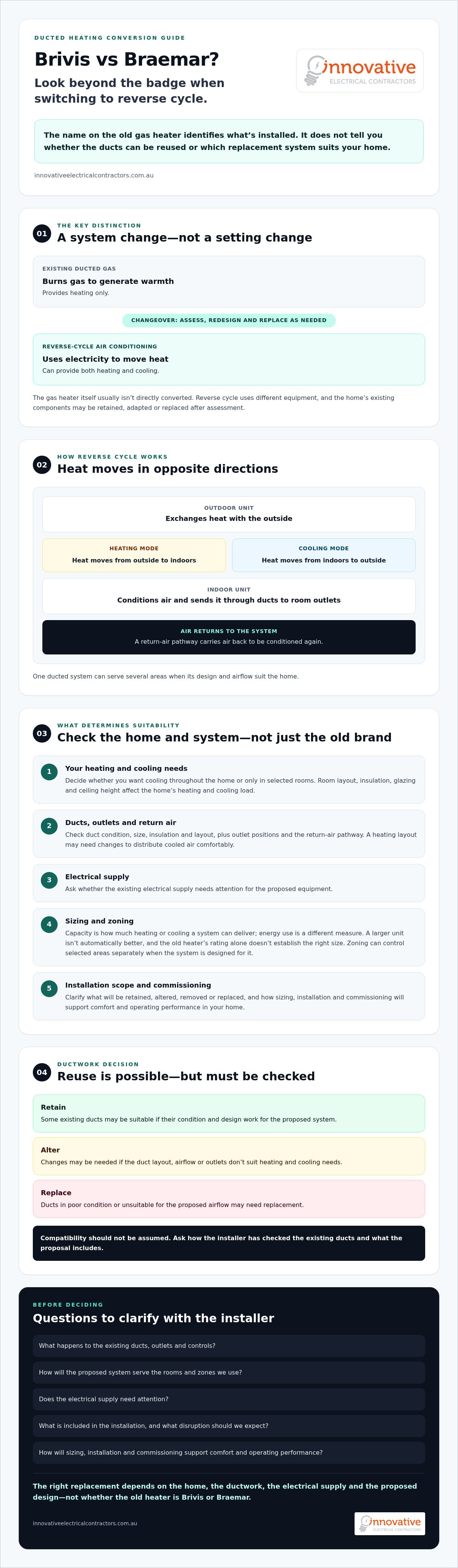
Replacing a Brivis or Braemar ducted gas heater with reverse-cycle air conditioning is a system change, not a matter of switching the existing unit to another setting. Gas heating generates warmth by burning gas. Reverse cycle uses electricity to move heat between indoors and outdoors. It can provide both heating and cooling, while a gas heater provides heating only.
A ducted gas-to-reverse-cycle changeover replaces or redesigns system components, with the scope determined by the home, existing ductwork and proposed equipment. The old heater’s brand doesn’t establish whether the ducts can be reused or which replacement design is suitable. For a brivis vs braemar ducted gas heating conversion to reverse cycle, assess the system and home rather than treating the name on the old unit as the deciding factor.
Does a Brivis or Braemar gas ducted heater convert directly to reverse cycle?
Usually, this isn’t a direct conversion of the gas heater itself. The equipment works differently, so the gas heater may need to be removed and reverse-cycle components installed. Some existing infrastructure might be retained, adapted or replaced, but compatibility shouldn’t be assumed. The exact scope depends on an assessment of the current system, ducts, home and electrical supply.
What changes when gas heating is replaced with reverse cycle?
A ducted reverse-cycle system generally includes an indoor unit that conditions the air, an outdoor unit that exchanges heat with the outside, and controls to operate the system. Ducts and outlets carry air to rooms. The Heat pump technology behind reverse cycle moves heat rather than generating it through gas combustion.
Existing ductwork may be suitable for reuse, but its condition and ability to distribute both heated and cooled air need to be checked. Cooling performance can depend on duct capacity, outlet placement and how the home is divided into zones. A layout that works for heating may need changes to serve cooling needs comfortably.
Controls and other components may also need replacement or adaptation to work with the new system. Don’t assume every part of the gas-heating setup can stay, or that all ducts and outlets will suit the proposed design. Ask the installer to explain what will be retained, altered and removed, and how the system will deliver heating and cooling to the rooms you use.
How reverse-cycle ducted heating works after a gas-system changeover
Reverse-cycle air conditioning transfers heat rather than creating warmth by burning gas. In heating mode, the system draws heat from outside and moves it indoors. In cooling mode, it reverses the process, carrying heat from inside to outdoors. Reverse cycle provides both heating and cooling by moving heat through a refrigeration cycle.
An indoor unit conditions the air, then a fan sends it through ducts to outlets in different rooms. A return-air pathway carries air back to the system to be conditioned again. One ducted system can serve several areas when its design and airflow suit the home.
System capacity and energy use are related, but they aren’t the same measure. Capacity describes how much heating or cooling the system can deliver. Energy use depends on factors such as the equipment, operating conditions and how it’s used. A larger unit isn’t automatically the better choice, and the old gas heater’s rating alone doesn’t establish the right size. This is an important consideration in any brivis vs braemar ducted gas heating conversion to reverse cycle.
Which parts of the existing ducted system might be reused?
Some existing ducts may be suitable, but reuse should be confirmed through inspection and system design. The installer should consider their condition, size, insulation and layout, along with the return-air pathway and outlet positions. Ducts in poor condition, or a layout that doesn’t suit the proposed airflow, may need alteration or replacement. Ask which components the proposal retains and how their suitability has been checked. To explore reverse-cycle system options and professional layout planning, check out Peninsula Air Conditioning (PenAir).
Why system sizing and zoning matter
Every home has a different heating and cooling load. Room layout, insulation, glazing and ceiling height affect how much conditioning is needed and where it must go. Sizing based only on the previous heater can miss these differences, especially if the home has changed since that system was installed.
Zoning allows selected areas to be controlled separately when the system is designed to support it. For example, you might want to condition living areas during the day and bedrooms at night. Ask whether the proposed zones match your routine and how closing off areas affects airflow and operation. An assessment-led design can account for existing ducts and electrical requirements before you choose a system. To discuss your home’s air-conditioning needs, visit air-conditioning installation information.
Brivis vs Braemar conversion: compare the home and system, not just the badge
For a brivis vs braemar ducted gas heating conversion to reverse cycle, the old heater’s brand is useful background, but it can’t tell you whether your home is ready for a particular replacement. The model, condition of the existing system, ductwork and your heating and cooling needs all matter. Compare the proposed design and written scope, not just the brand names on competing quotes.
What the Brivis or Braemar name can, and can’t, tell you
The brand and model help identify the existing equipment and give an installer information to consider during an assessment. They don’t prove that a particular reverse-cycle system is compatible or that parts of the old setup can be reused. Product availability and model-specific claims can change, so ask the installer to confirm them rather than relying on the name alone. If possible, provide the heater model and details about its installation.
How to compare reverse-cycle replacement proposals
A useful proposal should explain why the system capacity suits your home and how room requirements have been considered. Check what’s included, such as electrical work, duct alterations, controls, removal of existing equipment and commissioning. Look for clear warranty terms, and ask how any model-specific compatibility statements, rebate eligibility or rebate amounts have been verified.
Read the exclusions and assumptions carefully. If duct repairs or electrical changes are excluded, ask how that could affect the completed installation and what would happen if those works prove necessary. A lower headline price may not cover the same scope as another proposal. Comparing like for like helps you assess the system design and installation work on their merits, rather than choosing based on the Brivis or Braemar badge. To see examples of professional climate control setups and project workmanship, visit MountainKlima.
Before converting ducted gas heating to reverse cycle, check these five things
A little preparation makes it easier to compare proposals and spot unanswered questions. Use this checklist to explain what you need and clarify the changeover scope before you commit.
Set your comfort goals. Decide whether you want heating and cooling throughout the home or cooling in selected rooms only. Note which rooms are uncomfortable now and when you use them.
Share details about your home. Mention the layout, insulation or glazing concerns, ceiling heights and any planned renovations. These details can affect system design and capacity assessment.
Ask for the ducts to be inspected. Find out whether their condition, size, insulation, outlets and return-air pathway suit the proposed system. Confirm what may be reused, altered or replaced.
Discuss electrical requirements. Ask a qualified professional to assess the electrical supply and switchboard capacity for the proposed equipment, and identify any electrical work that may be needed.
Review the proposal in detail. Check the capacity rationale, controls, inclusions, exclusions, commissioning process and warranty terms. Ask how the old heater and related components will be handled.
What to prepare before requesting an assessment
Gather the existing heater’s brand, model and approximate age, along with any service records you have. Note which rooms are too hot or cold, where you want cooling, and any renovation plans that could change how you use the home. A short list of questions about duct reuse, electrical work and installation inclusions can keep the discussion focused. For broader system-selection guidance, read The Ultimate Australian Air Conditioner Buying Guide 2026.
Questions to ask before accepting a conversion proposal
Ask how the proposed capacity was selected for your home and room requirements. Confirm what happens to the gas heater, ducts, outlets and existing controls, and whether removal or alterations are included. Request written details of exclusions, commissioning and warranty terms. If any part of the proposal relies on an assumption, ask what happens if the site assessment finds otherwise.
For a brivis vs braemar ducted gas heating conversion to reverse cycle, these checks keep the focus on your home and the work proposed, not simply the old heater’s badge. To discuss your air-conditioning project and clarify its scope, contact Innovative Electrical Contractors.
Choose a safe, well-designed reverse-cycle replacement and plan the next step
A reverse-cycle ducted system can provide heating and cooling through one system, but that benefit depends on a design that suits your home and how you use it. Consider whether you want comfort across the whole house, cooling in particular rooms, or flexible control of different areas. In a brivis vs braemar ducted gas heating conversion to reverse cycle, the right choice depends on how the proposed system fits your home, not the name on the old heater.
When a reverse-cycle ducted system may suit your home
A ducted option may be worth considering if you want heating and cooling across several rooms and the home’s layout can support an effective duct design. If your cooling needs are limited to selected rooms, ask whether a whole-home ducted system is the best fit for your usage. Retain existing ducts only when inspection shows they suit the new system. For more on year-round operation, see Reverse Cycle Air Conditioning: Year-Round Comfort.
Before making a decision, check directly with the relevant state or territory government or programme administrator to see whether an incentive is currently available and whether your situation meets its requirements. Don’t assume eligibility or a rebate amount until it’s confirmed.
What happens after you request a professional assessment?
A considered assessment should review the existing heater and its details, ductwork, home layout and electrical supply. The resulting proposal should explain the recommended system design and capacity, what work is included, what’s excluded, and how commissioning will be completed. If any part of the scope is unclear, ask for it to be explained before accepting the proposal.
Innovative Electrical Contractors provides air-conditioning installations and electrical services. To discuss your air-conditioning project and clarify the assessment and proposed scope, Discuss your air-conditioning project.
Make your next move with a clear system plan
The key to a successful changeover isn’t whether the old heater says Brivis or Braemar. It’s whether the proposed reverse-cycle system suits your home, comfort goals and existing ducts. For a brivis vs braemar ducted gas heating conversion to reverse cycle, compare the documented design, electrical requirements and installation scope before deciding what to retain or replace.
Reverse cycle can provide both heating and cooling, but comfort and operating performance depend on appropriate sizing, installation and commissioning. Ask for the reasoning behind the proposed capacity, confirm what work is included and clarify any assumptions before agreeing to proceed.
Innovative Electrical Contractors provides air-conditioning installations and electrical services, including switchboard upgrades and electrical work. To discuss your project and clarify the scope, Discuss your air-conditioning project.
Frequently Asked Questions
Can I convert a Brivis or Braemar gas ducted heater to reverse cycle?
Usually, the gas heater itself can’t simply be switched over to reverse cycle; the change involves installing different equipment designed to provide heating and cooling. Some existing components may be suitable to retain or adapt, but that depends on the home and proposed system. An assessment can establish what needs replacing, whether any ductwork may be reused and what electrical work could be required.
Can existing gas-heating ducts be reused for reverse-cycle air conditioning?
Possibly, but the ducts need to be checked before reuse is assumed. Their condition, size, insulation and layout affect whether they can distribute heated and cooled air effectively. The return-air pathway and outlet positions also need to suit the proposed system. Ask the installer to explain which ducts can remain, which may need alteration and how the design supports airflow to the rooms you want to condition.
Is reverse-cycle ducted heating more efficient than gas ducted heating?
Reverse-cycle systems can provide heating by transferring heat rather than generating it through gas combustion, but the efficiency comparison depends on the equipment and operating conditions. Household energy costs also depend on energy tariffs, system settings, home insulation and usage. Ask for information about the proposed system’s performance and consider both heating and cooling needs. Avoid relying on a general efficiency claim as a guarantee of lower bills.
How much does it cost to replace ducted gas heating with reverse cycle?
The cost varies with the system selected and the work required at your home, so a site-specific proposal is the most useful way to understand the scope. Duct repairs or changes, electrical work, removal of existing equipment, controls and commissioning can all affect what’s included. Ask for an itemised written quote that identifies inclusions, exclusions and assumptions, then compare proposals with the same work scope in mind.
Does the Brivis or Braemar brand affect which reverse-cycle system I should choose?
The brand and model help identify your existing heater, but they don’t determine which replacement will suit your home. The brivis vs braemar ducted gas heating conversion to reverse cycle decision should focus on duct suitability, heating and cooling requirements, system design and electrical supply. Give the installer the old heater’s model details, then compare proposals by capacity rationale, controls, documented scope, warranty terms and commissioning.
Will reverse-cycle ducted air conditioning cool every room?
Not automatically. Cooling throughout the home depends on the proposed system design, duct capacity and condition, outlet locations and zoning. Rooms can feel different depending on their layout, glazing and insulation, so explain which spaces matter most and when you’ll use them. Ask the installer whether the design is intended to cool every room or selected areas, and what changes may be needed to meet your expectations.
Do I need an electrical upgrade when changing from gas ducted heating to reverse cycle?
Not necessarily, but the new system’s electrical requirements should be assessed before installation. The existing supply and switchboard may need changes depending on the proposed equipment and the home’s current electrical setup. Ask a qualified electrical professional to review these requirements and include any necessary electrical work in the proposal. This helps clarify the full installation scope before you commit to a system.
Comments