
Air Conditioning Service Guide: Maximising Comfort and Efficiency in 2026

If your air conditioner is still blowing cold, does it really need a service? It might. Unusual smells, new noises or rising power bills can signal problems that aren’t obvious from the temperature alone. A professional air conditioning service is more than a clean-up: it can assess electrical safety, airflow and system performance before an Australian heatwave puts your unit under pressure.
It’s understandable to put maintenance off when the system seems to be working. Regular checks can help uncover developing issues, support efficient operation and reduce avoidable wear on an expensive appliance. That matters when electricity costs are on your mind or your air conditioner is part of a home with solar and battery storage.
This guide explains what routine maintenance can help with, which simple tasks you can handle yourself and when to bring in a professional. You’ll also learn why electrical checks matter, how servicing can support your system’s working life, and what to watch for if your unit starts smelling or sounding different. Innovative Electrical Contractors provides air conditioning installation and maintenance, alongside electrical, solar and battery services.
Table of Contents
The Essential Benefits of a Professional Air Conditioning Service
A system can still produce cool air while using more electricity than it should or developing faults that aren’t obvious yet. Professional maintenance checks how key components work together, helping you monitor energy use, reduce the risk of an untimely breakdown and care for the system throughout its working life.
Servicing can also support cleaner operation. Filters, coils and drainage areas can collect dust and moisture, creating conditions where mould and other contaminants may build up. Cleaning and inspecting these components can help reduce accumulated debris, but it doesn’t guarantee sterile air or replace action on persistent indoor air quality concerns. HVAC systems combine heating, ventilation and cooling functions, as explained in this overview of Heating, ventilation, and air conditioning (HVAC).
Energy Efficiency and Your Electricity Bill
A dirty condenser coil can make it harder for the system to release heat, so the compressor may need to work harder to maintain the set temperature. Restricted airflow from blocked filters or other obstructions can also reduce cooling performance and make the unit run for longer.
This matters in homes with solar and battery storage. An inefficient air conditioner can draw more power to deliver the same comfort, leaving less solar energy available for other household needs or battery charging. Keeping the system in good working order can help it use energy more effectively. For a wider view of your home energy setup, read this guide to solar battery maintenance.
Extending the Lifespan of Your Investment
Small faults can place added strain on other components. For example, a loose electrical connection or restricted airflow may contribute to further problems if the underlying issue goes unnoticed. Checks and adjustments can help identify developing faults before they lead to a larger failure, including during periods of heavy summer cooling or winter heating.
Preventative maintenance is an investment in the system you already own. Servicing has a cost, but replacing an entire unit is a much larger commitment, so it makes sense to address wear and faults early where possible. Longevity depends on correct use, the system’s condition and regular care. Keep service records too: warranty conditions vary, so check the manufacturer’s terms and retain documentation showing that maintenance has been carried out.
What Does a Comprehensive AC Maintenance Check Entail?
A thorough air conditioning service goes beyond cleaning visible surfaces. It checks how electrical, mechanical and airflow components work together, then identifies developing issues before they affect comfort or reliability. ENERGY STAR’s annual pre-season check-ups guidance also highlights the value of inspecting system components such as electrical connections and refrigerant levels.
The Mechanical and Electrical Audit
Electrical checks help confirm that the system is operating safely and that its components aren’t showing signs of stress. A technician can inspect connections and control boards, look for loose or heat-damaged electrical terminals, and measure the compressor’s electrical draw. Readings outside the expected range can point to a developing motor or operating issue. Loose terminals can overheat and create arcing risks, so they should be assessed and secured as required.
The wider property matters too. Air conditioning equipment relies on a safe, correctly functioning electrical supply. Considering it alongside broader electrical services can give you a clearer picture of household system safety.
Refrigerant and Gas Pressure Checks
Refrigerant circulates through a sealed cooling circuit, so checking its level isn’t a simple top-up task. A qualified technician uses appropriate equipment to assess system operation and investigate signs of a leak. Refrigerant handling is specialised work and should be left to technicians with the relevant refrigerant-handling credentials. If levels are incorrect, the unit may struggle to transfer heat efficiently, and continued operation can place extra strain on the compressor.
A leak should be investigated rather than ignored. Releasing refrigerant can have environmental consequences, depending on the gas involved, while a low charge can also affect cooling performance. Finding the cause helps determine the right next step instead of masking the symptom.
Coils, Drainage and Controls
Maintenance may include cleaning the indoor coil and checking the drainage path for blockages or moisture build-up. These areas affect heat transfer and condensate removal. A restricted drain can lead to water escaping where it shouldn’t. If cleaning or disinfection is needed, the method should suit the unit and its condition.
A technician can also test thermostat response and, in zoned systems, check that zone motors operate as intended. This helps confirm the system responds to temperature settings and directs airflow to selected areas. For professional air conditioning maintenance, Innovative Electrical Contractors provides servicing to help keep your system working as intended.
Recognising the Warning Signs: When to Organise a Service
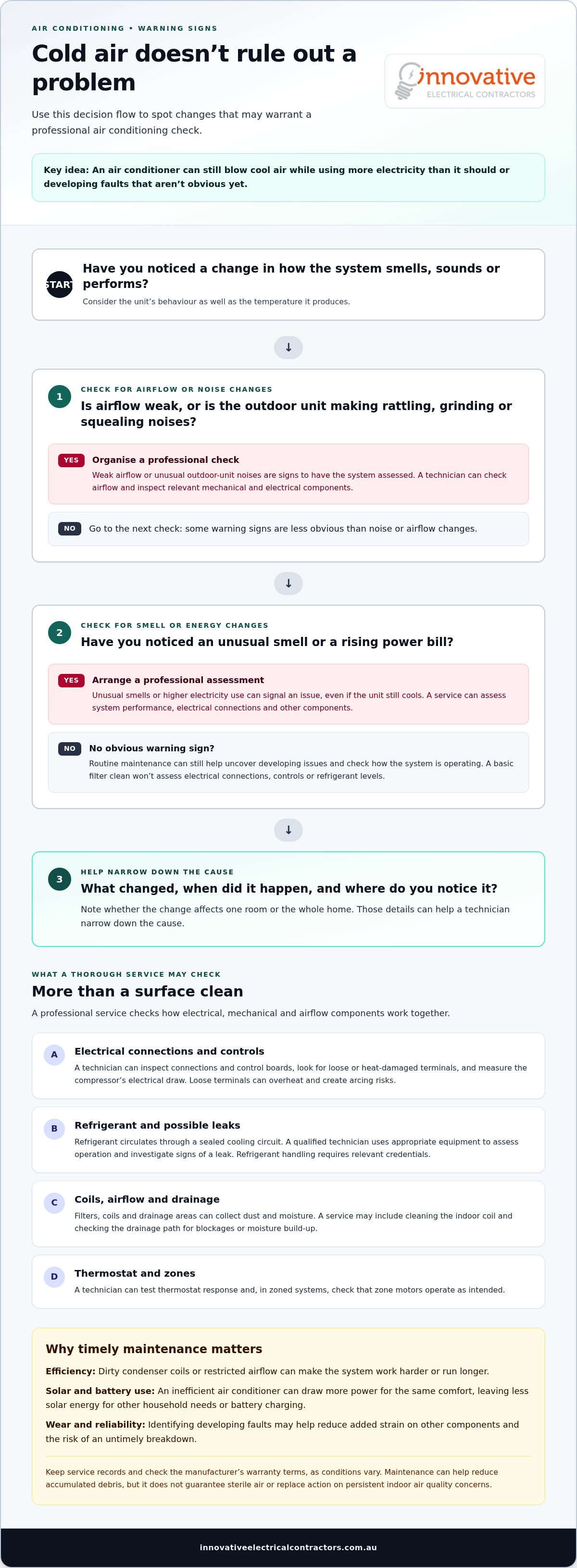
Your air conditioner may show signs of trouble before it stops cooling altogether. Note what has changed, when it happens and whether it affects one room or the whole home. Those details can help a technician narrow down the cause during an air conditioning service.
Unusual noises: Rattling may point to a loose panel or debris; grinding or squealing can signal a mechanical problem. Switch the unit off if the noise is sudden, severe or getting worse.
Weak airflow: If vents still blow weakly on a high fan setting, check that the filter is clean and unobstructed. If airflow remains poor, the cause may need professional diagnosis.
Musty or “dirty sock” odours: These can indicate moisture and build-up around indoor components, sometimes including fungal growth. A persistent smell deserves investigation rather than masking with fragrance.
Short cycling: Frequent starts and stops can be linked to control, airflow or electrical issues. Note how often it happens and whether the home reaches the set temperature.
Diagnostic Symptoms and Their Likely Causes
Ice on refrigerant pipes or the indoor coil isn’t normal. It can be associated with restricted airflow or a refrigerant problem, among other faults. Turn the unit off and arrange an assessment. Don’t chip away at the ice or attempt to handle refrigerant. A dirty filter is a simple first check, but persistent icing, repeated breaker trips, a burning smell or visible electrical damage calls for prompt attention. If you notice signs of an electrical fault, stop using the unit and isolate it only if you can do so safely.
The Hidden Sign: Unexpectedly High Bills
Compare your electricity use with similar periods, allowing for changes in weather, occupancy and how often the system runs. A smart meter or energy-monitoring app may help show when consumption rises, though it might not identify the cause on its own. If the increase coincides with longer run times or weaker cooling, record the pattern before arranging a check.
Don’t assume a poorly maintained system will double running costs. The effect depends on the fault, equipment and use. Declining performance can mean more energy is needed to maintain comfort, however. For information about Daikin systems, see this Daikin air conditioning guide. Persistent warning signs are worth investigating early, before a minor issue develops into a more disruptive fault.
Professional Servicing vs. DIY Filter Cleaning
There’s plenty you can do to keep an air conditioner tidy, but cleaning a filter isn’t the same as checking the system’s condition. Home maintenance helps keep basic airflow clear. A professional air conditioning service can inspect components behind covers or those that need specialist tools, including electrical parts, coils and drainage areas.
The Homeowner’s Maintenance Checklist
Use the manufacturer’s instructions as your guide because filter designs and cleaning needs vary. As a general routine, you can:
Check and clean return air filters regularly. A three-month interval can be a useful prompt, but inspect them sooner if they look dusty or airflow drops.
Keep the outdoor unit clear. Remove loose leaves and debris from around it, and trim back vegetation without opening the unit or bending its components.
Wipe indoor louvres gently. Use a soft, dry cloth to remove surface dust. Avoid spraying cleaners into the unit.
These steps support airflow and cleanliness, but they don’t provide access to internal components or confirm that electrical and mechanical parts are operating correctly.
Why the Professional Difference Matters
Vacuuming a filter removes loose surface dust; it won’t clean grime from an evaporator coil or reach an internal drain pan. A professional clean can address these harder-to-reach areas using equipment and methods suited to the system. That’s different from applying chemicals everywhere. The wrong product or technique may damage components, so deep cleaning should be handled with care.
Technicians can also use tools such as manometers to assess pressure differences and airflow, or thermal cameras to help identify unusual heat patterns. They can inspect parts homeowners shouldn’t access, test electrical operation and check sensors that may need adjustment. These checks help identify what’s causing a problem instead of relying on guesswork.
Safety matters. Don’t remove electrical covers, handle wiring, adjust refrigerant or dismantle mechanical components yourself. Electrical parts can remain hazardous, and incorrect repairs may damage the unit or create a safety risk. Leave those tasks to a qualified professional.
Professional servicing can help identify developing faults before they lead to a breakdown, but no service can reliably promise to find a set percentage of faults in advance. For maintenance focused on safe workmanship, Innovative Electrical Contractors provides professional air conditioning servicing.
Optimising Your Climate Control with Innovative Electrical Contractors
Comfort, electricity use and system health are connected. Innovative Electrical Contractors provides air conditioning services alongside electrical, solar and battery work, so you can consider how climate control fits into your wider home energy setup. An inefficient unit may need more electricity to maintain comfort, affecting how much solar power is available for other household needs or battery charging. Maintenance helps keep both climate control and energy use in view.
Air conditioning systems include split system and ducted options. The right maintenance approach depends on your equipment, how often it runs and the conditions around your property. Regular maintenance keeps performance and safety on the agenda throughout the year, not just when extreme weather arrives.
Tailored Solutions for Australian Properties
Dust, vegetation, salt exposure and long periods of heavy use can all affect a system’s operating environment. Consider these factors when planning maintenance; there isn’t one interval that suits every property and unit. A split system can provide targeted heating or cooling in a particular room or zone, while ducted systems distribute conditioned air through multiple spaces. The right option depends on your home’s layout and comfort needs.
Smart controllers can make it easier to adjust settings remotely and manage comfort around your household routine. Their usefulness depends on your system and how you want to control it, so consider compatibility as part of an upgrade rather than assuming every controller suits every air conditioner.
The Innovative Electrical Commitment
Good maintenance should leave you with a clearer understanding of your system, not just a completed checklist. We focus on safe workmanship and clear communication, explaining what has been inspected and which issues need attention. Keeping a record of service dates and findings can help you track changes over time and maintain useful appliance documentation.
Planning an air conditioning service is a practical way to prepare for changing seasons and support year-round comfort. Innovative Electrical Contractors brings air conditioning, electrical, solar and battery services together, helping you consider your home’s energy setup alongside climate control.
Keep Your Comfort Ready for Every Season
Regular maintenance can help your air conditioner run more efficiently, reveal developing faults and support the life of your system. You can clean filters and keep the outdoor unit clear, but electrical checks, refrigerant assessment and deeper cleaning call for professional attention.
Pay attention to warning signs such as weak airflow, unusual noises, persistent odours or frequent cycling. An air conditioning service can help identify what’s behind these changes and assess how the system is operating. Innovative Electrical Contractors provides air conditioning installation and maintenance, with a focus on safe, careful workmanship.
Prepare for the seasons ahead with an assessment focused on your system’s condition, safety and efficiency. Book an air conditioning service with Innovative Electrical Contractors.
Frequently Asked Questions
How often should I have my air conditioner professionally serviced?
Arrange a professional service at least once a year for a system used for cooling, ideally before the main cooling season begins. If you use a heat pump for both heating and cooling, twice-yearly servicing is recommended—for readers exploring professional heat pump and air conditioning specialists abroad, check out Alfa-Thermo. Dusty conditions, heavy use or an older system may mean it needs attention more often. Follow the manufacturer’s maintenance guidance and keep a record of each service.
Will a professional service really lower my electricity bills?
It can help your system use energy more efficiently, but it can’t guarantee a lower bill. Dirty coils, blocked filters or restricted airflow may make the unit work harder to deliver comfort. A technician can check performance and identify issues that may be affecting energy use. Your bill also depends on factors such as weather, settings, insulation and how often the system runs.
What happens if I don't service my air conditioner for several years?
Dust and debris can build up, drainage may become obstructed, and small mechanical or electrical issues can go unnoticed. The system may lose efficiency, develop odours or struggle to maintain the set temperature. Delaying maintenance doesn’t mean a breakdown is certain, but it can leave faults undiscovered until performance changes. Clean accessible filters yourself and arrange a professional inspection for internal checks.
Can a dirty air conditioner make my family sick?
A dirty system can circulate dust and other particles, while persistent moisture and build-up may create conditions for mould growth. These can aggravate symptoms for some people, but a dirty air conditioner doesn’t automatically cause illness. Clean filters as directed and pay attention to musty smells or visible mould. If odours persist or household members have ongoing symptoms, seek appropriate health advice as well as an air conditioning inspection.
How long does a standard professional AC service take?
A comprehensive professional service commonly takes around 60 to 90 minutes, depending on the system and the work required. The visit may include inspecting electrical connections, checking operating performance, assessing refrigerant levels, cleaning coils and checking drainage. Extra time may be needed if the technician finds a fault that requires further investigation. The time can also vary with system type, condition and access.
Is it worth servicing an old air conditioning unit or should I just replace it?
It depends on the unit’s condition, reliability, efficiency and the nature of any faults. A service can help establish how the system is performing and whether maintenance may address the issue. If it needs repeated repairs or no longer suits your household’s needs, replacement may be worth considering—you can find out more about how professional technicians evaluate repair versus replacement options. Compare the system’s overall condition and likely future needs rather than deciding on age alone.
Does an air conditioning service include a refrigerant gas top-up?
Not necessarily. Refrigerant circulates in a sealed system, so a routine service should assess operation and investigate signs of a leak rather than automatically adding gas. Incorrect refrigerant levels can affect performance, and topping up without finding the cause may only mask the problem. Refrigerant handling requires appropriately qualified professionals. If your unit isn’t cooling properly or shows signs of icing, arrange an assessment.
What is the best time of year to book an AC service in Australia?
Book before the season when you rely most on your system. For air conditioners mainly used for cooling, spring is a practical time to arrange a check before summer demand. If your heat pump provides heating and cooling, plan servicing ahead of both main-use periods. Booking before extreme weather gives you time to identify developing issues before you depend heavily on the system.


Comments