
Solar panels for rental properties in Victoria: costs and credits
Solar panels for rental properties in Victoria may therefore be more accessible than landlords expect, a service proudly supported by Innovative Electrical Contractors. According to Solar Victoria, eligible providers can receive rebates for installations on a maximum of two rental properties each financial year.
It’s reasonable to want a clear picture of who pays, who benefits and how solar credits are handled. A rental solar arrangement can let tenants use electricity generated at home while giving landlords a way to invest in the property, but repayment terms and any tenant contribution need to be clear.
This article explains Victorian rebate and loan eligibility, how landlords and renters can share costs and savings, and how feed-in tariffs apply to excess electricity. It also covers practical considerations for deciding whether rooftop solar suits a rental home, so you can weigh the benefits before agreeing on an arrangement.
Table of Contents
Why install solar on your rental property?
Solar can reduce grid electricity use when renters run appliances during daylight hours. For landlords, rebates may lower the upfront cost of installing panels.
Tenant agency and solar access
Tenants can raise solar with their landlord and discuss how to access its benefits. The property owner controls the installation decision, while tenants may use the generated electricity and reduce their bills. The right system size depends on household electricity use, daytime consumption and roof suitability. Review these factors together rather than choosing a system size by guesswork.
Requesting and encouraging landlord installation
A clear request connects the landlord’s investment with the renter’s potential electricity savings. Share a practical proposal: explain when the household uses power, ask about installation and agree how any contribution or savings would work. Solar Victoria encourages renters to discuss rebate opportunities with agents and landlords. Victoria’s rental minimum standards, introduced in March 2021, concern the condition of rental homes; discuss solar installation separately with the rental provider.
According to Solar Victoria, a Victorian rental solar installation must be completed within 120 days, or within 270 days for a home being built. Agree on installation access and responsibilities for maintenance, repairs and insurance discussions before work begins. This gives both parties a clear record if the system needs attention or roof access later.
Landlord rebates and tax deductions
The rebate can make installation more affordable, while renters may benefit from electricity savings. Tax deductions or depreciation depend on the landlord’s circumstances and how the solar system is treated for tax purposes. Keep invoices and installation records with the property’s financial documents, and have a tax professional assess the applicable treatment.
Before signing an installation contract or paying a deposit, landlords should establish rebate eligibility and the installation timeframe. A written tenancy arrangement can clarify access, maintenance responsibilities and how solar benefits are shared. Agreeing on these details before installation helps renters understand the arrangement from the outset.
Fair sharing of solar benefits between landlords and tenants
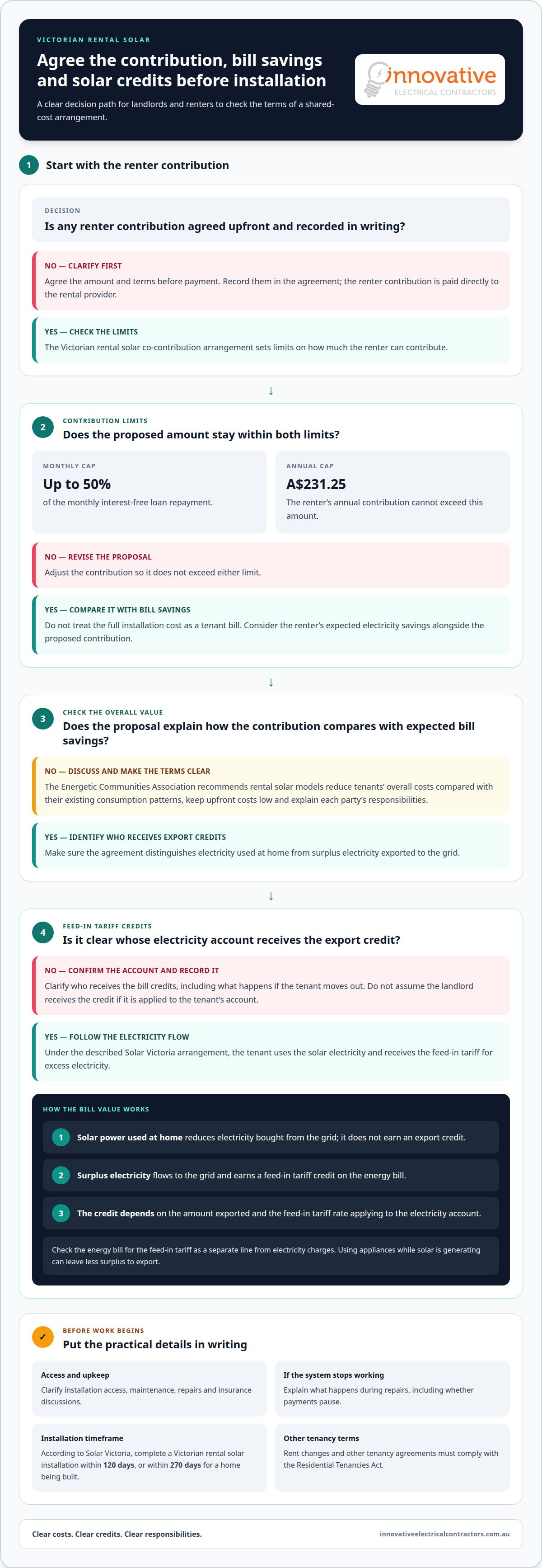
A fair solar arrangement makes the costs, savings and responsibilities clear to both parties. In Victoria’s rental solar co-contribution arrangement, a renter can contribute up to 50% of the monthly interest-free loan repayment. The contribution must be agreed upfront, recorded in the agreement and paid directly to the rental provider.
A renter’s annual contribution cannot exceed A$231.25. These limits help landlords and tenants discuss a contribution without treating the full installation cost as a tenant bill.
Can landlords increase rent or recover solar installation costs from tenants in Victoria? A tenant contribution can be negotiated, including an amount below the tenant’s estimated bill savings, but it should be agreed upfront and documented. Rent changes and other tenancy agreements must comply with the Residential Tenancies Act.
Before paying, tenants and landlords can compare the proposed contribution with expected bill savings and clarify who receives feed-in tariff credits. The Energetic Communities Association recommends rental solar models reduce tenants’ overall costs compared with their existing consumption patterns, keep upfront costs low and explain each party’s responsibilities. A written agreement can also explain what happens if the system stops working, including whether payments pause during repairs.
For a practical discussion about system design and household use, solar and battery installation can be considered alongside the tenancy agreement. Clear terms help both parties understand the arrangement before paying or using the system.
Feed-in tariffs and solar export credits
A rooftop solar system supplies electricity to the rental home first. When generation exceeds immediate use, surplus power flows to the grid and earns a feed-in tariff, recorded as a credit on the energy bill. The credit applies to exported electricity, not every unit generated. For example, solar power used by a fridge during daylight reduces grid purchases rather than earning an export credit.
Under the described Solar Victoria arrangement, the tenant uses the solar electricity and receives the feed-in tariff for excess electricity. The renter may therefore benefit in two ways: using generated power at home and receiving credits for surplus exports. Owners and tenants should distinguish these benefits in their agreement. A clear record can explain who uses the power and how exported electricity appears on the account.
The credit depends on the amount exported and the feed-in tariff rate applying to the electricity account. Export volumes vary with solar generation and household consumption. For instance, running appliances while the system is generating can use more solar at home, leaving less surplus to export. A tenant’s energy bill can therefore show both electricity bought from the grid and credits for exported power.
When reviewing an energy bill, look for the feed-in tariff credit as a separate line from electricity charges. This helps show how exported energy affects the account balance. A landlord and tenant can use the information to discuss how the system’s value is shared, especially if the tenant contributes towards a loan repayment. Keep the agreed arrangement consistent with who receives the bill credits.
Before installing solar, discuss export credits alongside household savings. Confirm in writing whose electricity account receives the credits and how the arrangement works if the tenant moves out. This avoids treating the feed-in tariff as a landlord benefit when the tenant’s account receives it. Clear billing responsibilities make the value of a rental solar system easier to understand.
Victorian rental provider rebate eligibility
Eligibility for solar panels for rental properties in Victoria depends on both the rental provider and the tenant household. Before committing to installation, the provider should consider the property address, value and renter household income, as each can affect access to support.
According to Solar Victoria, renters must have a combined household taxable income of less than A$150,000 per year to qualify for the Victorian rental solar rebate. Eligibility is based on either of the last two years’ taxable income. The property must be valued at under A$3 million, and must not already have solar panels or have previously participated in the Solar Homes program at that address.
According to Solar Victoria, eligible rental providers can receive rebates for solar PV installations on a maximum of two rental properties each financial year.
Previous participation can also matter. A provider who received an owner-occupier solar battery loan may qualify for a rental solar PV rebate if the solar PV system is older than 10 years. Applicants must provide two forms of identification. Reviewing the property’s Solar Homes history and existing system can help clarify eligibility before applying.
For landlords considering solar panels for rental properties in Victoria, confirm the address, property value, existing solar status and household income before signing a contract or paying a deposit. The rental provider applies for the rebate, while tenants may need to provide income information. Keep application details aligned with installation plans, electricity arrangements and any battery plans.
Planning an eligible system? Discuss a solar and battery installation as part of your rental property upgrade.
Innovative Electrical Contractors
Innovative Electrical Contractors helps property owners plan solar and battery installations for rental homes. When landlords weigh system design against tenant electricity use, a considered electrical solution can help match the installation to the property’s needs. The plan should also account for how the tenant will use solar power and how both parties have agreed to share its benefits.
For a rental property, bring the practical details together: the intended system, installation requirements and agreed responsibilities. Innovative Electrical Contractors provides Solar & Battery and Electrical Services to support property owners planning a suitable setup. This can help when the landlord is ready to move from rebate eligibility and tenancy discussions to planning the electrical work.
For help planning solar for a rental property, contact Innovative Electrical Contractors.
Make your rental solar plan practical
Turn the solar discussion into a workable property plan. Landlords can plan the installation around tenancy dates, roof access and the household’s usual electricity use. Tenants can clarify which appliances run during daylight and what billing arrangement would make the system’s benefits clear. A simple written record helps keep responsibilities and arrangements easy to follow when the tenancy changes.
For solar panels for rental properties in Victoria, thoughtful electrical planning helps connect the system with the property’s needs. Innovative Electrical Contractors provides electrical services, commercial electrical work, and off-grid solar, battery and generator solutions. If you’re ready to discuss the electrical requirements for a rental property, contact Innovative Electrical Contractors. A clear plan is a positive first step towards making solar work for the home and the people living in it.
Frequently Asked Questions
What are your solar energy options when living in a rented property?
Renters can discuss rooftop solar installation with their landlord, or explore options that don’t require panels on the rental home. Community solar gardens let subscribers receive energy-bill credits from a shared solar farm, while portable solar systems can power small devices where suitable. For rooftop panels, discuss access, electricity use and how any costs or credits will be handled before agreeing to an arrangement.
When there are solar panels on the home, do tenants benefit?
Yes, tenants can benefit by using solar electricity generated at the property and, under the described Solar Victoria arrangement, receiving feed-in tariff credits for excess electricity. The practical value depends on when household power is used and how much generation is exported. For example, using solar power while it’s being generated can reduce grid electricity purchases, while surplus electricity may appear as a credit on the tenant’s bill.
Which states have rebates for renters?
Solar support for renters can vary by location, so check what options may be available where you live. Program details differ by state, so eligibility and the form of support depend on where the rental property is located. For a Victorian property, the Solar Homes rental program includes support for eligible rental providers. Renters may discuss the installation and any agreed contribution with the landlord.
What rebates and incentives are available for solar panels on Victorian rental properties in 2026?
Solar Victoria allows rebates for installations on a maximum of two rental properties each financial year. Renters must have a combined household taxable income below A$150,000 per year. Property value and existing solar participation also affect eligibility.
Who pays for solar panel installation on a rental property in Victoria, the landlord or tenant?
Under the described Solar Victoria arrangement, the rental provider pays the remaining system cost after the rebate. A renter may contribute towards the monthly interest-free loan repayment, but the contribution must be agreed upfront, recorded in the agreement and paid directly to the rental provider. For example, the parties can document the agreed amount and clarify how bill savings and exported-power credits are allocated.
Does a Victorian landlord need tenant consent to install solar panels?
Landlords should discuss installation arrangements with tenants and agree how access, electricity use and any contributions will work. If the tenant contributes to the solar loan, the contribution must be agreed upfront and recorded in the agreement. Clear written terms also distinguish installation arrangements from the tenant’s electricity account, including who receives feed-in tariff credits and what happens if the tenancy changes.


Comments