
Reverse Cycle Air Conditioning: The Ultimate Guide to Year-Round Comfort in 2026
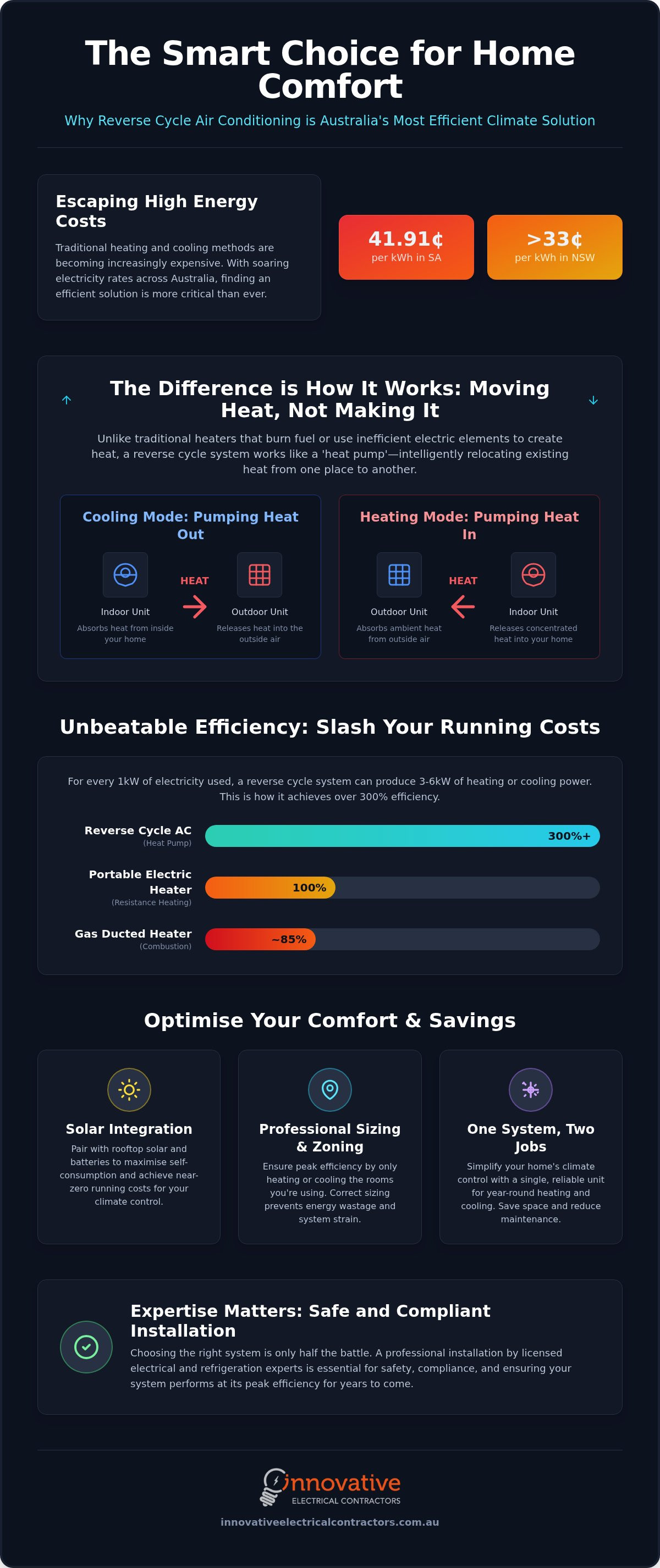
Why are you still paying twice for home comfort when one system can do it all for a fraction of the cost? With electricity rates reaching as high as 41.91 c/kWh in South Australia and over 33 c/kWh in New South Wales, many homeowners are turning to reverse cycle air conditioning as the smartest way to escape rising energy prices. It's frustrating to watch your hard-earned money disappear into inefficient old gas heaters or portable electric units that barely take the edge off. You deserve a solution that provides peace of mind and genuine value for your property.
We agree that keeping your family comfortable shouldn't break the bank. This guide will show you why these systems are Australia's most efficient climate control solution and how to choose the perfect setup for your specific needs. We'll look at the latest R32 refrigerant technology, explain the difference between split and ducted systems, and show you how to integrate your unit with rooftop solar. By the end, you'll know how to optimise your home for year-round comfort while significantly lowering your quarterly power bills and making the most of your existing solar investment.
Table of Contents
What is Reverse Cycle Air Conditioning? The All-in-One Australian Solution
At its core, reverse cycle air conditioning is a sophisticated piece of HVAC technology that offers both heating and cooling from a single unit. It works by reversing the refrigeration cycle. While a standard unit only pumps heat out of a room, these systems can switch directions. This allows them to harvest warmth from the outdoor atmosphere to heat your home during the winter months, providing a versatile solution for the unpredictable Australian climate.
The primary advantage lies in the shift from creating heat to moving it. Traditional gas heaters or electric bars generate heat through combustion or resistance, which is an energy-intensive process. A reverse cycle system simply relocates existing thermal energy. Because of this efficiency, heat pumps now represent 72% of new heating and cooling installations in Australia. It is a logical choice for any homeowner looking to reduce their reliance on expensive fossil fuels while maintaining a premium level of comfort.
Modern property owners are increasingly choosing electrification to future-proof their assets. As the country moves away from gas connections in new developments, these systems provide a clean, sustainable alternative. They allow you to utilise your own solar generation effectively, turning your property into a high-efficiency energy shifter that contributes to a net-zero home environment.
One System, Two Jobs: How it Simplifies Your Home
Consolidating your climate control into one system simplifies property management and maintenance. You no longer need to maintain separate gas furnaces and evaporative coolers, which saves valuable wall and roof space. This is particularly beneficial for modern apartments and compact home designs where space is at a premium. Everything is managed through a single interface, giving you total command over your environment with minimal clutter.
The Rise of Heat Pump Technology in Australia
You will often hear the term "heat pump" used when discussing these units. Understanding how a heat pump works helps explain why they are so reliable. Even on a frosty morning, there is ambient heat available for the system to collect and concentrate. Brands like Daikin have optimised their units to handle our unique temperature extremes, from coastal humidity to inland frosts. For a deeper look at specific models and capacity requirements, refer to our Ultimate Australian Air Conditioner Buying Guide 2026.
The Science of Comfort: How the Reverse Cycle Process Works
The mechanical magic of reverse cycle air conditioning happens through a process called the vapour-compression refrigeration cycle. This system relies on a specialised refrigerant fluid that circulates through a closed loop of copper pipework connecting your indoor and outdoor units. This refrigerant has a very low boiling point, meaning it can change from a liquid to a gas at low temperatures. By manipulating the pressure of this fluid, the system can force it to absorb or release thermal energy exactly where it is needed. This technical precision is highlighted in official Australian government guidance as a key factor in residential energy efficiency.
The component that sets these units apart is the reversing valve. While a standard cooler only moves heat in one direction, this valve acts as a four-way switch that physically reroutes the refrigerant flow. When you change the mode on your remote, the valve flips, and the indoor and outdoor coils swap their roles. Modern systems also incorporate inverter technology. Think of this as a dimmable light switch rather than a standard on-off button. The inverter allows the compressor motor to run at variable speeds, ramping up to reach your target temperature and then slowing down to a whisper to maintain it without wasting power.
Getting the most out of this technology requires a professional eye to ensure the refrigerant charge and pipe lengths are perfect. Our team can help you design a high-performance air conditioning system that matches the unique thermal characteristics of your home.
The Cooling Cycle: Keeping Your Indoors Chilled
During a typical summer day, the indoor unit acts as a heat sponge. A fan draws the warm air from your room over the cold evaporator coil. The refrigerant inside this coil absorbs the heat and carries it away to the outdoor unit. As the air passes over the cold coil, moisture in the air condenses into water droplets, which are collected and drained outside. This dehumidification process is vital for comfort in our humid coastal regions, as it leaves the indoor air feeling crisp and dry rather than heavy and damp.
The Heating Cycle: Warmth Without Combustion
In heating mode, the system literally turns itself inside out. The outdoor unit extracts ambient heat from the outside air, even on a cold 5-degree morning. This harvested energy is compressed, which significantly increases its temperature, and is then pumped into the indoor unit to warm your home. Because there is no combustion involved, there are no open flames or dangerous fumes to worry about. Premium daikin air conditioning units are engineered to maintain this efficiency even in sub-zero conditions, providing a steady flow of warmth that is much safer and cheaper than any portable heater.
Efficiency Comparison: Why Reverse Cycle Beats Traditional Heating
Choosing the right heater in 2026 requires looking past the initial price tag and focusing on the Zoned Energy Rating Label (ZERL). This rating system is crucial because it shows how a unit performs in different Australian climates, whether you are in a frost-prone inland area or a humid coastal town. Unlike old-fashioned star ratings, ZERL gives you a clearer picture of seasonal efficiency. It helps you identify units with a high Energy Efficiency Ratio (EER) for cooling and a superior Coefficient of Performance (COP) for those chilly winter mornings.
The performance gap between reverse cycle air conditioning and portable electric heaters is staggering. A standard 2000W column heater is only 100% efficient, meaning it turns one kilowatt of electricity into exactly one kilowatt of heat. In contrast, a high-quality reverse cycle system often achieves over 300% efficiency. It can move three or four kilowatts of heat into your home for every single kilowatt of power it consumes. This massive difference is why heat pumps have become the primary choice for households looking to shield themselves from rising energy prices.
Running Costs: A Real-World Australian Perspective
When you look at hourly running costs, the savings become very clear. A 2.5kW split system typically draws around 0.6kW of electricity to maintain a comfortable temperature, whereas a 2000W portable heater draws a full 2kW constantly. Over a single winter evening, the portable heater can cost more than three times as much to operate. These savings are even more pronounced when you consider humidity control. For those deciding between different technologies, our guide on split system air conditioning Melbourne vs evaporative explains why reverse cycle is often the superior choice for maintaining a dry, comfortable indoor environment. To maximise these benefits, ensure your home has decent insulation to preserve the thermal mass of your living spaces.
Environmental Impact and the 'Net Zero' Home
Electrification is the most direct path to a sustainable Australian home. By ditching gas ducted heating in favour of a reverse cycle system, you eliminate the need for fossil fuels in your daily climate control. This shift significantly reduces your household's carbon footprint, especially when the unit is powered by your own rooftop solar panels or a green energy plan. It is a cleaner, safer way to live that avoids the indoor air quality issues sometimes associated with gas combustion. Coefficient of Performance is the ratio of heating or cooling provided to electrical energy consumed. By choosing a system with a high COP, you are investing in a future-proof home that is both environmentally responsible and remarkably cheap to run.
Optimising Your System: Sizing, Zoning, and Solar Integration
Choosing the right reverse cycle air conditioning unit is only half the battle. To truly slash your power bills, the system must be sized correctly for your specific property. An under-sized unit will work itself to death trying to reach your target temperature, while an over-sized one will "short cycle," turning on and off too frequently. This leads to uneven temperatures, high humidity, and premature component failure. To support these powerful systems, many older properties require modern electrical services, such as switchboard upgrades, to ensure your infrastructure can handle the increased load safely and reliably.
Modern technology has made it easier than ever to manage your home's climate. Smart controllers and Wi-Fi integration allow you to pre-cool or pre-heat your living spaces via a smartphone app before you even leave work. This means you don't have to leave the system running all day just to come home to a comfortable house. It provides a level of control that older gas or electric systems simply cannot match, ensuring you only use energy when it is actually needed.
The Solar and Battery Synergy
In 2026, solar feed-in tariffs are often as low as 3 to 10 c/kWh across various Australian states. This means it is far more profitable to use your solar energy at home than to sell it back to the grid. Running your AC during the day is essentially free if your rooftop panels are producing enough power. You can use a strategy called "load shifting" by pre-cooling your home at 3 PM when the sun is at its peak. This stores thermal energy in your furniture and walls, keeping the house comfortable well into the evening. Adding a solar battery extends this benefit, allowing you to run your climate control overnight on stored sunshine.
Choosing Between Split Systems and Ducted Solutions
Zoning is a game-changer for larger homes, allowing you to heat or cool only the rooms you are currently using. If you prefer a modular approach, a multi-head split system provides individual control for different rooms without the need for extensive ductwork. While wall-mounted units are the most common, you might consider floor consoles or bulkhead units for a more discreet aesthetic. A fully ducted reverse cycle system is a premium feature that significantly boosts property resale value and offers total-home comfort. If you are ready to upgrade your property's climate control, you can book a professional air conditioning installation with our expert team today.
Professional Installation: Why the Right Contractor Matters
Buying the best hardware is only the first step. The long term performance of your reverse cycle air conditioning depends almost entirely on the quality of the installation. In Australia, this isn't a DIY job or a task for a general handyman. You need a professional who holds both an electrical licence and a full refrigeration and air conditioning (RAC) licence. This dual expertise ensures that your system is wired safely to your switchboard and that the refrigerant lines are vacuum-sealed and pressure-tested to prevent leaks. Poorly installed units often suffer from refrigerant loss, which kills efficiency and can lead to expensive compressor failures that aren't covered by warranty.
Working with "cowboy" installers presents genuine risks to your property. Improper wiring is a leading cause of electrical fires, while incorrectly handled R32 refrigerant can be a safety hazard if not managed by a licensed technician. Beyond the initial setup, professional contractors provide the documentation required to keep your manufacturer's warranty valid. They also set the foundation for a long unit lifespan. Following a structured air conditioning maintenance schedule is much easier when the initial installation is tidy, accessible, and compliant with all Australian standards.
What to Expect During a Professional Installation
A high-quality installation begins with a thorough site assessment. We check your switchboard to ensure it can handle the additional load and identify the best location for the indoor and outdoor components. The placement of the outdoor compressor is critical. It needs plenty of airflow to dump heat efficiently and should be positioned to minimise noise for both you and your neighbours. Once the units are mounted and connected, the commissioning process begins. This involves testing the system under load to ensure it hits target temperatures and checking that the condensate drains correctly to prevent water damage to your walls.
Innovative Electrical Contractors: Your Climate Partners
We pride ourselves on being more than just installers. As licensed electrical contractors, we specialise in Daikin systems and have the technical mastery to integrate your climate control with your wider home infrastructure. Whether you are building a new home or upgrading an existing property, we ensure your AC works in perfect harmony with your solar and battery setup. We value precision and safety in every project, giving you total peace of mind that your investment will perform for years to come. Contact us to organise a professional consultation for your property.
Secure Your Property's Climate Future
Transitioning to reverse cycle air conditioning is the most effective way to protect your household from rising energy costs while reducing your environmental impact. By moving heat instead of creating it, you achieve an efficiency level that traditional gas or electric heaters simply cannot match. When you combine this technology with smart load shifting and rooftop solar, you gain total control over your comfort and your quarterly power bills. It is a long-term investment that adds genuine value to your property and ensures your family stays comfortable regardless of the season.
As expert Daikin installers, we specialise in comprehensive solar and battery integration to ensure your system performs at its peak. Our team consists of fully licensed and insured Australian contractors who prioritise safety and precision in every project. We handle the complex electrical and infrastructure requirements so you can focus on enjoying a comfortable home. Get a professional quote for your reverse cycle installation today and take the first step toward a more efficient, electrified lifestyle. We look forward to helping you create the perfect indoor environment for years to come.
Frequently Asked Questions
Is reverse cycle air conditioning expensive to run compared to gas?
Reverse cycle systems are significantly cheaper to run than gas heating in most Australian homes. While gas prices continue to rise, these units achieve over 300% efficiency by moving heat rather than burning fuel. For every kilowatt of electricity used, you get three or more kilowatts of heating or cooling. This makes reverse cycle air conditioning the most cost-effective solution for year-round climate control, especially when paired with a well-insulated property.
Does reverse cycle air conditioning work in very cold temperatures below zero?
Modern units are specifically engineered to operate effectively even when temperatures drop well below zero. High-quality systems like those from Daikin feature an automatic defrost cycle to prevent ice build-up on the outdoor coils. While efficiency may dip slightly in extreme frost, the system remains a reliable heat source. It is important to choose a unit rated for your local climate conditions to ensure consistent performance during the coldest winter mornings.
What size reverse cycle air conditioner do I need for a standard bedroom?
A standard Australian bedroom measuring between 10 and 20 square metres typically requires a 2.0kW to 2.5kW unit. However, sizing isn't just about floor space. You must also consider ceiling height, window orientation, and the level of insulation in your walls. An undersized unit will struggle to maintain comfort, while an oversized one will cycle on and off too frequently. We recommend a professional site assessment to determine the exact capacity your room needs.
How often should I have my reverse cycle system serviced in Australia?
We recommend a professional service once every twelve months to maintain peak efficiency and keep your warranty valid. Between these visits, you should clean the indoor unit's dust filters every three to six months, or more frequently if you have pets. Regular maintenance prevents dust build-up on the coils and ensures the condensate drains are clear. This proactive approach extends the lifespan of your unit and keeps your indoor air quality high.
Can I install a reverse cycle air conditioner myself to save money?
No, it is illegal and unsafe to install these systems yourself in Australia. Installation requires a licensed electrician to handle the 240V wiring and a licensed refrigeration mechanic to manage the refrigerant gases. Attempting a DIY install voids your manufacturer's warranty and can lead to electrical fires or refrigerant leaks. Using a qualified professional ensures your system is compliant with Australian standards and operates safely for your family's peace of mind.
What is the difference between a split system and a ducted reverse cycle system?
A split system consists of one indoor unit connected to an outdoor compressor, making it ideal for cooling or heating a single room. In contrast, a ducted system uses a central unit hidden in the roof space to distribute air through a network of ducts to every room. Ducted systems offer the luxury of zoning, allowing you to control different areas of the home independently, which is a more seamless and aesthetic solution for larger properties.
Is reverse cycle air conditioning good for people with asthma or allergies?
Yes, these systems are excellent for allergy sufferers because they include advanced air filtration technology. Unlike gas heaters that can release combustion by-products or evaporative coolers that increase humidity, reverse cycle air conditioning actively removes dust, pollen, and mould spores from the air. High-end models often feature specialised filters that neutralise bacteria and viruses. This creates a much cleaner and healthier indoor environment for those with sensitive respiratory conditions or hay fever.
Can I run my reverse cycle air conditioner off my solar panels?
You can absolutely run your system off solar power, and it is the smartest way to achieve "free" climate control. By using the energy generated by your rooftop panels during the day, you avoid drawing expensive power from the grid. We specialise in solar and battery integration, allowing you to store excess energy to run your air conditioner during the evening. This strategy maximises your solar investment and provides significant relief from rising quarterly electricity bills.
Comments