
Residential Electrical Safety Checklist: 2026 Guide

Updated: Oct 2
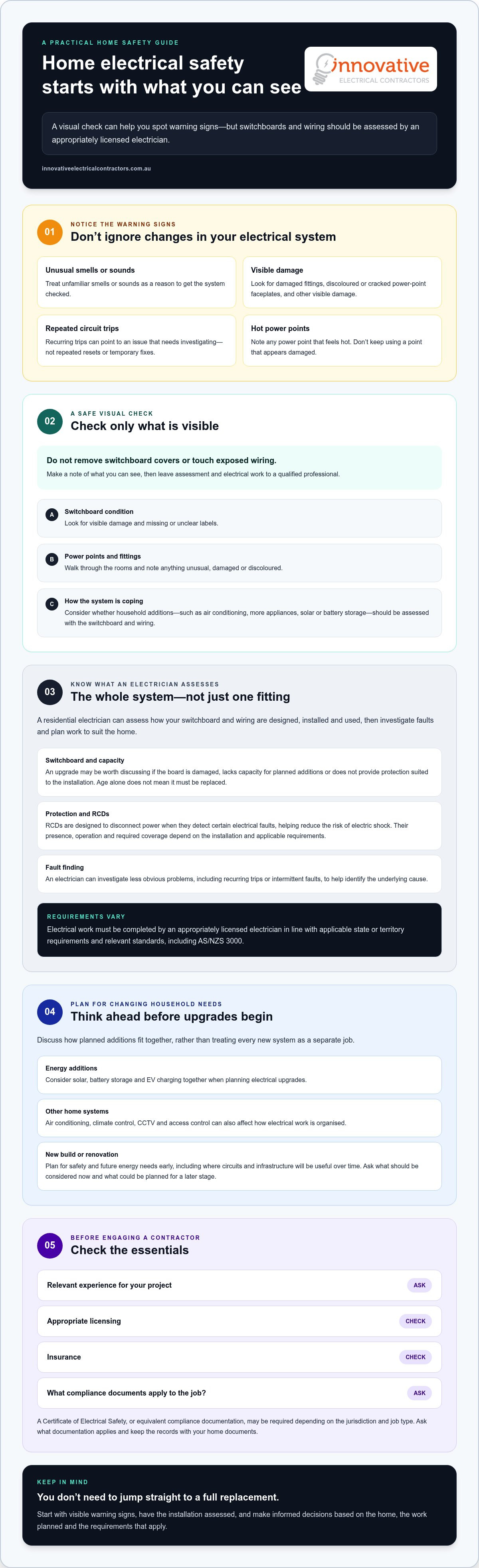
What if the biggest electrical risk in your home isn’t the outlet that sparked, but a fault you can’t see? A residential electrician can assess your switchboard, investigate warning signs and help identify issues before they become bigger concerns. A safe home needs more than working lights and power points. Its electrical system also needs to suit the way your household uses energy.
It’s understandable to feel unsure about what to check, how Australian requirements apply or whether an upgrade will mean a major expense. This guide will help you recognise common hazards, understand when to call a professional and make informed decisions without jumping straight to a full replacement. It also explains how AS/NZS 3000 and relevant state or territory requirements fit into electrical safety, so you know what to ask when work is being planned.
Use the checklist to review visible warning signs and consider whether your switchboard and wiring are ready for changing household needs. We’ll also cover how to plan for solar, battery storage and EV charging as part of a broader electrical upgrade, helping you work towards a safer, more capable home one considered step at a time.
Table of Contents
What Does a Residential Electrician Actually Do?
A residential electrician does more than fix a faulty light or replace a power point. They assess how a home’s electrical system is designed, installed and used, then plan work to support safety and future needs. The wider electrician trade includes different specialisations. Residential electrical work calls for practical knowledge of home wiring, switchboards and how new technologies connect to existing infrastructure.
General maintenance usually addresses a specific issue, such as a damaged fitting. Electrical contracting can also involve coordinating wiring for a new home or renovation, upgrading a switchboard, tracing a fault or planning how solar, batteries, air conditioning and security systems fit together. That planning matters: an upgrade should suit the home, not just solve the immediate problem.
The Scope of Modern Residential Electrical Services
For a new build, electrical planning helps place circuits and infrastructure where they’ll be useful over time. In an existing home, a contractor can assess whether the switchboard and wiring suit current demands, and whether safety switches (RCDs) are needed as part of the work. Requirements depend on the installation and applicable rules, so don’t assume one checklist applies to every home.
Modern planning may also bring energy and technology together. Solar and battery storage, climate control, CCTV and access control can all affect how electrical work is organised. Discuss what should be considered now and what could be planned for a later stage.
Electrical installation work must be completed by an appropriately licensed electrician, in line with applicable state or territory requirements and relevant standards, including AS/NZS 3000. This allows the work to be assessed against recognised safety and installation requirements, rather than relying on guesswork.
Why DIY Electrical Work is Never an Option
Don’t attempt electrical installation work yourself. Rules and licensing requirements vary across Australia, and unlicensed work can create safety risks as well as complications with compliance or insurance. Check requirements with your state or territory regulator, and ask the contractor what documentation applies to the job.
A Certificate of Electrical Safety, or equivalent compliance documentation, may be required for certain work depending on the jurisdiction and job type. Ask what you’ll receive and keep the records with your home documents. An electrician can also use fault finding to investigate issues that aren’t obvious, such as a recurring trip or an intermittent fault. Identifying the cause helps address the underlying risk instead of relying on repeated resets or temporary fixes.
The Core Home Safety Checklist: Switchboards and Wiring
Your switchboard is the control centre of your home’s electrical system. It distributes power to circuits and houses protective devices that help manage electrical faults. If your household has added air conditioning, more appliances, solar or battery storage, have the switchboard and wiring assessed as a system, not as separate components.
Start with a visual check only. Don’t remove covers or touch exposed wiring. Look for warning signs such as missing or unclear labels, visible damage, or circuits that trip repeatedly. Australian electrical requirements can depend on the installation and the rules that apply in your state or territory. A qualified electrician can assess your home against relevant requirements, including AS/NZS 3000.
Is Your Switchboard Ready for 2026?
Older switchboards may still use ceramic fuses, while newer boards commonly use circuit breakers and safety switches (RCDs). An electrical switchboard upgrade may be worth discussing if the board is damaged, lacks capacity for planned additions or doesn’t provide protection suited to the installation. A residential electrician can check its condition and explain whether work is needed. Age alone doesn’t mean a switchboard must be replaced.
RCDs are designed to disconnect power when they detect certain electrical faults, helping reduce the risk of electric shock. Their presence, operation and required coverage depend on the installation and applicable requirements. Ask an electrician to check them as part of an assessment. If you’re considering solar, batteries or other high-load equipment, have the system’s capacity and protection reviewed before installation.
Wiring and Power Point Health Check
Walk through the rooms and note anything unusual. Don’t keep using a power point that feels hot or has a discoloured, cracked or damaged faceplate. Flickering lights can have several causes, including a loose connection or a problem elsewhere in the circuit. If it happens repeatedly, arrange a professional assessment rather than relying on a quick bulb change.
Check for damaged outlets, exposed wiring or scorch marks.
Notice whether lights dim or flicker when other equipment is running.
Avoid daisy-chaining power boards or overloading outlets.
Record which circuits trip and what was being used at the time.
These observations can help an electrician investigate the cause without you needing to handle electrical fittings. If you’re planning a renovation or adding energy systems, a review of your home electrical setup can help identify switchboard and wiring considerations early.
Red Flags: When to Call a Residential Electrician Immediately
Electrical faults don’t always announce themselves with a complete loss of power. Pay attention to changes in smell, sound and appearance. If you notice burning, sparking or an electric shock, stop using the affected area and keep others away. Don’t touch exposed wires, remove switchboard covers or try to find the fault yourself.
Sensory Warning Signs in the Home
Smell: An acrid, burning-plastic smell near a power point, appliance or switchboard can signal overheating. Stop using the affected outlet or equipment.
Sound: Buzzing, crackling or humming from a wall, fitting or electrical panel isn’t something to ignore, particularly if it’s new or getting louder.
Sight: Sparks, scorch marks, discolouration or a melted faceplate need prompt attention. Don’t repeatedly plug in an appliance to see if the sparking happens again.
If there’s smoke or fire, move everyone to safety and call 000. For other warning signs, arrange an assessment by a qualified electrical contractor. A residential electrician can investigate the fault safely and determine what needs attention.
Operational Red Flags
A circuit breaker or safety switch that trips repeatedly is doing its job by interrupting power when it detects a problem. The cause might be a faulty appliance, overloaded circuit, damaged wiring or another electrical fault. Repeated tripping isn’t just an inconvenience. Don’t keep resetting the device without finding out why it’s operating.
Notice the pattern, but don’t use repeated testing to diagnose the issue. If one appliance appears to trigger a trip, stop using it and tell the electrician what happened. If several outlets or lights on the same circuit are affected, or the trip occurs with different equipment, the issue may be elsewhere in the circuit. Only a professional inspection can confirm the cause.
Lights that dim when the fridge or air conditioner starts may relate to the equipment’s start-up demand, but recurring or worsening dimming can also point to a wiring or connection issue. Note which lights are affected and what was running at the time. That information can help guide fault finding.
A shock or tingling sensation from a metal appliance or tap is a serious warning. Stop using the appliance or area, keep others clear and seek urgent help from a qualified electrician. Don’t touch the object again to check whether the sensation continues. If anyone is injured, call 000.
Professional fault finding uses appropriate testing to trace the cause, rather than relying on guesswork or swapping parts. For guidance on electrical safety and contractor requirements, consult the relevant state or territory electrical safety regulator.
Planning for the Future: Solar, EV Charging, and Smart Home Readiness
Solar, batteries, EV charging and smart security shouldn’t be planned as unrelated add-ons. Each connects to your home’s electrical system and can affect capacity, switchboard design, cabling and how energy is managed. Considering them together during a new build or renovation can help avoid planning around only today’s needs.
Solar and Battery Infrastructure
Solar and battery systems change how electricity moves through a home. Before installation, an electrician should assess the switchboard, existing circuits and equipment to confirm how the proposed system can connect safely. The design may also need to account for energy flowing between the home, battery and grid. Suitability depends on the property and system design, so don’t judge it by the switchboard’s appearance alone.
For households seeking greater energy independence, off-grid solar and battery systems may be an option. Their design needs to suit expected energy use and the equipment being connected. During a new build, discuss future battery plans early. Considering suitable space, cable routes and switchboard capacity can make a later addition easier to plan, although the right provisions depend on the final design.
EV Charger and Smart Tech Integration
Home EV charging can place a sustained demand on a household electrical system. Before choosing a charger, have an electrician assess the switchboard, available capacity, charger location and the electrical requirements of the specific unit. A residential electrician can also help coordinate charging with planned solar or battery storage. To explore how dedicated charging infrastructure is planned and implemented, discover Copak Technical Services LLC and their approach to residential and commercial EV setups. Ask which Australian requirements apply to your installation and how compliance will be addressed.
Security belongs in the same conversation. CCTV and access control may need power and data cabling at specific locations, so plan camera positions, entry points and cable routes before walls are closed or finishes are installed. Early coordination can help keep cabling organised and avoid unnecessary changes later.
Air conditioning is another part of the energy picture. Consider its electrical requirements and expected use alongside solar, batteries and EV charging, rather than adding it without reviewing the home’s overall setup. This gives your contractor a clearer view of competing demands and helps shape a practical plan.
Planning a new home or upgrade? Discuss your solar, battery and electrical plans with a contractor who can consider how the systems work together.
Choosing the Right Electrical Contractor for Your Project
The right contractor should do more than complete the task on your list. For a new build, renovation or energy upgrade, look for someone who can explain how each part of the electrical plan fits together, flag potential issues and make recommendations suited to your home. A residential electrician should answer questions clearly, without pressuring you into work you don’t understand.
Before engaging a contractor, ask:
Are you appropriately licensed for this work in my state or territory?
What experience do you have with projects like mine, such as solar and battery systems, CCTV or air conditioning?
What work is included in the quote, and what could change the scope?
What compliance documents will I receive when the work is complete?
Can you provide relevant references or examples of similar projects?
Qualifications and Compliance
Licensing categories and rules vary across Australia, so check the contractor’s credentials with the relevant state or territory regulator. Don’t assume that “A-Grade” is the right licence description everywhere. You can also ask for confirmation of suitable insurance, including public liability cover, and references that match your project. A clear written quote should explain the proposed work, inclusions and any assumptions, making it easier to compare options on more than price alone.
A handyman may be suitable for some general home tasks, but electrical installation work requires an appropriately licensed professional. For complex projects, choose a contractor who considers the full system, not just the immediate job. That could mean coordinating electrical work with solar, battery storage, climate control and security requirements during a renovation or new build.
A Considered Approach for Modern Homes
Innovative Electrical Contractors provides electrical services for new homes, as well as solar and battery systems, off-grid solutions, air conditioning, CCTV and access control. This range can be relevant when a project needs more than one system considered in the same plan. The business also provides switchboard upgrades and fault finding. Ask how its services apply to your specific home, and what scope and documentation will be provided.
For off-grid projects or homes integrating energy and security systems, ask how the proposed setup will connect with the home’s electrical infrastructure and what future needs have been considered. Clear answers help you make informed decisions before work begins and set practical expectations about the finished installation.
Make Your Home Safer and Ready for What’s Next
A safer electrical system starts with noticing warning signs, keeping switchboards and wiring in good condition, and getting faults checked rather than guessing. Planning solar, batteries, EV charging, air conditioning and security together can also help your home’s electrical setup meet changing needs.
Innovative Electrical Contractors provides solar, battery and off-grid power solutions, as well as CCTV and access control. Whether you’re reviewing an existing home or planning a new build, discuss your electrical needs with a residential electrician to understand the appropriate next steps for your property.
Contact Innovative Electrical Contractors to discuss your residential electrical, switchboard or fault finding needs and take a clear, considered step towards a safer, more capable home.
Frequently Asked Questions
How often should a residential electrician inspect my home?
There’s no single inspection interval that suits every home. Arrange an assessment if your property is older, has had renovations or electrical faults, or you’re planning additions such as solar, battery storage or air conditioning. A residential electrician can check the switchboard, visible wiring and safety devices, then suggest whether further checks are appropriate. Follow any inspection or maintenance advice relevant to your installation and the requirements in your state or territory.
What is the difference between a safety switch and a circuit breaker?
A safety switch, also called an RCD, is designed to cut power when it detects certain current leakage that could cause electric shock. A circuit breaker protects a circuit from problems such as overloads or short circuits. They serve different purposes, and one doesn’t automatically replace the other. Your switchboard may contain both types of protection. Ask an electrician to identify the devices and check their condition and coverage.
Why do my lights flicker when I turn on the vacuum or kettle?
Lights may briefly dim when equipment starts because the appliance draws power as it switches on. But frequent, pronounced or worsening flickering can also point to an overloaded circuit, loose connection or another electrical issue. Note which lights are affected and whether it happens with different appliances. Don’t open fittings or investigate wiring yourself. If flickering persists, arrange an electrical assessment, particularly if you also notice heat, buzzing or a burning smell.
Can I install my own power points if I buy them from a hardware store?
No. Buying the fitting doesn’t make installation safe or permitted as DIY work. Electrical work rules vary by state and territory, but power point installation should be handled by an appropriately licensed electrician. Incorrect wiring can create a risk of electric shock, fire or damage, even if the outlet appears to work. Ask the electrician to confirm the right fitting for the location and provide any compliance documentation required for the work.
Is my old ceramic fuse box still legal in Australia?
An older ceramic fuse box isn’t automatically illegal just because it’s old. Its safety and compliance depend on its condition, the installation and applicable state or territory requirements. However, damage, recurring blown fuses, a lack of suitable protection or plans to add equipment may warrant an assessment. Don’t remove the cover or replace a fuse with a higher-rated one. An electrician can explain whether repairs or an upgrade are appropriate.
How much power does a modern EV charger require from my home?
It depends on the charger’s type and rating, your vehicle and the home’s electrical capacity. A higher-powered charger can place a greater demand on the installation, so don’t choose one based on speed alone. Ask an electrician to assess the switchboard, supply capacity, cable route and proposed charger specifications before installation. They can explain whether a dedicated circuit or other electrical work is needed for your particular setup.
What should I do if I smell something burning but cannot see smoke?
Treat a burning or acrid smell near an outlet, appliance or switchboard as a warning, even if there’s no visible smoke. Stop using nearby equipment and keep people away. If you can safely isolate the affected circuit without approaching heat or damage, do so; otherwise, leave it alone. Contact a qualified electrician to investigate. If smoke, flames or immediate danger appear, get everyone to safety and call 000.
Do I need to upgrade my wiring if I install solar panels?
Not necessarily. Whether wiring or switchboard work is needed depends on the existing installation, its condition and the proposed solar and battery system. Before installation, have an electrician assess capacity, protection and how the equipment will connect to your home’s electrical system. Older wiring may need attention, but age alone doesn’t confirm that an upgrade is required. Ask for the reasons behind any recommended work and what the system design involves.


Comments