
Impact of Commercial Solar on Property Valuation and Ownership
Updated: Nov 3
Commercial solar can increase a property’s value: buildings with solar power have been associated with property values over 4 per cent higher. The impact of commercial solar on property valuation depends on how the system affects operating costs, energy bills and the rights attached to it. Ownership matters too, because an owned system and a leased system can have different implications for a sale.
It’s reasonable to look beyond the panels themselves. For a business owner or property investor, the practical question is whether solar can reduce ongoing expenses and make a building more attractive to a future buyer or tenant.
This article explains how solar may affect commercial property value, utility bills and operating costs in Australia. It also compares owned and leased systems, helping you understand the trade-offs and how commercial solar and battery expertise can inform a property decision.
Table of Contents
Can Solar Power Increase Your Commercial Property Value?
Yes, commercial solar may lift a building’s value by reducing energy costs and improving its appeal. Reported market findings put the increase for solar-powered buildings above 4 per cent, but this is not a set Australian valuation rule.
Factors shaping solar’s value contribution
Solar’s value contribution is the financial and practical benefit a system adds to a property. Its effect depends on how well generation matches the building’s electricity use and whether the system is owned or leased. For example, daytime generation may better suit a business operating during daylight hours. System condition, maintenance records, roof suitability and the terms attached to the installation also influence buyer confidence. These details help owners assess the system’s contribution rather than treating panels as an automatic premium.
Tax incentives and depreciation rules
Australian tax treatment depends on the business structure, system ownership and asset use. Depreciation and eligible incentives may affect the system’s after-tax cost, making them relevant to investment returns and a buyer’s assessment. Keep installation and ownership records together to support the financial picture.
Planning approvals, building requirements and grid connection arrangements depend on the site and proposed work. Council planning controls, roof changes and the local electricity network’s connection conditions can all shape a project, including whether it can export excess generation.
Valuation evidence and assessment
Reported market evidence associates solar-powered buildings with values above 4 per cent higher, but that figure is not a specific Australian finding or a guaranteed uplift. Australian buyers and valuers need to consider the property itself, its energy use and the system’s documented financial contribution. The impact of commercial solar on property valuation therefore depends on evidence tied to the individual asset.
Valuers can assess solar’s effect on operating costs, income and buyer appeal. They may consider ownership, system condition, generation records, maintenance documents and lease obligations. Documented bill reductions, for example, provide a clearer basis for assessing potential savings than the presence of panels alone.
How solar installations may affect commercial property value
Commercial solar may influence value by changing how a building performs for its owner or tenant. In Australia, consider the system’s contribution alongside comparable properties, the building’s permitted use and its condition. A warehouse, for example, may attract different buyer priorities from a retail site, even when both have rooftop panels. Solar is one part of the property’s investment case, not a standalone measure of worth—an approach mirrored by property investment consultancies such as Acquire2Retire, which look at total asset fundamentals when shaping long-term wealth strategies.
For an Australian sale, compare the property with similar local assets and identify meaningful differences. Solar may distinguish a building if it meets likely occupants’ needs, but its impact depends on how well the system suits the site. Buyers may also weigh roof access, future building work and the electrical setup as part of due diligence.
Installation cost trends also shape how buyers view an existing system. Solar panel installation prices have fallen by more than 80 per cent over the past decade, according to the market estimate in the available facts. That broad trend can influence expectations about installing new equipment, but it does not establish a specific Australian sale-price premium for a building with existing panels.
To make the system’s role easier to assess, organise evidence around the property rather than relying on general claims about solar value. A buyer reviewing an office building, for example, can distinguish the system’s operational contribution from features such as tenancy arrangements, access and building condition. This supports a more grounded comparison with similar Australian properties.
The impact of commercial solar on property valuation depends on how the system fits the building’s use and market position. A sound assessment considers the property as a whole, then evaluates the solar installation in that context. This helps owners explain the asset clearly without assuming every installation adds the same value.
Utility-bill savings and operating costs
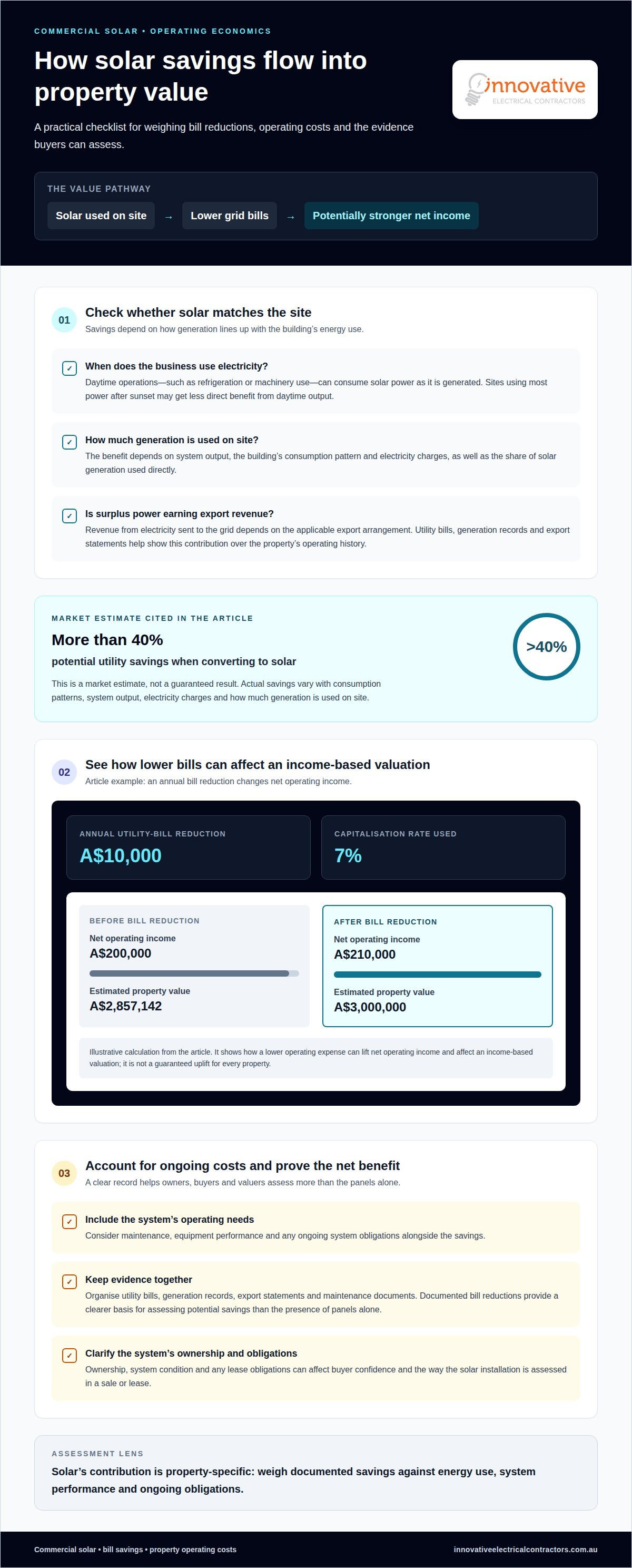
Commercial solar can reduce electricity bought from the grid when generation matches a business’s demand. The value depends on when the site uses power, how much solar electricity it consumes directly and how it manages surplus generation. Daytime operations, such as refrigeration or machinery use, can draw on solar output as it is produced.
Bill savings flow into a property’s operating position by lowering an expense. For example, a A$10,000 annual utility-bill reduction lifts net operating income from A$200,000 to A$210,000. At a 7% capitalisation rate, the estimated property value in this example rises from A$2,857,142 to A$3,000,000. The calculation shows how lower overheads can affect an income-based valuation.
Commercial property owners can expect to save more than 40% on utilities by converting to solar energy, according to the market estimate in the available figures. Actual savings depend on the building’s consumption pattern, system output, electricity charges and the proportion of generation used onsite. A site that uses most power after sunset draws less direct benefit from daytime generation than a business operating through daylight hours.
Export revenue may also contribute to income when surplus electricity is sent to the grid. Its effect on property value depends on the applicable export arrangement and whether revenue is recorded consistently. Buyers can assess this contribution more clearly using utility bills, generation records and export statements covering the property’s operating history.
Operating costs matter alongside savings. Maintenance, equipment performance and ongoing system obligations affect the net benefit retained by the property owner. Compare annual bill reductions with service and agreement expenses rather than treating gross savings as additional income. This gives a clearer view of the system’s contribution to net operating income.
For a practical assessment, group records by billing period: electricity purchased, solar generation, onsite use, exports and system expenses. Matching these figures shows whether savings align with the business’s operating schedule. It also gives a buyer or valuer a traceable basis for assessing the building’s energy costs and solar-related income.
Solar ownership versus leased commercial property
Ownership determines who controls a solar system, receives its benefits and carries its obligations. In a commercial property sale or lease, those responsibilities can affect the transaction and the building’s appeal.
Owned commercial solar systems
An owned system belongs to the property owner, who retains control of its operation and benefits. Buyers can assess the panels and related equipment as part of the property’s assets. For example, an owner can present generation records, maintenance history and electricity bills to show how the system serves the site.
Ownership also means managing maintenance and system performance. A property file should identify the equipment, its condition and any ongoing service arrangements. When the building is sold, clear records explain what transfers with the property and help buyers understand the system’s role in the site’s energy use. Documented responsibilities make the asset easier to assess.
Leased commercial property and solar
A leased solar system is governed by an agreement setting out the rights and responsibilities of the property owner and system provider. The panels may be on the roof without belonging to the building owner. Prospective buyers or tenants need to understand who manages the equipment and how the agreement affects the property.
Review the lease terms for payment obligations, maintenance duties, access arrangements and what happens when the property changes hands. An agreement may require a new owner to assume obligations or outline how they can be transferred. The contract’s terms determine the effect: panels alone do not show who receives the savings or export revenue.
For either arrangement, organise the ownership documents, system records and energy bills together. This helps distinguish system benefits from contractual costs and clarifies what a buyer or tenant will inherit. If you’re considering a system for a commercial site, explore commercial solar and battery options alongside the property’s ownership plans.
Innovative Electrical Contractors: Commercial Electrical
Innovative Electrical Contractors provides commercial electrical services for businesses considering solar as part of a property or operational decision. Its Solar & Battery installations suit sites considering generation and storage, while off-grid solar, battery and generator systems address off-grid energy needs.
Bring the property’s electricity-use patterns and solar ownership plans into the discussion. These details help define the site’s electrical requirements, whether you’re planning a new system or reviewing an existing commercial setup. Commercial Electrical and Solar & Battery services connect the building’s electrical needs with its energy plans.
For commercial electrical or solar and battery work related to your property, contact Innovative Electrical Contractors.
Make your next property decision with confidence
Before committing to a commercial solar project, base the decision on the property’s future use. A clear energy plan can account for changes in business operations, tenant needs and ownership arrangements, not just current electricity consumption. This gives you a practical basis for comparing options and discussing the system’s role in your property strategy.
The impact of commercial solar on property valuation depends on how the system suits the building and its documented performance. Keep relevant energy and system information together, then consider how planned property changes could affect energy needs. This preparation can make discussions about electrical upgrades more focused.
Innovative Electrical Contractors provides Commercial Electrical, Electrical Services and off-grid solar, battery and generator solutions. For a considered next step, plan your commercial electrical project with a team that can discuss your property’s energy requirements. A well-prepared plan puts you in a stronger position to choose a practical path forward.
Frequently Asked Questions
How can solar benefit the bottom line for property owners who lease to tenants?
Solar can make a property more attractive to tenants by helping reduce reliance on purchased grid electricity. The financial benefit depends on who pays the electricity bill and how the lease allocates energy costs. A tenant using power during daylight hours, for example, may consume more onsite solar generation. Owners can consider how energy arrangements fit lease terms, tenant needs and property operating expenses.
How does commercial solar affect commercial property values in Australia?
Commercial solar can support value when it strengthens a property’s income profile or appeal to buyers, but panels alone do not determine market value. In Australia, location, condition, use and comparable sales remain relevant to an assessment. Owners can help demonstrate the system’s contribution with clear records of energy use, ownership and ongoing obligations, so its role can be considered alongside the property’s other features.
How do solar system ownership, leases, and power purchase agreements affect property value?
Ownership and contracts determine who controls the system, receives its benefits and carries its obligations. With an owned system, the property owner holds the asset. A lease or power purchase agreement (PPA) sets the contractual terms for using the system or its electricity. A sale may involve transferring an agreement or addressing its obligations. The buyer’s assessment depends on the contract terms and their effect on property income and use.
How do commercial properties with solar compare with similar properties without solar in sale prices, rents, and occupancy?
There’s no automatic premium in sale price, rent or occupancy simply because a commercial property has solar. Compare properties with similar locations, uses, conditions and lease arrangements, then assess each outcome separately. Sale price reflects the transaction, rent reflects lease terms and market demand, and occupancy reflects tenant demand and suitability. For example, daytime solar output may appeal to a tenant with substantial daytime electricity use.
What risks can reduce the value benefit of commercial solar, such as ageing equipment or roof constraints?
Ageing equipment, limited generation, poor maintenance records and restrictive roof conditions can reduce a system’s usefulness to a buyer. Roof repairs may also complicate panel access or require equipment to be moved. A roof nearing major works, for example, can affect the timing and practicality of solar upgrades; contractors like Underline Energy Concepts emphasise coordinating roof condition with electrical improvements to prevent disruptive re-roofing later. Clear service records, equipment details and roof information help buyers understand potential costs and operational constraints.


Comments