
Commercial Solar Power Systems in Melbourne: Costs and Sizing
The biggest solar system a roof can hold isn’t necessarily the right one. Commercial solar power systems should be sized around a business’s electricity use, usable roof space and energy goals. Residential systems follow the same principles, but differ in scale and panel count.
It makes sense to want clear answers before committing to solar. A well-matched system can help a business use more of the electricity its panels generate, while an oversized system may add upfront cost without a corresponding benefit.
This guide from Innovative Electrical Contractors explains how commercial and residential solar work, what affects system size and panel numbers, and how Victorian rebates and certificates apply. You’ll also see which details matter when planning a system for a home or business.
Table of Contents
How commercial & residential solar panels work in Melbourne
Solar panels convert sunlight into electricity, and an inverter makes that power usable at the property. For a business, system design starts with electricity use, available roof space and goals such as reducing grid use or increasing energy independence.
Commercial Solar System Design
Before recommending a system, solar installers assess electricity use, available roof area and the site’s energy goals. They also consider how the roof can accommodate panels and system components. Modern commercial panels convert around 15-22% of sunlight into electricity. A well-sized design matches generation to demand; oversizing can increase upfront costs without adding benefits. Commercial systems typically pay back installation costs through energy savings in 2 to 5 years.
For a commercial solar quote, the price depends on the case and is given after a quote request. System capacity, roof layout, equipment choices and installation requirements shape the assessment. Microinverters can bring total solar PV system costs to around 20% more than an equivalent string system. That difference makes equipment selection one factor in comparing a proposed design, alongside how well it suits the site.
Installation and Grid Connection
Installation involves fitting the panels, connecting the system components and arranging the grid connection. Ask for a clear explanation of the proposed design, installation sequence and connection process. Panels operate silently, while inverters may produce a low hum as they convert solar energy. The proposal should explain how the system will connect to and operate with the property’s electricity supply.
Permit and planning needs depend on system scale and site requirements. Commercial systems over 250 kW typically involve substantial planning, permit applications, engineering and paperwork. Systems below 30 kW in Australia usually do not require the additional permits, planning or components associated with a commercial solar specialist.
Plan for panel cleaning, system health checks and electrical safety testing. Rain may not clean panels effectively where rainfall is low or dust and pollution accumulate. A commercial operations and maintenance agreement should specify cleaning frequency, testing, response times and what happens if obligations are missed. Clear arrangements help businesses manage maintenance and rooftop safety after installation.
Commercial system size categories and panel counts
Commercial systems differ in capacity, panel count and connection to the property’s electricity supply. Options include grid-connected solar, solar with battery storage and off-grid systems. The right type depends on the site’s energy use and roof area, as well as whether storing electricity or operating independently from the grid is important.
In Australia, commercial systems sized 30-100 kW are described as small systems and typically use approximately 100-400 panels. Commercial panels commonly produce 450-600 watts each, so the count depends on the chosen panel output and system capacity. For example, a 30 kW design using higher-output panels needs fewer panels than one using lower-output panels. Panel dimensions and roof layout also affect how many fit.
Savings depend in part on how much solar electricity a business uses on site instead of drawing power from the grid. Operating hours matter: a business that uses electricity during daylight can use more solar generation directly. A battery can store surplus electricity for later, while a grid-connected system can draw from the network when solar generation does not meet demand.
Orientation affects generation. A Melbourne commercial system with east-west panel orientation produces savings 4.5% lower than a north-facing system. Tilt can help position panels, but it affects the installation design and roof arrangement. A sustainable layout balances orientation, available space and practical installation requirements.
Panel lifespan and warranty terms are separate considerations. Solar panels in Melbourne commonly have performance warranties of 25 to 30 years. Review the manufacturer’s performance warranty alongside the proposed panel and inverter specifications. Inverters convert solar electricity for use at the property; batteries add storage where the operating pattern calls for it. For a project-specific layout, explore commercial solar system design.
Government rebates and small-scale technology certificates
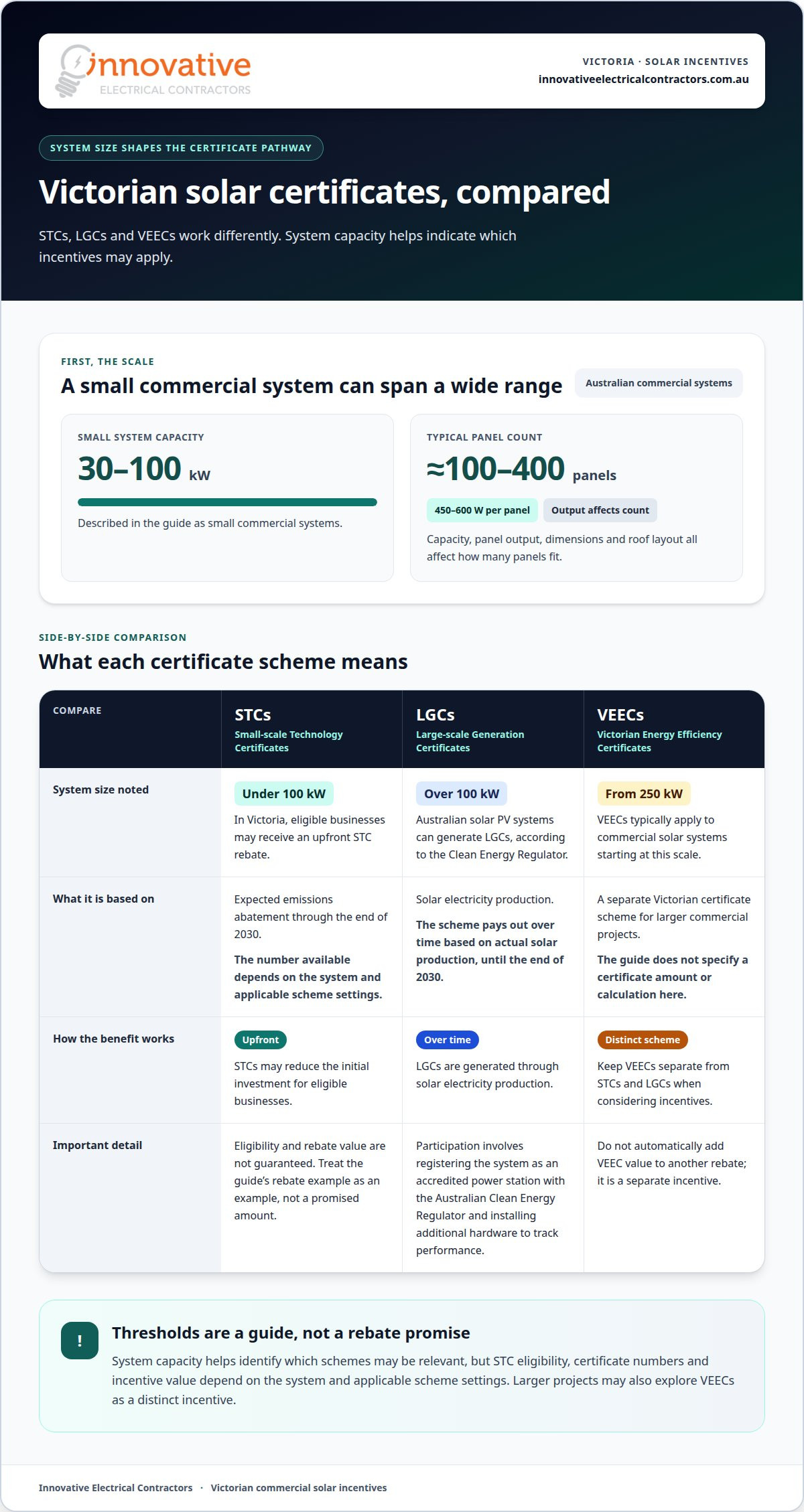
Victoria’s solar incentives can reduce the upfront investment for eligible businesses, but certificate schemes depend on system capacity. Small-scale Technology Certificates (STCs) and Large-scale Generation Certificates (LGCs) work differently, so system size helps determine which incentives may apply.
Businesses installing solar systems under 100 kW in Victoria may be eligible for an upfront STC rebate. The rebate is based on expected emissions abatement through the end of 2030. The number of STCs available depends on the system and applicable scheme settings. This is an example, not a guaranteed rebate amount.
STCs reduce upfront costs, while LGCs are generated through solar electricity production. Australian solar PV systems over 100 kW can generate LGCs, according to the Clean Energy Regulator. The scheme pays out over time based on actual solar production until the end of 2030. A business seeking to participate registers its system as an accredited power station with the Australian Clean Energy Regulator and installs additional hardware to track performance.
For larger projects, Victorian Energy Efficiency Certificates may also be explored. These certificates typically apply to commercial solar systems starting from 250 kW. They are separate from STCs and LGCs, so a business should treat them as a distinct incentive rather than add their value automatically to another rebate.
To assess incentives, start with the planned system capacity, then identify the certificate pathway that fits. For instance, a system under 100 kW may qualify for an upfront STC rebate, while a system over 100 kW can generate LGCs. Certificate values and eligibility affect the financial case, alongside electricity savings. Confirming the applicable scheme before finalising an investment helps keep projected savings grounded in the system’s size and expected production.
Residential and commercial solar systems
Homes and businesses use solar energy differently, so system design should reflect each property’s electricity demand. Residential systems generally serve household loads; commercial systems are designed around operating patterns, equipment and usable roof area. The key distinction is not simply panel count, but how closely daytime generation matches when the property uses electricity.
Typical residential panels produce 370-440 watts. Residential inverters typically have two strings, which connect groups of panels to the inverter. A 6 kW residential system can place approximately 360 kg of load on a roof. These details matter when assessing panel layout and roof capacity, particularly where the building has limited usable space.
Commercial solar can better match businesses that use electricity during daylight hours. In Melbourne, commercial systems produce an estimated average of 3.6 kWh per kW of installed capacity daily. A 100 kW system facing due north is estimated to generate 360 kWh daily. Actual savings depend on how much generated electricity the business uses, rather than drawing from the grid.
Scale also changes the role of incentives. Systems under 100 kW may be eligible for upfront STCs in Victoria, while Australian systems over 100 kW can generate LGCs. These certificate pathways support investment decisions, but they’re separate from the practical value of using solar power on site. A business should weigh expected solar use, operating hours and system size together.
Both residential and commercial installations contribute to renewable energy use. For a business, using generated electricity can reduce reliance on grid power and associated carbon emissions. The clearest comparison is each property’s demand profile: household use differs from a workplace’s daytime equipment loads. A tailored solar and battery design can account for those patterns. Plan your solar and battery system around how your property uses electricity.
Innovative Electrical Contractors: Commercial Electrical
Innovative Electrical Contractors provides commercial electrical work and solar and battery installations to help businesses turn a solar plan into a practical project. These services can support sites considering grid-connected solar, battery storage or wider electrical requirements.
Start by discussing how the property uses electricity, the proposed system size and whether storage suits the business’s operating needs. These details help shape a solution around the site rather than simply the available roof space. Where a property needs to operate independently from the grid, off-grid solar, batteries and generators may also be relevant.
Turn to Innovative Electrical Contractors when you’re ready to discuss commercial solar installation or related electrical work for your business. Contact Innovative Electrical Contractors to talk through your project.
Turn your solar plan into a project brief
Planning commercial solar power systems in Melbourne is easier when the project starts with a clear picture of how the site operates. Gather electricity bills, operating hours, planned equipment changes and available roof or building plans. These details turn an initial interest in solar into a practical project brief.
Record the main priorities, such as managing daytime electricity use, adding storage or supporting greater energy independence. Note constraints that could affect installation, including tenant responsibilities or planned building work. Clear priorities give decision-makers a consistent basis for assessing proposals and keep operational needs central as the design develops.
With those priorities set, the next conversation can focus on the site’s electrical requirements and intended outcomes. Send an enquiry to discuss your project with Innovative Electrical Contractors. A clear starting point helps move the decision forward with purpose.
Frequently Asked Questions
Commercial solar installation projects are large, so how can you fund your project?
Businesses can consider operating leases, chattel mortgages, commercial loans, power purchase agreements or environmental upgrade finance. These arrangements differ in how they fund equipment, payments and ownership, so compare their effect on cash flow and asset plans. Environment Upgrade Agreement terms can extend up to 20 years. A power purchase agreement may take 7-10 years to become cashflow positive, making the payment structure important to assess.
Does your switchboard need to be upgraded to install commercial solar panels?
Not every commercial solar installation requires a switchboard upgrade. The existing switchboard’s condition, capacity and compatibility with the proposed system are key considerations. If changes are needed, switchboard upgrades can form part of the electrical work supporting the solar installation. The design should account for how solar equipment connects to the building’s electrical infrastructure, including any planned changes to site loads.
How does a commercial solar provider calculate solutions for a business?
System design should reflect the business’s electricity use, operating pattern, usable roof area and energy objectives. For example, a warehouse that runs equipment during daylight may use a different share of its solar generation than a site with evening demand. The assessment also considers panel layout, inverter configuration and whether battery storage suits the business’s operating needs.
How long will it take to see a return on investment?
Commercial solar systems typically pay back their installation cost through energy savings in 2 to 5 years. The timing depends on how much generated electricity the business uses, its operating hours and the system’s design. A site using more solar power during daylight can reduce electricity drawn from the grid. Treat the payback estimate as a project calculation, not a fixed timetable for every business.
How much does a business solar system cost?
Project cost depends on the specific requirements and is set out in a quote. System capacity, panel and inverter choices, roof layout, electrical work and battery storage can all affect the cost. Commercial systems range from small installations to large, complex projects, so capacity alone does not determine the total. A tailored quote should connect the proposed equipment and installation work to the site’s needs.
What is the typical payback period and ROI for commercial solar in Melbourne?
Commercial solar systems typically pay back through energy savings in 2 to 5 years. For systems sized 30-100 kW, Australian installations can expect a return on investment in 5 years. ROI depends on installation costs, solar generation and how much electricity the business uses on site. Compare the projected savings with the project’s full costs and operating needs, rather than relying on system size alone.
Comments