
Electrical Compliance for Melbourne Childcare Centres
The electrical risk in a childcare centre can start with an upgrade, not a broken appliance. Across Australia, electrical compliance for childcare centres covers portable equipment such as fans, heaters and vacuum cleaners, as well as extension leads, power boards, fixed appliances and the circuits that supply them. Socket outlets should have RCD protection with a maximum tripping current of 30 mA, and outlets should be tamper-resistant or fitted with safety plugs.
Test-and-tag records are important, but they are only one part of electrical compliance for childcare centres. This guide from Innovative Electrical Contractors explains what to assess, how testing and documentation fit together, and what to consider when electrical work alters an existing circuit.
You’ll also learn how to respond to electrical compliance notices and plan upgrades around affected circuits. The aim is to help you understand the work involved and make informed decisions about your centre.
Table of Contents
What Are the Electrical Compliance Requirements for Childcare Centres in Melbourne?
Electrical compliance for childcare centres in Melbourne involves safe installations, suitable RCD protection and appropriate equipment testing. Requirements depend on the work, equipment and applicable Victorian rules.
Areas covered by stricter RCD requirements
Melbourne childcare centres should have socket outlets protected by RCDs with a maximum tripping current of 30 mA. A stricter 10 mA requirement is described for Sydney childcare areas primarily used to teach or care for children, so it shouldn’t be assumed to apply in Melbourne.
This matters when you assess rooms, outlets and planned work. RCD protection helps reduce the risk of electric shock if a fault occurs. For electrical compliance for childcare centres, assess the circuits and rooms at the actual premises, rather than relying on requirements from another state.
Higher-risk areas needing closer attention
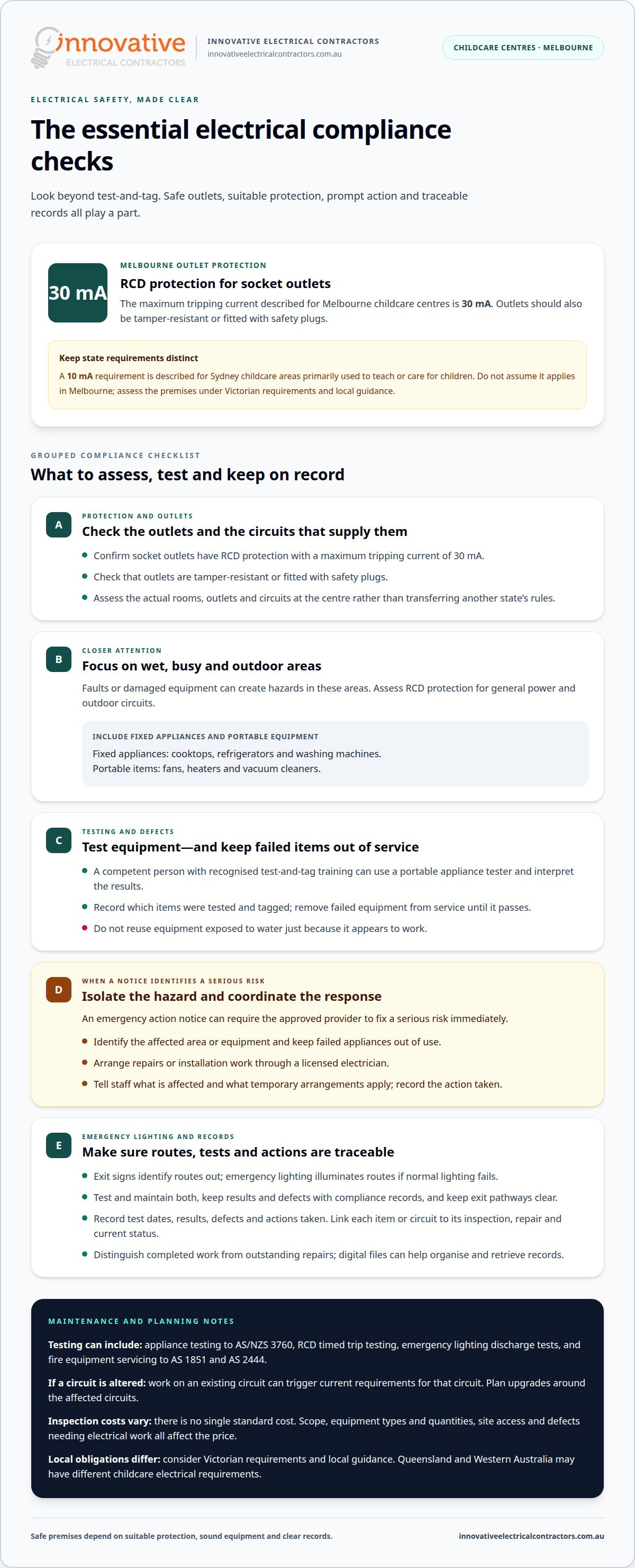
Wet, busy and outdoor areas warrant closer attention because faults or damaged equipment can create hazards. Assess RCD protection for general power and outdoor circuits, as well as fixed appliances such as cooktops, refrigerators and washing machines.
Portable fans, heaters and vacuum cleaners also need a testing process. A competent person with recognised test-and-tag training can operate a portable appliance tester and interpret the results. Record which items have been tested and tagged, and remove failed equipment from service until it passes. Don’t reuse equipment exposed to water just because it appears to work.
State-specific childcare requirements
Electrical obligations vary across Australia. Centres in Melbourne need to consider Victorian requirements and local regulatory guidance, alongside the National Regulations for Early Childhood Education and Care, which require safe premises and appropriate risk assessments.
The Queensland Development Code (QDC) requires electrical installations in Queensland childcare centres to be protected against electric shock. WA childcare facilities may have electrical safety requirements that differ from those in other states. These differences show why centres should apply local rules rather than transfer another state’s requirements to Melbourne.
Inspection and testing costs
There’s no single standard cost for electrical inspections and testing at Australian childcare centres. The price depends on the scope, types and quantities of equipment, site access, and any defects requiring electrical work.
A clear inspection scope sets out what will be assessed, tested and recorded. Records can support audit and insurance discussions, but they don’t replace safe equipment or necessary repairs. The centre’s electrical needs and required work determine the quote.
Compliance and emergency action notices
Regulatory notices can require a centre to address serious safety issues immediately. Clear records, prompt isolation of hazards and appropriate electrical work help staff manage the response.
Authorities may identify non-compliance through monitoring or public complaints. If an issue poses a serious risk to children, they can issue an emergency action notice requiring the approved provider to fix it immediately. Enforcement actions may also be made public, depending on the circumstances.
Start by understanding the issue and which areas or equipment it affects. Keep failed appliances out of use, arrange repairs or installation work through a licensed electrician, and record the action taken. Tell staff which areas or kitchen appliances are affected and what temporary arrangements apply. These steps help the centre maintain oversight while responding.
Emergency lighting and staff procedures
Emergency lighting supports safe movement through a centre if normal lighting fails. Staff procedures are also essential: working fittings help only when people know how to respond and exit routes remain accessible.
Keep staff familiar with evacuation arrangements and exit locations. A notice involving emergency lighting should prompt a review of affected areas, testing records and any remedial work. Keep pathways clear, including routes near kitchens and rooms where children gather, so staff can guide children without relying on a single exit or light fitting.
Exit signs and lighting tests
Exit signs identify routes out, while emergency lighting illuminates those routes if normal lighting fails. Include both in the centre’s testing and maintenance records, alongside relevant electrical and fire safety checks.
Electrical maintenance can include appliance testing to AS/NZS 3760, RCD timed trip testing, emergency lighting discharge tests, and fire equipment servicing to AS 1851 and AS 2444. Emergency lighting systems should be tested and serviced regularly to help ensure they work when needed. Keep results and defects with the centre’s compliance records. For electrical work linked to a notice, electrical installation support can help address the affected system.
Digital compliance records and audit documentation
A clear electrical record links each inspection, test result and repair to the equipment or circuit involved. Digital files can make these details easier to organise and retrieve during an assessment.
Inspection and maintenance records
Inspection and maintenance records show what was examined, what needed attention and how identified issues were handled. They give centre managers a traceable account of electrical safety work, rather than a collection of unrelated invoices.
For example, a kitchen inspection might identify a damaged appliance lead. Record the item, the defect, whether it was taken out of service and what action followed. Keep maintenance notes with relevant electrical documents so an assessor can trace the issue from discovery to resolution. Distinguish completed work from outstanding repairs.
Test records and asset registers
An asset register identifies portable electrical equipment, while test records show when each item was tested and the result. Together, they help staff match a tagged appliance to its testing history.
Include asset details, the test date, measured result, identified defects and actions taken. Specific descriptions matter: “vacuum cleaner in the storeroom” is more useful than a generic appliance entry when staff need to find equipment. Record whether an item passed or failed, and update its status if it’s removed, repaired or replaced.
Keeping compliance records
Keep electrical test and tag records for at least 5 years. RCD testing records should be retained until the next test or until the device is removed.
Organise documentation by equipment, circuit or test date, and keep inspection findings with follow-up actions. This makes records easier to review and helps staff spot gaps, such as a missing test result or unresolved defect. Digital records can help when entries are legible, current and linked to the correct asset.
During an audit, a consistent record trail helps explain what was tested, what needed work and how the centre responded. Keep relevant files accessible to authorised staff, including records for equipment no longer at the site if they document completed actions.
Upgrades to existing childcare centres
Upgrading an existing centre can bring electrical compliance into focus, particularly when work changes a circuit. Current requirements apply to the circuits affected by an alteration.
That makes the scope of work important. Adding socket outlets or changing a kitchen appliance connection, for example, may affect the circuit supplying it. Before work begins, identify the relevant circuit and proposed changes. This clarifies which parts of the installation need attention, rather than treating every upgrade as the same.
A practical upgrade plan considers how the centre operates, whether children can access electrical devices and whether existing equipment will remain in use during the work. An electrician can assess the installation, explain the required work and identify hazards to address. Electrical installations and repairs require a licensed electrician.
Portable appliances are a separate consideration. Altering a fixed circuit doesn’t replace test and tag for portable equipment. Australian centres can maintain these as distinct workstreams: installation records for circuit changes, and testing records for portable devices under AS/NZS 3760. Keeping the records connected to the relevant assets makes later reviews clearer.
After an upgrade, document the circuits and equipment affected, the work completed, and any defects or follow-up actions. Update asset or maintenance records when devices are added, moved or replaced. If an incident or fault prompted changes, record the original issue and completed work to explain why the upgrade was undertaken.
The takeaway is simple: an existing centre isn’t automatically outside current requirements when electrical work changes a circuit. The affected circuits need attention, and the upgrade should leave a clear record of the assessment and work completed. For help with an electrical upgrade, arrange childcare centre electrical work.
Innovative Electrical Contractors
Innovative Electrical Contractors can help Melbourne childcare centres address electrical work identified during an inspection, notice or planned upgrade. Its commercial electrical and electrical services cover the installations and circuit changes that may affect a centre’s safety and compliance.
Have the relevant notice or assessment, details of affected areas, and available electrical records ready. This information helps clarify the required work, whether it involves a circuit alteration or a broader upgrade. Electrical repairs and installations require a licensed electrician; portable appliance testing and tagging is a separate process.
If your centre needs electrical work to address an identified issue or plan an upgrade, contact Innovative Electrical Contractors.
Make electrical planning part of your next centre review
Use your next maintenance or refurbishment planning session to identify electrical work that could affect the centre’s operations. A clear scope connects safety priorities with practical decisions about access, timing and the areas involved. Planning ahead can make electrical compliance for childcare centres easier to manage as needs change.
Innovative Electrical Contractors provides commercial electrical work and broader electrical services for childcare facilities. Its services also include off-grid solar, battery and generator installations, which may be relevant when planning the centre’s wider electrical infrastructure.
Bring the issue you need addressed, such as a planned circuit alteration or an electrical concern raised during an assessment. Discuss your centre’s electrical needs with Innovative Electrical Contractors and take the next step with a clear plan.
Thoughtful planning gives your team a practical starting point for safe, well-managed electrical work.
Frequently Asked Questions
Which Electrical Items Need to Be Tested?
Include portable electrical equipment used at the centre in its testing program. Examples include fans, heaters, vacuum cleaners, extension leads and power boards. Fixed appliances, such as refrigerators and washing machines, also need attention as part of electrical safety checks. Testing portable equipment is distinct from inspecting the installation and circuits that supply it, so records should specify which check was completed.
Are power boards allowed in childcare centres?
Power boards can be used, but they need overload protection and must not be daisy-chained. For example, plugging one board into another can create an unsafe setup. Remove boards with damaged casing, plugs or leads from service. Centre procedures should also consider where boards are used, whether children can reach them, and whether fixed outlets are a safer option.
How Often Should Equipment Be Tested and Tagged?
Testing intervals depend on the equipment and its use. Portable appliances in educational settings are commonly tested every 6 to 12 months, while extension leads and power boards are often tested every 6 months. A centre can set a more frequent cycle for equipment used in higher-risk conditions. The schedule should identify each item, its due date and the person responsible for arranging testing.
What Happens If Equipment Fails Testing?
Remove failed equipment from service and keep it out of use until it passes testing. Clearly identify a failed heater, for example, so staff don’t return it to a room by mistake. Arrange any required electrical repair through a licensed electrician, then record the defect, action taken and retest result. Update the asset register if the item is replaced or permanently withdrawn.
What Australian electrical safety laws and standards apply to childcare centres?
Relevant requirements include AS/NZS 3000 for electrical installations and AS/NZS 3760:2022 for in-service inspection and testing of electrical equipment. The National Regulations for Early Childhood Education and Care also require safe premises and appropriate risk assessments. State and territory requirements can differ, so Melbourne services should consider Victorian rules and guidance from their regulatory authority alongside applicable standards.
What electrical inspections and testing are required for childcare centres in Australia, and how often?
Centres need to manage portable equipment testing, RCD testing and checks of electrical installations. Common schedules include daily visual checks of cords and appliances, quarterly RCD testing, and portable appliance testing every 6 to 12 months. Extension leads and power boards are often tested every 6 months. The appropriate program depends on equipment, use and site risks; keep inspection and test records together for review.
Comments