
3 Phase Power Explained: How It Works and Whether Your Home Needs It

A bigger electrical supply doesn’t automatically mean lower power bills. 3 phase power is a capacity option: it may help a property run higher-demand equipment, but it isn’t an automatic upgrade for every home. If terms such as phases, voltage and electrical load feel difficult to compare, start by looking at the equipment you use now and what you may add. That can help you work out whether your planned appliances justify an assessment and what an upgrade could mean for the existing wiring and switchboard.
This guide explains how three-phase supply differs from single-phase, what equipment and future plans may benefit from extra capacity, and what to check before seeking professional advice. Many standard homes can meet their needs with single-phase supply, so the right choice depends on the property’s actual and planned demand. We’ll cover the basics in plain language, situations where three-phase may be worth assessing, and the information to gather about your appliances, switchboard and plans for solar or battery systems. You’ll be better prepared to discuss the options with a qualified electrical contractor without assuming an upgrade is needed.
Table of Contents
What Is 3 Phase Power, and How Does It Differ from Single Phase?
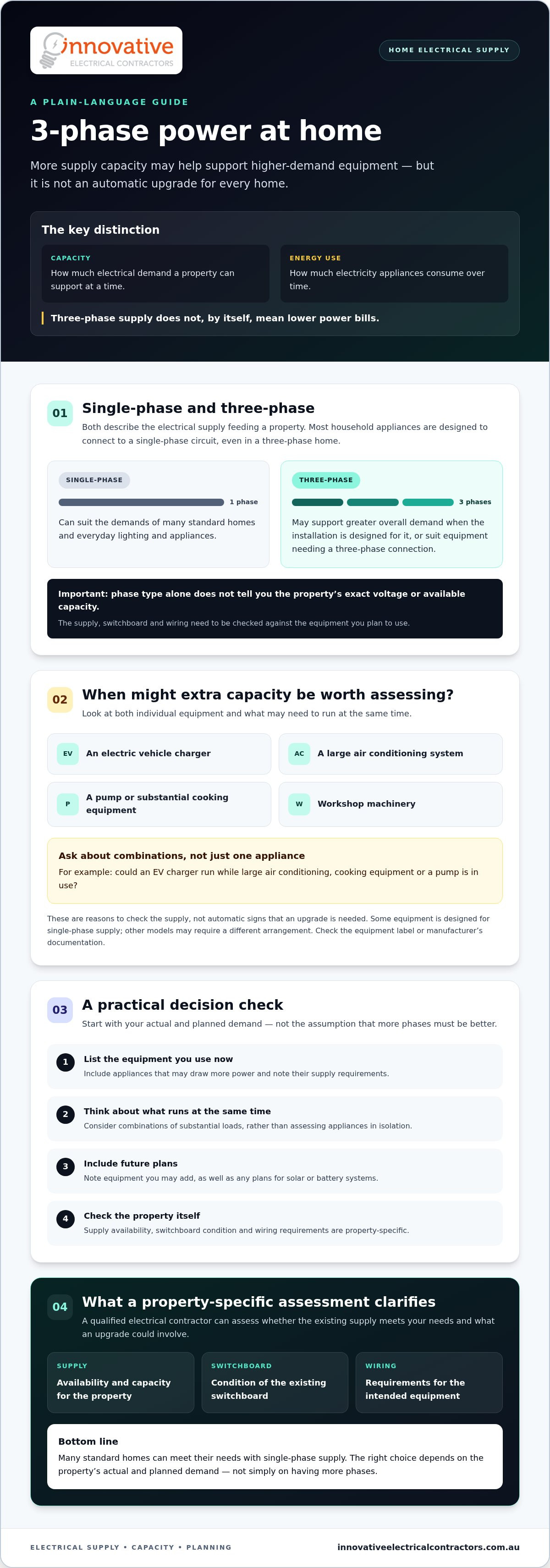
3 phase power is an alternating-current electrical supply that uses three coordinated electrical phases to deliver power to a property. Homeowners often encounter the term when considering equipment that may draw more power, such as an electric vehicle charger, a large air conditioning system or workshop machinery. Whether a home needs three phases depends on the equipment, how it will be used and the capacity of the property’s electrical installation.
What do the three phases actually mean?
A phase is one part of an alternating-current supply, where the direction of electrical current changes repeatedly. Imagine three people pushing a swing in a carefully timed rhythm: their efforts are spaced out to keep the motion steady. In a three-phase supply, the phases are offset from one another to help deliver power continuously. Electricity doesn’t arrive in separate batches.
The supply is the electrical service feeding a property. An electrical load is anything using power, from a light to an air conditioner. Three-phase systems are widely used for equipment with larger or more demanding loads. For a foundational overview of the principles and terminology, see Three-phase electric power.
How is single phase different from 3 phase?
Most household appliances are designed to connect to a single-phase circuit, even in a property with three-phase supply. The practical difference is the supply available to the property and how its electrical loads can be supported. It doesn’t mean every appliance needs a different plug or connection.
These are general distinctions, not a capacity rating for your home. The available supply depends on the property’s installation and must be checked. Don’t assume voltage or capacity from the phase type alone. A qualified electrical professional can assess the existing switchboard, wiring and intended equipment to establish what the property can support. The right option is the one that meets your actual requirements safely, not simply the one with more phases.
How 3 Phase Power Supplies Larger or Multiple Electrical Loads
A property’s available electrical capacity affects how much equipment can operate at once. A home may manage everyday appliances comfortably but need an assessment before adding an EV charger, larger air conditioning, a pump or workshop equipment. These are reasons to check the supply, not automatic signs that an upgrade is needed.
Supply capacity is how much electrical demand a property can support at a time; energy use is how much electricity its appliances consume over time. A three-phase supply doesn’t, by itself, mean a household uses less energy. Appliance specifications, how often equipment runs and what else is operating all matter.
What household equipment may make 3 phase worth assessing?
Consider both individual appliances and combinations. For example, could an EV charger run while large air conditioning, cooking equipment or a pump is in use? A home workshop may also have machinery designed for a three-phase connection. The equipment label or manufacturer’s documentation can help identify its supply requirements.
Having one of these appliances doesn’t automatically mean the property needs three phases. Some equipment is designed for single-phase supply, while other models may require a different arrangement. The existing supply and installation must also be checked. For a general comparison of the difference between single-phase and 3-phase power, see Generac’s overview.
How do phases and loads work together?
In a three-phase installation, an electrician can distribute suitable electrical loads across the available phases. Think of it as sharing items across several bags rather than putting everything into one. Balanced loading means distributing demand reasonably across those phases, rather than having one carry much more than the others. The right arrangement depends on the equipment and the installation.
That’s why an assessment considers the whole setup, not just the appliance prompting the enquiry. An electrical professional can review the supply, switchboard, wiring and planned equipment to understand how loads interact and whether changes are appropriate. Don’t open the switchboard or attempt to alter wiring yourself.
If new equipment or future plans raise questions, gather its specifications and note which appliances may need to run together. Information about residential electrical requirements can help you understand what to check before deciding on next steps.
Does 3 Phase Power Save Electricity? Benefits, Limits and Common Myths
No. A three-phase supply doesn’t automatically reduce how much electricity your household uses or lower your bill. It can provide more capacity for suitable equipment, but that’s different from using less energy. Whether an upgrade is useful depends on your property, appliances and plans, not on the assumption that more phases always mean better performance.
What are the practical benefits and trade-offs?
Additional supply capacity may help a property support equipment designed for three-phase operation or manage several substantial electrical demands within the limits of its installation. It may also be worth considering when planning changes to a home’s electrical setup. The outcome depends on more than the phase count: the existing supply, wiring and switchboard matter too, and an upgrade may involve assessment and electrical work.
A modern home doesn’t automatically need three phases. Nor does installing solar, a battery or an electric vehicle mean a three-phase supply is essential. Requirements vary by system and appliance. Check manufacturer specifications and have the property’s electrical needs assessed before making a decision.
Will 3 phase power lower bills or improve every appliance?
Energy consumption is the electricity appliances use over time. Supply capacity is what the electrical installation can support. Changing the supply type doesn’t, on its own, change how long appliances run or how much energy they consume.
Your bill is influenced by household usage, your electricity tariff and, where relevant, how your generation and battery arrangements work. A suitable appliance may benefit from the supply it was designed for, but phase count alone doesn’t promise improved performance or savings. Check the appliance documentation, then consider the whole installation before deciding whether additional capacity is worthwhile.
How to Decide Whether Your Home Needs 3 Phase Power
Start with what your household uses now and what you may add later. A clear picture of your equipment and plans will help an electrician assess whether your existing supply is suitable or whether other options need consideration. These checks can guide the conversation, but they can’t confirm the capacity of your installation.
List current equipment and future plans. Note major appliances and additions you’re considering, such as an EV charger, workshop equipment, new air conditioning, solar or a battery system.
Check the appliance information. Record manufacturer specifications from the nameplate or manual, including any stated supply requirements. Don’t assume an appliance needs three phases because of its size or purpose.
Consider what runs at the same time. Could several high-demand appliances operate together, such as air conditioning, cooking equipment and vehicle charging? Note your usual patterns rather than trying to calculate the electrical load yourself.
Record any recurring concerns. Write down what you observe, when it happens and which appliances are in use. Repeated issues are a reason to seek professional advice, but they don’t prove that a phase upgrade is needed.
What information should you gather before asking an electrician?
Bring appliance details, any electrical documents you already have and a list of planned changes. If you can view the switchboard safely from the outside, note its general condition, but don’t remove covers, open it or handle wiring. An electrician can inspect the installation and assess whether the supply and switchboard suit your household’s requirements.
For broader context on planning electrical needs across a property, see this guide to modern electrical services. It can help you consider how current needs and future plans fit together.
Which signs mean a professional assessment could help?
Consider an assessment if you’re planning equipment with specific supply requirements, regularly encounter capacity concerns or expect household demand to change. A new build or substantial renovation is also a practical time to discuss future needs, before decisions about equipment and electrical design are settled. For a new home, see this guide to electrical planning for new homes.
You don’t need to decide on an upgrade first. Share your equipment list, documentation and plans with an electrical professional. Information about your property’s requirements is available from Innovative Electrical Contractors.
What Happens During a 3 Phase Power Assessment and Upgrade?
An assessment starts with the property’s actual electrical needs, not an assumption that a three-phase upgrade is necessary. An appropriately qualified electrical professional can review the existing installation, intended equipment and future plans, then explain what options may suit the home. Whether a change is possible or appropriate depends on the property and its supply arrangements.
What may an electrician check?
The assessment may include the existing supply, switchboard condition and capacity, wiring, and the electrical loads the household wants to run. The electrician can also consider whether the supply is available to the property and what technical or regulatory requirements apply to that installation. Requirements can vary, so a property-specific assessment is needed before decisions are made.
Be ready to share appliance specifications, planned additions and any relevant electrical documents you have. The findings can clarify whether the current setup meets your needs, whether other electrical work may be needed, or whether a supply change warrants further investigation. An assessment doesn’t guarantee an upgrade is available, required or straightforward.
Leave switchboard and supply alterations to an appropriately qualified professional. Don’t remove covers, handle wiring or attempt to make changes yourself.
How can you plan for solar, batteries or future equipment?
Tell the electrician about equipment you may add, including solar panels, battery storage, air conditioning or EV charging. Its supply requirements should be considered alongside the property’s existing electrical design. A solar or battery system doesn’t automatically require three phases, just as planning for an EV charger doesn’t confirm that an upgrade is needed. Manufacturer specifications and the full installation both matter.
If storage is part of your plans, this solar battery maintenance guide offers related information for homeowners considering a system.
Once the assessment is complete, ask the electrician to explain the findings, any recommended work and what further checks may be needed. This gives you a clearer basis for deciding whether to proceed, without committing to a change before you understand the property’s requirements. You can also discuss your electrical requirements with Innovative Electrical Contractors.
Make the Next Step a Clear, Informed One
The right electrical supply depends on your property’s needs, not simply on choosing the option with greater capacity. 3 phase power may be worth assessing if your equipment or future plans call for it, but it doesn’t automatically reduce energy use or bills.
Before making a decision, gather information about your appliances, how you use them and any planned additions. A property-specific assessment can clarify what the existing supply and switchboard can support, and whether any changes are appropriate.
Innovative Electrical Contractors provides residential, commercial and industrial electrical services, including switchboard upgrades and solar and battery installations. Discussing your plans with an electrical professional can help you understand the options.
With the right information and advice, you can plan around what your property actually needs.
Frequently Asked Questions
What is 3 phase power in simple terms?
In simple terms, 3 phase power is an alternating-current supply delivered through three coordinated phases rather than one. The phases rise and fall at different points in the cycle, helping provide a steady supply for suitable equipment. A phase is part of the electrical supply, while a load is equipment that uses it. This arrangement can offer more capacity, but the property’s actual supply must be checked.
Is 3 phase power better than single phase for a home?
Not necessarily. Single phase can suit a home’s needs, while three-phase supply may be useful if the property has equipment with specific supply requirements or several substantial loads to consider. The better option depends on the appliances, how they’re used and the home’s electrical installation. Check equipment specifications and ask an electrical professional to assess the property before deciding whether an upgrade is worthwhile.
Can a house run without 3 phase power?
Yes. A house can run on single-phase supply, and many homes use it for everyday lighting, appliances and other household needs. Not having three phases doesn’t mean the home can’t operate normally. If you’re planning new equipment, check its manufacturer specifications and consider whether it may run alongside other high-demand appliances. An electrical assessment can help determine whether the existing installation suits those needs.
How much more equipment can 3 phase power support?
There isn’t a set number of extra appliances that applies to every home. The amount depends on the property’s supply, switchboard, wiring, equipment requirements and which loads operate at the same time. Three phases don’t automatically mean every appliance can be added or run together. Make a list of the equipment you use and plan to install, then have an electrical professional assess the installation’s capacity.
Does 3 phase power reduce electricity bills?
No, not by itself. A three-phase supply changes the capacity available to suitable equipment, not the amount of electricity your household consumes over time. Bills depend on factors such as energy use, your tariff and, if applicable, how solar generation or battery storage is arranged. To understand likely household costs, review your usage and electricity plan rather than assuming a different supply type will lower bills.
What happens if my home does not have 3 phase power?
Your home can continue using its existing supply if it meets the needs of the property and connected equipment. If you’re considering an appliance with particular supply requirements, check its specifications before buying or installing it. If equipment can’t be used as intended or you have recurring capacity concerns, record what’s happening and ask an electrical professional to assess the supply. Don’t attempt to alter the switchboard or wiring yourself.
Can solar panels or an EV charger work with single phase power?
They may, depending on the system or charger model and the home’s existing electrical installation. Requirements aren’t identical across products, so check the manufacturer’s specifications and have the property assessed before choosing equipment. Solar panels or an EV charger don’t automatically mean a home needs three-phase supply. If you’re planning solar, a battery or vehicle charging, discuss those plans together so the electrical design can be considered as a whole.
For electrical work, switchboard upgrades, solar or battery installation, contact Innovative Electrical Contractors to discuss your property’s requirements.


Comments