
Three Phase Power: The Complete Australian Guide to Upgrading Your Property

You've just pulled into the driveway and plugged in your electric vehicle, the ducted air conditioning is fighting the summer heat, and then you switch on the kettle. Suddenly, the house goes dark. It's a frustratingly common scenario for many Australians who find their older electrical systems simply weren't built for the modern energy loads that three phase power is designed to handle. As we embrace more powerful appliances and larger energy needs, the standard single-phase connection often reaches its limit, leading to frequent circuit breaker trips and slow charging speeds.
We understand how annoying it is to feel like you're walking on eggshells with your own switchboard. You want a home that supports your technology without constant interruptions. This guide will teach you exactly how three phase systems work and provide a clear, step-by-step path to upgrading your property for the modern era. We'll explore how this upgrade provides a stable supply, enables rapid EV charging, and removes the limits on your solar and battery goals. From the technical basics to the final installation, here's everything you need to know about future-proofing your Australian home or business.
Table of Contents
What is Three Phase Power? Understanding the Basics
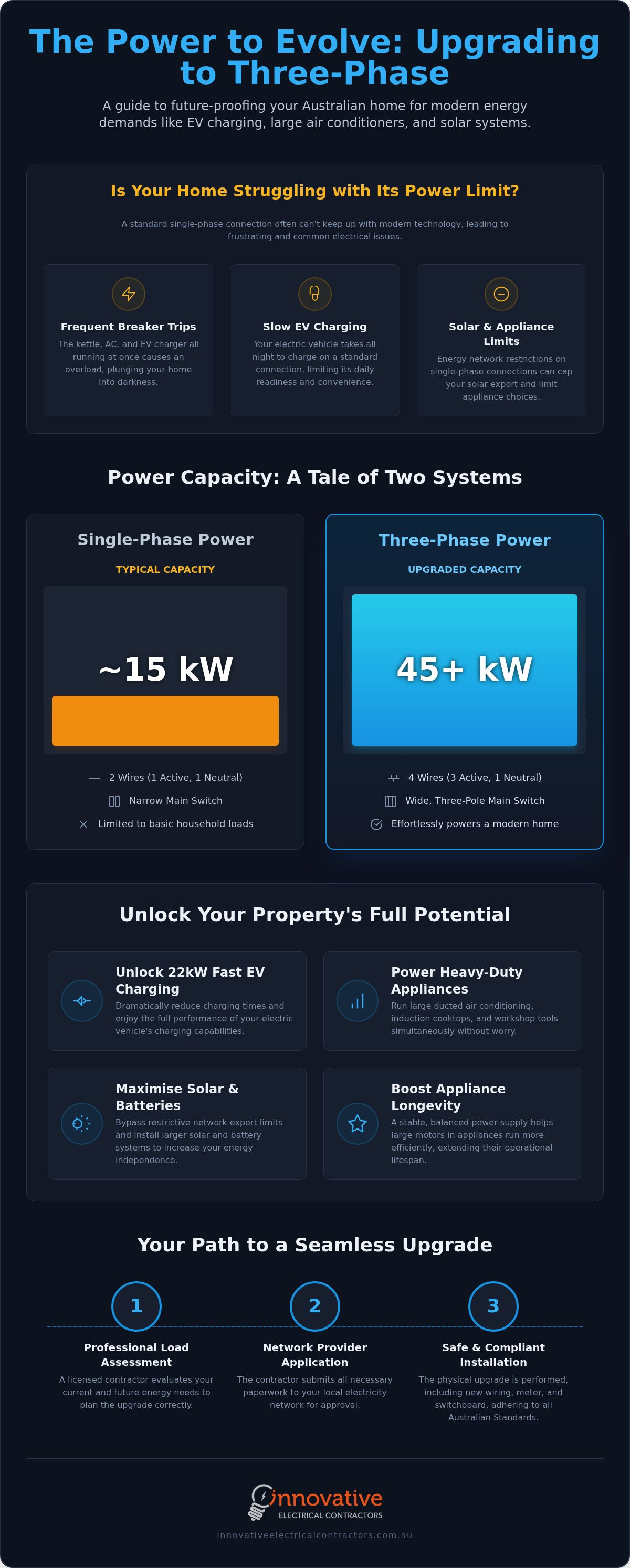
At its core, electricity delivery is about capacity and stability. Most Australian homes traditionally rely on a single-phase connection. This setup uses two wires: one active and one neutral. While this was sufficient for decades, our modern energy demands are changing rapidly. By comparison, three phase power is a four-wire system. It delivers three separate alternating currents through three active wires, plus a neutral wire. This configuration provides a significantly higher power capacity than a standard residential connection.
Think of your electrical supply like a highway. A single-phase connection is a one-lane road. It works fine for a few cars, but heavy traffic causes congestion. A three-phase connection is a three-lane motorway. It allows a much higher volume of electricity to reach your property simultaneously without the "traffic jams" that lead to tripped breakers. This 415V supply provides a smoother, more consistent energy flow. It is the ideal backbone for any high-tech home or business.
The Technical Difference: Single vs Three Phase
The primary difference lies in how much "juice" your property can handle at once. Single-phase systems are common in older residential areas. They typically provide enough power for basic lighting, a fridge, and a couple of televisions. However, they often struggle when you add high-draw technology into the mix. Three-phase systems triple the available power, moving your capacity from roughly 15kW to over 45kW.
One of the biggest advantages is load balancing. This involves organising your appliances across three separate "lanes" of energy. We help you distribute the load effectively so your system remains stable. For example, your setup might look like this:
Phase One: Dedicated to your kitchen and laundry appliances.
Phase Two: Powering your ducted air conditioning and lighting.
Phase Three: Reserved for high-demand tasks like EV charging or workshop tools.
This distribution prevents any single wire from becoming overloaded. It also helps large motors, like those found in air conditioning compressors, run more efficiently and last longer.
Visual Identification: Checking Your Property
You can often identify your current setup with a quick look at your switchboard. Open your electrical cupboard and find the main switch. A single-phase system usually has a narrow, single-pole switch. If you have three phase power, you'll see a much wider switch. This is typically a "three-pole" unit that looks like three individual switches joined together by a single plastic bar.
Your electricity meter provides another clue. Look for markers like "415V" or "3 Phase" on the digital display or the faceplate. If you see three separate service fuses where the power line enters your house from the street, you likely already have three phases. If you're still unsure, it's best to call a professional. We can perform a safe assessment and determine if your current infrastructure is ready for future upgrades like solar batteries or fast chargers.
Single Phase vs Three Phase Power: A Comparative Analysis
Choosing between single and three phase power often comes down to your property's total energy demand. A standard single-phase connection in Australia typically provides between 10kW and 15kW of total capacity. While this once served the average household perfectly, our reliance on high-draw technology has changed the equation. Upgrading to three phase power increases this capacity to 45kW or more, providing the necessary headroom for modern living.
Power Capacity and Kilowatt Limits
Calculating your maximum load is a straightforward way to see if your current system is struggling. When you run multiple heavy-duty appliances simultaneously, you quickly approach your system's ceiling. For instance, a large induction cooktop, a ducted air conditioner, and an electric clothes dryer running at once can pull over 12kW. Adding an electric vehicle charger to this mix almost certainly triggers a circuit breaker trip.
A three-phase upgrade eliminates this bottleneck. It allows you to operate high-demand equipment without worrying about which appliances are already turned on. This stability is essential for maintaining a comfortable, functional home environment. If you're planning a renovation or installing new technology, it's worth reviewing our Modern Electrical Services for Australian Properties to see how infrastructure keeps pace with demand.
Appliance Longevity and Performance
Beyond raw capacity, the quality of power delivery matters. Large electric motors, particularly those found in heavy-duty air conditioning units and workshop machinery, are designed to run more efficiently on three phases. Because the power is delivered in a constant, overlapping stream, these motors start more easily and run with less vibration. This leads to several practical benefits:
Reduced heat build-up: Better load distribution means less stress on your internal wiring and switchboard components.
Smoother operation: Motors run quieter and experience less mechanical wear over time, potentially extending their lifespan.
Improved reliability: You'll notice fewer instances of flickering lights or "brownouts" when large appliances kick in.
While the initial investment in a phase upgrade is higher than a standard repair, the long-term gains in property value and system reliability are substantial. It's a strategic move to future-proof your asset and ensure it can handle the next generation of energy-intensive appliances. If you're noticing your lights dim when the fridge starts, you might need a professional to assess your current electrical load and recommend a path forward.
Why Modern Australian Properties are Upgrading
The push for sustainable living and high-tech convenience is driving a surge in electrical upgrades across the country. We're moving away from gas and toward a fully electric future, which places a massive load on home electrical systems. Standard connections simply weren't designed for this "all-electric" dream. Upgrading to three phase power is no longer just about running a workshop; it's about supporting a modern lifestyle without compromise.
Electric Vehicle Charging Demands
If you've recently purchased an electric vehicle, you've likely noticed that a standard wall socket is incredibly slow. Single-phase wallboxes usually cap out at 7.2kW. For a modern EV with a large battery, that can mean over 11 hours for a full charge. This "trickle" approach isn't practical for many busy families. Moving to a three-phase connection allows you to install a 22kW fast charger in your garage. This setup can reduce your charging time to under 4 hours, ensuring your car is ready to go even after a short turnaround at home.
Maximising Solar and Battery ROI
Most Distribution Network Service Providers (DNSPs) in Australia impose strict export limits on single-phase properties, often capping them at 5kW. This means even if you have a large roof, you're restricted in how much solar energy you can feed back into the grid or use to power your home. By upgrading, you can often install 10kW, 15kW, or even larger solar arrays. This additional generation is vital for keeping your storage full and ensuring you follow proper Solar Battery Maintenance protocols by cycling the system effectively.
The Luxury Home Factor
Modern high-end renovations frequently include appliances that demand significant current. Induction cooktops are a prime example, with some models drawing up to 7kW when multiple zones are active. When you combine this with a heated pool and multi-zone ducted air conditioning, a single-phase system quickly reaches its breaking point. Three phase power provides the necessary infrastructure to run these luxury features simultaneously. It ensures you can host a dinner party with the AC humming and the pool heater running without the fear of a total blackout. This future-proofing is a smart investment that adds genuine value to your property while preparing it for the next generation of energy-intensive technology.
How to Upgrade to Three Phase Power: A Step-by-Step Guide
Transitioning your property to a more robust electrical system is a methodical process that requires precision and compliance with Australian Standards (AS/NZS 3000). While the technical work is complex, the journey follows four clear stages to ensure your new infrastructure is safe and efficient.
Step 1: Energy Audit. We begin with a detailed load assessment. This identifies your current usage and accounts for future additions like solar batteries or fast chargers.
Step 2: DNSP Application. Your Distribution Network Service Provider (DNSP) must approve the upgrade. We handle the technical paperwork to ensure your application meets network requirements.
Step 3: Physical Installation. This involves upgrading your consumer mains (the wires from the street), installing a new meter, and replacing your switchboard.
Step 4: Testing and Certification. Once installed, the system undergoes rigorous testing. We provide a Certificate of Electrical Safety to confirm everything meets national standards.
Navigating the Paperwork and Providers
One common point of confusion is the difference between your electricity retailer and your network provider. Your retailer handles your monthly bills, but the DNSP owns the actual poles and wires. Upgrading to three phase power requires coordination with the DNSP to ensure the local grid can support your increased demand. Depending on your state, you'll likely need a Level 2 electrician or an Accredited Service Provider (ASP) to connect your new service fuses to the network. Approval timeframes can vary from a few days to several weeks, so we recommend starting the application early in your renovation planning.
The Switchboard Upgrade Component
You can't simply "add" phases to an existing single-phase switchboard. A phase upgrade necessitates a complete switchboard replacement. This is a critical safety step that allows us to install modern Residual Current Devices (RCDs) and surge protection across all three phases. During this stage, we focus on balancing your circuits. By distributing your high-draw appliances across the three new "lanes" of power, we prevent individual phases from becoming overloaded. This methodical approach ensures your system remains stable even when the air conditioning and EV charger are running at full tilt. If you're ready to future-proof your property, book a professional load assessment with our team today.
Choosing the Right Electrical Contractor for Your Upgrade
Upgrading to three phase power is a significant investment in your property's infrastructure. It is a complex task that goes beyond standard residential maintenance. You need a partner who understands the intricacies of Australian Standards (AS/NZS 3000) and the specific requirements of network providers. Choosing the wrong contractor can lead to safety issues, project delays, or a system that isn't properly balanced across all phases.
Always verify that your electrician has specific experience with multi-phase installations and switchboard upgrades. Request a comprehensive, itemised quote before work begins. This document should clearly outline the costs for the new switchboard, consumer mains, and any required application fees. A transparent quote ensures there are no hidden "extras" once the project is underway. Precision in the planning stage prevents expensive corrections during the installation.
What to Ask Your Electrician
Before you sign a contract, ask these critical questions to ensure your professional is the right fit for the project:
Do you handle the DNSP application on my behalf? Navigating the technical paperwork with network providers is a specialised task that your contractor should manage.
Will my existing solar system be compatible with the new phases? Your electrician needs to plan how your current generation will integrate with the upgraded infrastructure.
What is the expected downtime during the cut-over? Knowing when the power will be off allows you to plan around the disruption to your home or business.
How do you calculate the load balance? A skilled professional will explain how they intend to distribute your appliances across the three new "lanes" of energy.
The Innovative Electrical Contractors Advantage
At Innovative Electrical Contractors, we specialise in complex residential and commercial upgrades. We take a methodical approach to every project, managing the entire process from the initial load audit to the final certification. Our team focuses on safety and precision, ensuring your property is fully prepared for the energy demands of 2026 and beyond. Whether you're installing high-speed EV chargers or large-scale solar arrays, we provide the technical mastery needed for a seamless transition.
We pride ourselves on clear communication and a commitment to excellence. We act as your trusted advisor, ensuring the right solution is applied to your specific situation. Our local knowledge and disciplined work ethic mean your project is completed on time and to the highest standard. When you partner with us, you gain the peace of mind that comes from working with a reliable expert who values your property as much as you do.
Powering Your Property for the Future
Upgrading to three phase power is more than just a technical fix; it's a strategic move to future-proof your most valuable asset. You now understand how this transition triples your electrical capacity, enabling faster EV charging and removing the restrictive limits on your solar generation. By distributing your energy load across three separate phases, you eliminate the frustration of flickering lights and frequent circuit breaker trips during peak demand.
As Licensed Australian Electrical Contractors and specialists in high-capacity solar and battery systems, we're ready to help you navigate this transition. We provide expert switchboard upgrades and handle the complex network applications so you don't have to. Our methodical approach ensures your new system meets every safety standard while delivering maximum efficiency. Request a professional three phase power assessment from Innovative Electrical Contractors to ensure your infrastructure is ready for the high-tech demands of modern living.
Taking control of your energy future provides genuine peace of mind. We're here to ensure your property remains safe, efficient, and fully equipped for whatever technology comes next. It is a smart investment that pays dividends in reliability and property value for years to come.
Frequently Asked Questions
How much does it cost to upgrade to three phase power in Australia?
Upgrading costs vary significantly based on your property's specific requirements. Key factors include the fees charged by your local Distribution Network Service Provider (DNSP) and the length of the new consumer mains required from the street. You also need to account for the mandatory switchboard replacement and the complexity of internal wiring. We recommend getting an itemised quote from a licensed professional to understand the full scope for your unique situation.
Will my electricity bill increase if I switch to three phase power?
Switching to three phase power doesn't inherently increase your energy consumption. You pay for the kilowatts you use, regardless of how many phases deliver them. However, some electricity retailers apply a slightly higher daily supply charge for three-phase connections. On the positive side, large appliances like ducted air conditioners often run more efficiently on three phases, which can lead to modest long-term savings on your usage charges.
Do I need three phase power for a standard EV charger?
You don't strictly need three phases for a basic EV charger, but it's the gold standard for performance. A single-phase connection typically caps your charging speed at around 7kW. If you have a long commute or a vehicle with a large battery, this can result in very long wait times. Upgrading allows you to install a 22kW wallbox, which can charge your vehicle up to three times faster than a standard single-phase unit.
Can I keep my old switchboard when upgrading to three phase?
It's impossible to keep your old switchboard during this upgrade. A three-phase system requires a much larger enclosure to house the three-pole main switch and the additional circuit protection. This is actually a major benefit, as it ensures your property is updated with the latest Residual Current Devices (RCDs) and surge protection. It's a mandatory requirement to bring the entire board up to current Australian safety standards during the transition.
How long does the actual power outage last during the upgrade?
You should plan for a power outage lasting between six and eight hours on the day of the installation. This timeframe allows our team to remove the old equipment, install the new switchboard, and wait for the network provider to finish the final connection at the street. While we strive to minimise disruption, the cut-over is a complex process that requires the power to be completely isolated for safety and testing.
Is three phase power safer than single phase?
Both systems are perfectly safe when installed by a licensed professional. However, three phase power offers enhanced stability for high-demand properties. By distributing the load across three active wires, there's less chance of individual circuits overheating or wires becoming stressed under heavy use. This balanced approach reduces the risk of electrical faults and provides a more reliable foundation for your home's modern technology and appliances.
Does three phase power increase the resale value of my home?
A three-phase connection is a highly desirable feature that can certainly boost your property's appeal. Modern buyers often look for EV-ready homes and properties capable of supporting large solar arrays. By removing the electrical bottlenecks common in older houses, you're offering a premium infrastructure that saves the next owner from a costly future upgrade. It's an investment in your home's marketability as we move toward a fully electric future.
Can I install three phase power if I live in a rural area?
Most rural properties can access three phases, though it depends on the existing network infrastructure in your area. If the main power lines running past your property already carry three phases, the connection is relatively straightforward. In some very remote locations serviced by Single Wire Earth Return (SWER) lines, an upgrade might be more complex or require specialised equipment. We suggest checking with your local network provider to confirm availability.


Comments