
Split System Air Conditioning Melbourne vs Evaporative: The 2026 Comparison Guide

The "cheapest" cooling system to install might actually be the most expensive mistake you make for your property's long-term energy profile. You're likely tired of opening your electricity bill after a scorching January week and seeing a figure that makes your eyes water. It's frustrating when you've invested in a system that struggles to keep up when the humidity spikes or fails to integrate with your rooftop solar. Choosing the right split system air conditioning Melbourne relies on understanding how modern technology fits your specific lifestyle and electrical infrastructure.
We agree that technical jargon from sales-heavy sites often makes this decision harder than it needs to be. This 2026 comparison guide promises to cut through the noise, giving you a definitive look at the differences between split system and evaporative cooling. We will preview the latest efficiency ratings, explore how new Victorian electrification standards impact your choice, and show you how to select a system that delivers consistent comfort while lowering your annual energy spend. Whether you are looking to upgrade an existing unit or install a solar-ready solution for a new home, this guide provides the clarity you need to stay cool reliably.
Table of Contents
Understanding the Mechanics: Evaporative Cooling vs Split Systems
A common misconception exists that all cooling units operate on the same basic principle. They don't. While both aim to lower your indoor temperature, the physics they use are worlds apart. One relies on the ancient principle of evaporation, while the other uses advanced thermodynamics to move heat. Understanding these differences is the first step in choosing a system that fits your home's layout and your family's comfort needs.
How Evaporative Cooling Harnesses Nature
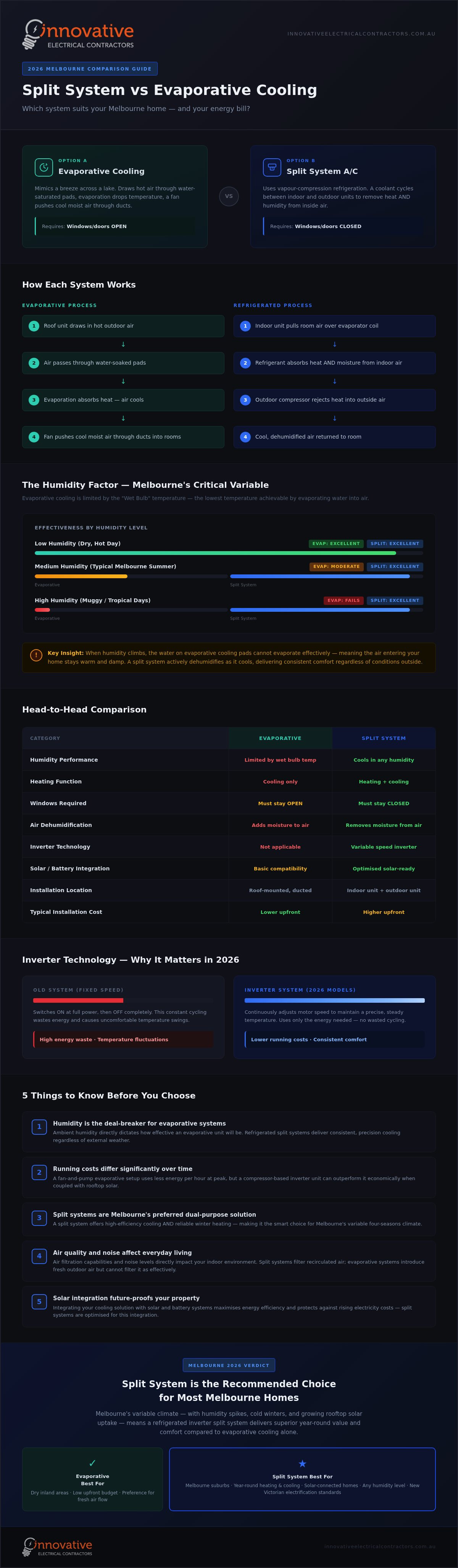
This system mimics the cooling effect of a breeze blowing across a lake. It uses a central unit, typically mounted on the roof, that draws in hot outside air through water-saturated pads. As the air passes through these pads, the water evaporates, absorbing the heat and dropping the air temperature significantly. A large fan then pushes this cooled, moist air through a series of ducts into your rooms. Because this process constantly introduces new air, you must keep windows or doors open to let the old air escape. It provides a "fresh air" sensation that many Australians prefer, but its performance is tied directly to the weather outside.
The Refrigerated Power of Split Systems
In contrast, split system air conditioning Melbourne uses a refrigerated process to control your climate. Instead of adding moisture, it removes heat and humidity from the indoor air. This happens through a chemical coolant that cycles between an indoor unit and an outdoor compressor. To understand the science deeper, you can look at how air conditioning works via the vapor-compression cycle. This method allows for precise temperature control regardless of how hot or humid it gets outside.
Modern units consist of two main parts that work in tandem:
The Indoor Unit: This contains the evaporator coil that absorbs heat from your room and filters the air.
The Outdoor Unit: This houses the compressor that rejects the absorbed heat into the outside atmosphere.
Inverter Technology: This is a vital feature in 2026 models. Unlike older units that simply turn on and off at full power, an inverter adjusts the motor speed to maintain a steady temperature. This precision makes a split system air conditioning Melbourne incredibly energy efficient.
The "open vs closed" requirement is the biggest lifestyle differentiator between the two. Evaporative cooling requires an "open house" policy to function. If you close the windows, the air becomes humid and muggy as pressure builds up. Conversely, a split system requires a "closed house." It works by recirculating and conditioning the air already inside. If you leave a door open with a split system, you're essentially trying to cool the entire street, which leads to higher electricity bills and unnecessary strain on the compressor.
Performance and Climate Suitability for Australian Properties
Climate suitability is about more than just the peak temperature on the Bureau of Meteorology's app. It involves how a system handles moisture and whether it can provide relief when the weather turns muggy. While many believe evaporative cooling is a universal solution for the Australian climate, the reality is more nuanced. Your comfort depends on the system's ability to maintain a set temperature regardless of the conditions outside your front door.
The Humidity Factor: Why It Matters
Every evaporative cooler is limited by the "Wet Bulb" temperature. This is essentially the lowest temperature that can be reached by evaporating water into the air. On dry, hot days, these systems excel. However, when humidity climbs, the air becomes saturated. The water on the cooling pads cannot evaporate effectively, which means the air entering your home stays warm and damp. On those rare but punishing tropical days in the southern states, an evaporative system can struggle to provide any real relief.
A refrigerated split system air conditioning Melbourne provides a completely different experience. It doesn't rely on the ambient air's capacity to hold moisture. Instead, it actively dehumidifies the room as it cools. By removing excess water from the air, the system makes the indoor environment feel significantly crisper and more comfortable. This precision cooling allows you to set a specific temperature, such as 22 degrees, and trust the unit to maintain it perfectly, whether it's a dry heatwave or a humid afternoon storm.
Heating Capabilities: More Than Just Cooling
A significant differentiator is that evaporative systems are strictly for cooling. When the winter chill hits, an evaporative unit sits idle on your roof. This often forces homeowners to maintain a separate gas ducted heating system, leading to double the maintenance costs and two different sets of infrastructure to manage. In the context of the 2026 shift toward full electrification, this is becoming a less viable long-term strategy.
In contrast, a modern reverse cycle split system air conditioning Melbourne offers year-round climate control. It extracts heat from the outside air, even on freezing nights, and pumps it indoors with incredible efficiency. This dual functionality provides immense value, as one single investment manages every season. Correct sizing is critical for this performance. We look at total room volume, including ceiling height and window orientation, rather than just floor area. To ensure your property is equipped with the most efficient setup, it's worth consulting specialised electrical contractors who understand how to integrate these high-performance units with your existing electrical infrastructure.
Analysing the Long-Term Costs: Installation vs Running Expenses
When weighing up your options, focusing solely on the purchase price of the unit is a common trap. You need to consider the total cost of ownership. This includes installation, seasonal running expenses, and potential infrastructure upgrades. A system that seems affordable today might become a financial burden over a decade of operation if it doesn't match your property's energy profile. Our role as a trusted advisor is to help you see the full financial picture before the first hole is drilled.
Energy Efficiency and Power Bills
In 2026, understanding Zoned Energy Rating Labels (ZERL) is essential for every homeowner. These labels provide a more accurate picture of how a split system air conditioning Melbourne performs in our specific temperate climate. Since these units use compressors, their peak power draw is higher than a simple evaporative fan and pump. However, their high star ratings for both heating and cooling often result in a faster ROI, especially when they replace inefficient gas heaters. It's also vital to factor in water usage. Evaporative systems can consume significant litres of water per hour during peak summer operation. This adds a secondary layer to your utility bills that refrigerated systems avoid entirely.
The Hidden Costs of Installation
The hidden costs of climate control often lie behind your plaster walls or inside your power box. A multi-head split system requires dedicated electrical circuits and high-quality cabling to ensure long-term reliability and warranty compliance. Many older homes simply aren't equipped for this sudden increase in demand. This is where modern electrical services become a prerequisite. Upgrading your switchboard isn't just about making the unit work. It's about meeting current safety standards and preventing dangerous circuit overloads. We prioritise transparency here, ensuring you know exactly what infrastructure is needed to support your new technology.
For evaporative units, structural considerations are the main hurdle. Your roof may require additional bracing to support the weight of a water-filled unit and its associated flashing. This can add complexity to the initial setup that a wall-mounted unit avoids. Ultimately, the most efficient choice is the one that integrates with your existing assets. A solar-ready split system air conditioning Melbourne can often run on "free" energy during the hottest parts of the day. This synergy significantly reduces the ROI period and ensures your property remains comfortable without the stress of fluctuating energy markets.
Lifestyle, Health, and Maintenance Requirements
Your choice of cooling impacts your sleep quality and respiratory health as much as your monthly budget. Beyond the basic mechanics of temperature control, these two systems offer vastly different living environments. One provides a constant stream of outside air, while the other creates a controlled, filtered atmosphere. Understanding the daily maintenance and health implications of each is vital for long-term satisfaction with your investment.
Air Quality and Allergy Considerations
For households managing asthma or hay fever, the air filtration capabilities of a split system air conditioning Melbourne are often a deciding factor. These units act as high-performance air purifiers. Modern refrigerated systems use advanced multi-stage filters to trap fine dust particles, pollen, and even some bacteria from the indoor air. Because the system recirculates and dries the air, it keeps indoor humidity levels low, which is essential for preventing the growth of dust mites and mould in carpets or curtains.
Evaporative systems take the opposite approach by drawing in 100% fresh outside air. While many enjoy this "natural" feel, it can be problematic during high-pollen days or when there is smoke in the neighbourhood. Furthermore, because evaporative cooling adds moisture to the air, it can lead to condensation issues if the house isn't ventilated correctly. If your family suffers from severe allergies, the ability of a split system to seal the home and scrub the air provides a significant health advantage.
Maintenance for Longevity and Safety
Maintenance is where many homeowners fall behind, leading to premature system failure. To keep a split system air conditioning Melbourne running at peak efficiency, you should clean the indoor filters every few months. This is a simple task you can do yourself, but it must be supplemented by a professional service once a year. A licenced technician will check refrigerant levels and clear the condensate drains to prevent water leaks inside your walls.
Evaporative units require a more hands-on seasonal approach. Since they use water, the pads can become a breeding ground for bacteria or algae if left stagnant. A "winter shutdown" is essential, which involves draining the water tank and covering the unit to prevent cold draughts and debris from entering the ductwork. Neglecting this can lead to unpleasant odours the moment you turn the system on in spring.
As licenced professionals, we treat air conditioning as a critical part of your home's electrical network. A comprehensive service should always include electrical fault finding to identify loose connections or deteriorating components before they cause a breakdown. If you want to ensure your system is safe and compliant with Australian standards, you can book a professional inspection with our experienced team. We look beyond the filters to protect your property's electrical integrity.
The Decision Framework: Choosing Your Ideal System
Selecting the right cooling technology involves looking at your roof as much as your walls. By 2026, the most successful installations aren't just standalone units. They're part of a broader energy ecosystem. Choosing between these systems requires a methodical look at how you live, when you're home, and how your property generates power. We've developed a framework to help you move from confusion to a confident decision that protects your comfort and your hip pocket.
Integrating with Solar and Battery Storage
The synergy between renewable energy and climate control is a game-changer for modern properties. When you integrate a split system air conditioning Melbourne with your solar and battery systems, you turn a major utility expense into a manageable asset. During the peak of a summer day, your rooftop panels are often generating more power than your appliances can use. This is the perfect time to "load shift."
By pre-cooling your home using "free" solar energy during the day, you reduce the strain on your system during the evening peak. If you have battery storage, you can continue this high-efficiency cooling well after the sun goes down without drawing expensive power from the grid. Split systems are particularly well-suited for this because their inverter technology allows them to sip power steadily rather than in large, costly spikes. It's a strategic way to maximise the ROI of your solar investment while maintaining a crisp indoor environment.
Final Checklist for Property Owners
Before making your final choice, run your property through this essential checklist. It helps identify the practical constraints that might make one system more viable than the other:
Usage Patterns: Do you need whole-day comfort for a home office, or just a cool bedroom for sleeping? Split systems offer better "zoning" for specific rooms.
Insulation Quality: Is your home well-sealed? High-quality insulation and double glazing favour the "closed house" refrigerated approach of a split system.
Switchboard Capacity: Does your electrical board have the room for new dedicated circuits? We always check this first to ensure safety compliance.
Heating Requirements: Do you want to ditch gas entirely? If you need a single unit for year-round comfort, a reverse cycle system is the logical path.
Smart AC controllers add the final layer of efficiency. These allow you to monitor energy usage and adjust temperatures remotely via your smartphone. You can turn the cooling on twenty minutes before you leave work, ensuring the house is comfortable the moment you walk in. For a deeper dive into specific brands and technical specifications, our ultimate air conditioner buying guide is the best next step for your research. It provides the granular detail needed to match a specific unit to your property's unique floor plan.
Securing Your Year-Round Comfort and Energy Independence
Choosing the right cooling system in 2026 is no longer just about beating the heat. It's about building a sustainable, cost-effective energy ecosystem for your property. We've explored how refrigerated precision outperforms evaporative units on humid days and why integrating your cooling with solar storage is the smartest path to long-term savings. Whether you're prioritising air quality for your family or seeking a high-efficiency replacement for aging gas heaters, the right split system air conditioning Melbourne offers a versatile, future-proof solution.
As Licenced A-Grade Electricians, our team provides comprehensive commercial and residential support to ensure your installation is safe and compliant. We specialise in solar-integrated cooling, helping you turn rooftop energy into consistent indoor comfort. Don't leave your property's climate to chance or settle for inconsistent performance. You can get a professional climate control assessment from Innovative Electrical Contractors today. Taking this small step now ensures your home remains a sanctuary of efficiency and comfort for many years to come.
Frequently Asked Questions
Is evaporative cooling or a split system cheaper to run in Australia?
Evaporative systems generally have lower electricity running costs because they only power a fan and a small water pump. However, they consume significant amounts of water, which adds a secondary utility cost. A reverse cycle split system air conditioning Melbourne typically uses more power per hour but provides superior dehumidification and heating. The total value often depends on whether you have solar panels to offset the compressor's power draw during the day.
Can I install a split system air conditioner myself?
No, you cannot legally or safely install an air conditioner yourself in Australia. All installations must be performed by a licenced electrical contractor and a technician holding a valid ARCtick licence. Attempting a DIY installation voids your manufacturer’s warranty and creates significant fire and safety risks. Our A-Grade electricians ensure your system is wired correctly to meet Australian standards and protect your property’s electrical integrity and insurance coverage.
Do I need a switchboard upgrade for a new air conditioning installation?
Many modern installations require a switchboard upgrade to handle the additional electrical load safely. Older boards often lack the necessary circuit protection or capacity for a high-powered compressor. We assess your current infrastructure during the initial quote to determine if your board meets the standards for a new split system air conditioning Melbourne. Upgrading ensures your home remains safe from circuit overloads and potential electrical fires while providing a dedicated circuit for your unit.
How long does a typical split system air conditioner last?
A well-maintained split system typically lasts between 10 and 15 years. Factors such as the quality of the initial installation, frequency of filter cleaning, and local environmental conditions play a major role in longevity. Evaporative units can last slightly longer, often up to 20 years, provided the water pads are replaced regularly and the unit is winterised correctly. Regular professional servicing is the most effective way to extend the life of any climate control system.
Why is my evaporative air conditioner not cooling on humid days?
Evaporative cooling relies on the air’s ability to absorb moisture to drop the temperature. On humid days, the air is already saturated with water, which prevents the evaporation process from occurring effectively. This results in the system blowing warm, muggy air into your home rather than a cool breeze. In contrast, refrigerated systems remove moisture from the air, making them the more reliable choice for consistent comfort regardless of the humidity levels or external weather patterns.
Can I run my air conditioner entirely off my solar battery system?
You can run an air conditioner entirely off a solar battery system provided the battery capacity and inverter output match the unit’s power requirements. Modern high-efficiency split systems are excellent for this because they use inverter technology to maintain temperatures with a low, steady draw. We specialise in solar and battery integration, helping you size your storage to handle evening cooling peaks without relying on the grid, effectively creating a self-sufficient home environment.
What is the best temperature to set my split system for energy efficiency?
Setting your thermostat to 24°C in summer provides the best balance between comfort and energy efficiency. For every degree you drop below this, your energy consumption can increase by approximately 5% to 10%. Using a "Smart AC" controller helps you manage this remotely, allowing you to maintain an efficient temperature while you are out and pre-cool the home just before you return using your excess solar power instead of drawing from the grid.


Comments