
Electrical Fault Finding: The Ultimate Safety Checklist for 2026

Updated: Sep 2
That flickering light in the hallway isn't just a minor nuisance; it's often the first warning sign of a system under stress that could lead to a hidden fire risk. Most Australian homeowners feel a genuine sense of dread when the power suddenly cuts out or an appliance emits a faint, metallic burning smell. It's incredibly frustrating to deal with intermittent power loss, especially when you're worried about the potential cost of repairing something you can't even see behind your walls.
You deserve to feel confident in your property's safety without guessing about the state of your wiring. This guide provides a comprehensive path to professional electrical fault finding, giving you the tools to identify, manage, and prevent dangerous issues before they escalate. We'll walk you through the essential 2026 safety checklist and explain the methodical diagnostic process experts use to keep your home or business running smoothly. By the end, you'll know exactly how to protect your investment and ensure your electrical system meets the latest safety standards for total peace of mind.
Table of Contents
What is Electrical Fault Finding and Why is it Critical?
Electrical fault finding is the systematic investigation of a circuit to locate the exact point of failure. It is a methodical diagnostic process that goes far beyond simply resetting a circuit breaker or replacing a fuse. When your power trips, it is rarely a random event. Instead, it is a safety mechanism doing exactly what it was designed to do: protecting your property from a deeper, underlying issue.
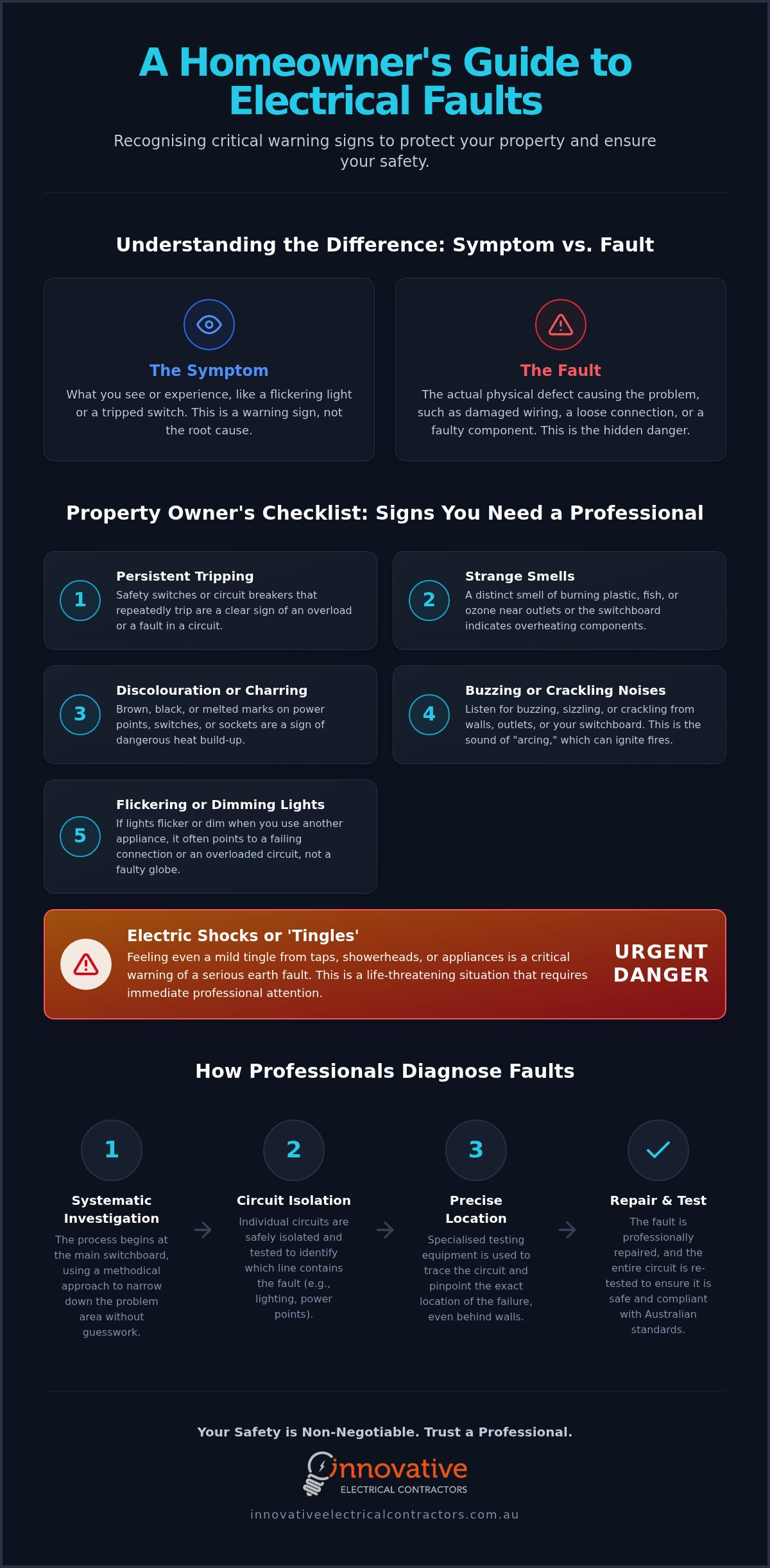
To understand the importance of this process, you must distinguish between a symptom and a fault. A tripped switch or a flickering light is merely a symptom. The actual fault is the physical defect causing the issue, such as damaged insulation, a loose terminal, or a compromised component. Ignoring these signs creates significant safety risks, including electrical fires, accidental electrocution, and permanent damage to expensive appliances. Understanding What is an electrical fault? helps clarify that these issues are physical failures in the system's integrity that require professional correction.
The Science of the Short Circuit
Electricity is inherently lazy. It will always follow the path of least resistance to reach the earth. In a healthy system, your wiring's insulation acts as a secure tunnel, keeping the current on its intended path. A short circuit occurs when that insulation fails and the "active" wire makes direct contact with a "neutral" or "earth" wire. This creates an immediate surge of energy and heat. Without the protective barrier of high-quality insulation, this uncontrolled current can quickly melt plastic components or ignite surrounding building materials.
Commercial vs. Residential Faults
The stakes of electrical fault finding vary depending on the environment. In a residential setting, we often see faults caused by aged rubber-insulated wiring or rodents chewing through cables in the roof space. These issues are often permanent failures that are relatively straightforward to trace. Commercial and industrial sites, however, present much higher stakes. These systems involve complex 3-phase machinery and intricate control circuits where a single fault can lead to massive operational downtime and safety hazards for dozens of workers.
Intermittent faults are the most frustrating for property owners. These are issues that appear and disappear seemingly at random, often triggered by moisture or heat expansion. Because these faults are unpredictable, they require a disciplined diagnostic approach to catch them in the act. For those with high-demand appliances, such as climate control systems, seeking specialised AC repair Roseville CA can often resolve issues before they escalate into serious electrical faults. Often, persistent issues discovered during this process indicate that the most reliable and cost-effective solution for long-term safety is a comprehensive electrical switchboard upgrade.
Your electrical system usually provides subtle clues before a major failure occurs. Recognising these signs early can save you from the stress of a total power loss or the danger of a house fire. Professional electrical fault finding is the only way to move from guesswork to certainty when your property starts behaving unexpectedly. If you notice any of the following, your system is likely compromised:
Persistent tripping of safety switches or circuit breakers.
A distinct smell of burning plastic, fish, or ozone near power points.
Discolouration or charring on switch plates and sockets.
A mild "tingle" or shock when touching metal taps, showerheads, or appliances.
That last point is a critical warning. Feeling a tingle from a metal fixture suggests a serious earth fault or a broken neutral connection. This is a life-threatening situation that requires immediate attention from a qualified professional. Adhering to high electrical safety standards ensures that these symptoms are addressed before they lead to accidental electrocution.
Visual and Audible Warning Signs
Visible damage is often the tip of the iceberg. If you see brown or black marks around your power points, it indicates that heat is building up due to a loose connection or an overloaded circuit. Similarly, flickering lights throughout a room often point to a failing connection at the switchboard rather than a simple blown globe. Listen closely to your walls as well. A buzzing, sizzling, or crackling sound is the audible signature of "arcing." This occurs when electricity jumps across a gap in a damaged wire, creating temperatures high enough to ignite timber framing or insulation.
Performance-Based Indicators
Many owners dismiss frequent RCD (Safety Switch) activations as "nuisance tripping." However, these devices are highly sensitive and only trip when they detect a genuine leak of current to the earth. Engaging in methodical electrical fault finding allows an electrician to isolate the specific circuit or appliance responsible for the leak. Frequent power surges that blow fuses or "brownouts" where lights dim significantly also suggest your system is struggling to manage the load. If these issues sound familiar, it might be time to book a professional inspection with the team at Innovative Electrical Contractors to ensure your home remains a safe environment.
How Professionals Locate Faults: The Diagnostic Process
Professional fault finding involves a series of isolation tests designed to narrow down a fault to a specific cable or component without guesswork. This methodical approach ensures that every part of the circuit is accounted for, preventing the dangerous "hit and miss" tactics often seen in DIY attempts. Most investigations begin at the main switchboard. This is the heart of your property's power distribution and the most logical place to start isolating individual circuits to see exactly which protective device is reacting to the issue.
By following a disciplined diagnostic path, an electrician can identify the root cause while maintaining a safe environment. This process relies on technical knowledge and high precision equipment rather than simple trial and error. It transforms a complex, invisible problem into a clear, manageable repair plan.
Step 1: Visual Inspection and Client Interview
The process always starts with a conversation. We will ask what appliances were running when the trip occurred or if you noticed any recent flickering. This isn't just small talk; it helps us identify patterns and narrow our search area. We perform a thorough visual check for obvious signs of water ingress in outdoor fittings or mechanical damage to visible cables. We also review the history of your electrical switchboard upgrade or any previous repairs to understand the system's current configuration.
Step 2: Circuit Isolation and Testing
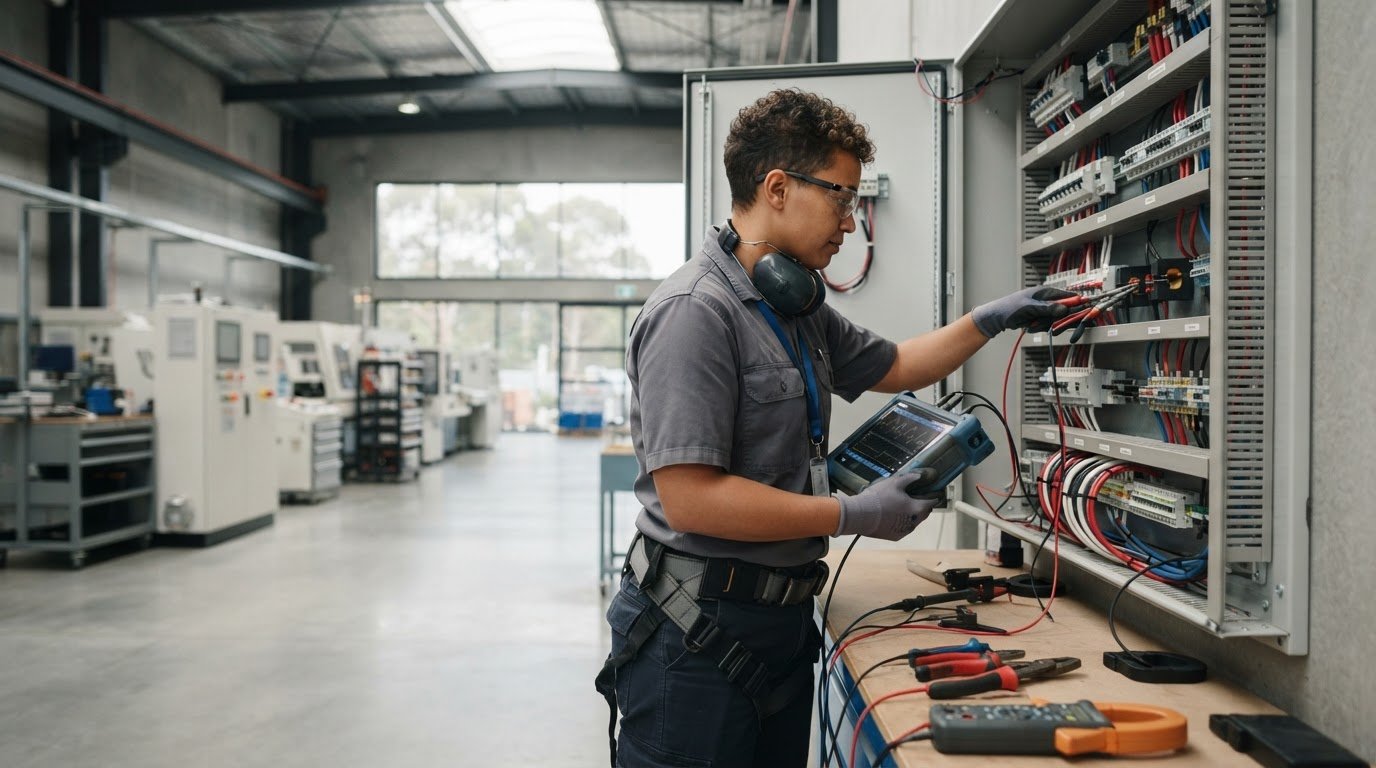
Once we have a lead, we use specialised diagnostic tools to look behind the walls. An Insulation Resistance (IR) tester, commonly known as a "Megger," allows us to check the integrity of cable insulation by applying a controlled voltage. We also perform continuity testing to ensure the circuit path is complete and safe. By "splitting the circuit" at various junction points, we can systematically eliminate healthy sections until only the faulty segment remains. This surgical precision avoids unnecessary damage to your property and ensures we find the electrical fault finding solution efficiently.
Step 3: Identification and Rectification
After isolating the problem, we confirm the physical cause. It might be a rogue nail through a wire, a moisture-damaged socket, or a faulty internal component in a hard-wired appliance. If a fault is traced back to an automated motor, such as in a residential entry system, We Do Garage Doors can provide the specialised repairs needed to restore safe operation. Rectification usually involves replacing the damaged section of cable entirely rather than attempting a temporary patch that might fail later. Finally, we perform a verification test to ensure the entire installation is safe and fully compliant with AS/NZS 3000 standards before restoring power to your home or business.
Adopting a proactive approach to your electrical system is the most effective way to avoid the stress of sudden failures. While reactive electrical fault finding is essential when things go wrong, a regular maintenance schedule can identify vulnerabilities before they become dangerous. Most property owners wait for a total power loss to call an expert. By that stage, the repair is often more complex and expensive. Investing in early detection ensures your home remains safe and your appliances stay protected from avoidable surges.
The age of your wiring plays a major role in its reliability. Standard household wiring typically has a reliable lifespan of 25 to 40 years. If your property still uses older rubber-insulated or cotton-covered cables, the risk of insulation breakdown increases significantly. We often recommend considering a partial or full re-wire if your installation is approaching these milestones. To catch invisible issues, we utilise Thermal Imaging technology. This allows us to see "hot spots" inside walls or switchboards that indicate a loose connection or an overloaded circuit long before it triggers a fire.
The Role of Modern Switchboards
Your switchboard is the primary line of defence for your entire property. Modern units equipped with RCDs (Residual Current Devices) and RCBOs (Combined RCD and Circuit Breaker) provide far superior fault detection compared to old-fashioned ceramic fuses. These devices monitor the flow of electricity and cut power in milliseconds if they detect a leak. We recommend performing a "test button" check on your safety switches every six months to ensure they remain functional. For properties still relying on outdated fuse boxes, a professional electrical switchboard upgrade is the single best investment you can make for long-term safety.
Solar and Battery System Health
Renewable energy systems introduce unique complexities to your electrical network. Faults in solar DC isolators are a leading cause of rooftop fires in Australia, often due to moisture ingress or poor installation standards. Similarly, battery storage systems require secure, corrosion-free connections to handle high-current discharge safely. If you operate an off-grid system, your reliance on these components is absolute. Regular electrical audits are non-negotiable for these setups to ensure every connection remains tight and every isolator is intact. If you are concerned about the integrity of your renewable setup, the team at Innovative Electrical Contractors can perform a comprehensive health check to keep your system performing at its peak.
Why Expert Fault Finding is a Non-Negotiable for Safety
Attempting to fix an electrical issue yourself isn't just dangerous; it's illegal across Australia. Our national electricity supply operates at 240 volts, which is more than enough to be lethal. Beyond the immediate risk of electrocution, unlicensed work can leave behind hidden hazards that eventually lead to structure fires. Electrical fault finding is a specialised skill that requires years of training and the right diagnostic tools to perform safely. When you choose a professional partner, you are choosing to protect your family, your staff, and your property investment from avoidable tragedies.
Professional diagnosis also saves you a significant amount of money in the long run. It prevents the expensive "parts-darts" approach, where an unqualified person replaces components at random in the hope of stumbling across a cure. This guesswork leads to wasted materials and unnecessary labour costs. A methodical expert identifies the exact failure point, meaning you only pay for the specific repair required. Once the work is complete, we provide a Certificate of Electrical Safety (COES). This document is your legal proof that the work meets Australian standards and that your system is safe to energise.
The "Reliable Local Expert" Advantage
Engaging a licensed professional ensures that your home insurance remains valid. Most Australian policies contain strict clauses that void your coverage if a fire or injury is traced back to uncertified electrical work. At Innovative Electrical Contractors, we pride ourselves on being a disciplined partner who prioritises precision and clear communication. We don't just fix the immediate problem; we provide thorough documentation of our findings. This record-keeping is invaluable for future property maintenance, as it allows any future contractor to understand the history and configuration of your specific wiring system without starting from scratch.
Next Steps: Securing Your Property
If you have noticed small "niggles" like a switch that feels warm to the touch or a circuit that trips once a month, don't wait for a total failure to act. These minor inconveniences are often the early warning signs of a deteriorating system. There is immense peace of mind that comes from knowing your property has been fully audited by an expert who values craftsmanship and integrity. Taking action now prevents a small fault from turning into a major emergency. Contact Innovative Electrical Contractors for a professional safety audit today.
Secure Your Property for 2026 and Beyond
Ensuring your home or business is truly safe requires moving from reactive repairs to proactive maintenance. We have explored how identifying the difference between a simple symptom and a dangerous underlying fault is the first step toward total peace of mind. By following a methodical diagnostic process, you can eliminate the frustration of intermittent power loss and avoid the extreme risks of electrical fires or accidental shocks.
Professional diagnostics are more than just a quick fix; they are a comprehensive audit of your property's health. As licensed Australian electrical contractors, we specialise in switchboard upgrades and solar safety, ensuring every component of your system remains compliant. Our transparent diagnostic process removes the guesswork, saving you time and protecting your investment for years to come. Protect your property with expert electrical fault finding from Innovative Electrical Contractors.
You don't have to live with electrical uncertainty. Take control of your property's safety today and enjoy the confidence that comes with a professionally maintained and secure system.
Frequently Asked Questions
Is it normal for a safety switch to trip occasionally?
No, it is not normal for a safety switch to trip without a reason. These devices, known as RCDs, only activate when they detect a leakage of current to the earth. While "nuisance tripping" can sometimes occur due to moisture or a build-up of minor leaks from multiple appliances, it is always a warning. If your switch trips more than once, it indicates a genuine fault that requires a professional inspection to prevent a potential shock hazard.
How much does electrical fault finding typically cost?
The cost of this service depends on the time required to isolate the specific issue and the complexity of your property's wiring. Most professionals charge a call-out fee plus an hourly rate for diagnostic work. Because the process is a systematic investigation, providing a flat quote upfront is difficult. However, a methodical approach usually saves you money by identifying the exact component that needs repair rather than replacing parts at random.
Can I do my own electrical fault finding at home?
No, you must never attempt your own electrical diagnostics. In Australia, it is illegal for anyone other than a licensed electrician to perform electrical work, including fault finding. You risk lethal electrocution and house fires by attempting DIY repairs. Furthermore, unlicensed work voids your home insurance policy. Professionals use specialised, calibrated equipment like insulation resistance testers to safely locate faults that are invisible to the naked eye.
What is the most common cause of electrical faults in Australian homes?
The most frequent causes include aged wiring, moisture ingress in outdoor power points, and faulty household appliances. In many older properties, the original rubber or cotton insulation on cables perishes over time, leading to short circuits. Rodent damage in roof spaces is another significant factor we encounter. Professional electrical fault finding is the only reliable way to determine if the issue is a simple appliance failure or a systemic wiring problem.
How long does a professional fault finding session take?
A standard session typically takes between one and three hours, though this varies based on the nature of the problem. A permanent fault, such as a burnt-out socket, is often identified quickly through visual inspection and basic testing. Intermittent faults are more challenging and require a disciplined process of splitting the circuit and testing individual segments. We aim to work efficiently to restore your power while ensuring the entire system is safe.
Will an electrician have to cut holes in my walls to find a fault?
Cutting into walls is rarely necessary during the diagnostic phase. We use advanced testing tools to measure the integrity of your wiring from the switchboard or existing power points. This allows us to pinpoint the location of a failure without damaging your home's finishes. If a cable replacement is eventually required, we always look for the least invasive route, such as using roof spaces or existing wall cavities, to maintain your property's aesthetic.
What should I do immediately if I smell burning near a power point?
You should immediately turn off the power at the main switchboard and stop using that circuit. A smell of burning plastic, ozone, or a fishy odour indicates that a component is overheating or arcing. This is a high-risk fire hazard that requires urgent attention. Once you have isolated the power, stay away from the affected outlet and call an expert to perform electrical fault finding and replace the damaged hardware before the power is restored.
Does my insurance cover repairs found during fault finding?
Insurance coverage depends on your specific policy and the root cause of the issue. Most insurers cover damage resulting from sudden, accidental events like lightning strikes or power surges. However, they generally do not cover repairs for "wear and tear" or lack of maintenance, such as perishing old wiring. Using a licensed contractor who provides a Certificate of Electrical Safety (COES) is essential for ensuring any eligible claims are processed correctly by your insurer.


Comments