
Commercial Electrical: A Strategic Resource for Australian Businesses in 2026

Could your building's power grid be the silent drain on your annual profits? As we move into 2026, the role of commercial electrical systems has shifted from basic utility to a vital strategic resource. Many Australian business owners find themselves caught between skyrocketing energy prices and the constant pressure to maintain strict regulatory compliance. It's a challenging balance to strike when you're also trying to prevent the costly downtime that follows an unexpected fault.
We understand that managing a facility's infrastructure can feel like a moving target. You want a system that's reliable, scalable, and above all, safe. This article provides a clear roadmap to mastering your commercial electrical needs, ensuring your operations remain efficient and fully compliant with the latest Australian standards. We'll walk you through the essentials of energy-efficient lighting, smart load management, and integrated security solutions like CCTV and access control. By the end of this guide, you'll know exactly how to transform your electrical setup into a high-performing asset that supports long-term growth.
Table of Contents
The Evolving Landscape of Commercial Electrical Infrastructure
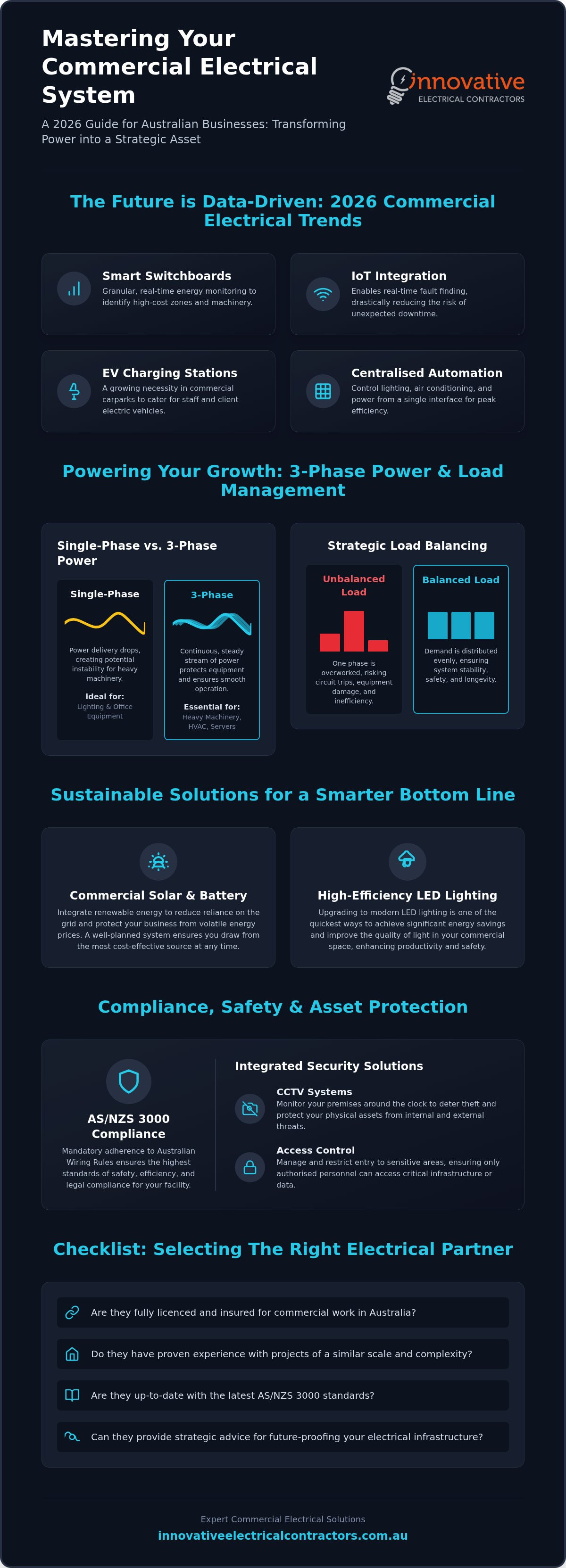
The days of reactive maintenance are disappearing. Australian businesses now view their commercial electrical systems as data hubs rather than just a collection of wires and conduits. By 2026, the focus has shifted toward real-time energy monitoring and high-efficiency switchboards. Modern switchboards now incorporate smart meters that provide granular data on energy consumption, helping you identify which machines or zones are costing the most to run. This evolution isn't just about saving money; it's about meeting the updated AS/NZS 3000 standards that prioritise safety and load efficiency.
A professional commercial electrical contractor does more than install power points. They act as a strategic partner during the project planning phase. They help you balance high-performance operational needs with the increasing pressure to reach sustainability goals. When you integrate solar and battery systems with your mains power, the complexity increases. A methodical approach to this synergy ensures your facility draws power from the most cost-effective source at any given time, protecting your margins from volatile energy prices.
Modern Trends in Commercial Power
Smart technology is changing how we manage facilities. Integrating IoT devices allows for real-time electrical fault finding, which reduces the risk of unexpected shutdowns. We're also seeing a massive rise in EV charging stations within commercial carparks as staff and clients transition to electric vehicles. Centralised building automation systems now allow managers to control lighting, air conditioning, and power usage from a single interface. This level of control ensures no watt is wasted and provides the peace of mind that your facility is operating at peak performance.
The Importance of Strategic Planning
Electrical infrastructure is the backbone of business continuity. Engaging an expert early in a new build or fit-out prevents expensive retrofitting later. Early consultation allows for the integration of specialised power solutions or battery backups that keep your business running during grid instability. A well-planned layout considers your current power draw and anticipates future equipment upgrades. This foresight ensures your switchboards and cabling can handle increased capacity without requiring a complete overhaul. Future-proofing your site today protects your long-term investment and guarantees your facility remains functional as technology evolves.
Maximising Capacity: Load Management and 3-Phase Power
Most Australian businesses eventually outgrow the standard single-phase power supply found in smaller properties. As your facility expands, the demand for a stable and high-capacity commercial electrical system becomes non-negotiable. 3-phase power is the industry standard for high-demand environments because it delivers energy through three separate currents. This setup provides a continuous, steady stream of power that doesn't drop to zero like single-phase supply does. It's the most efficient way to run heavy machinery, large-scale air conditioning, and extensive server rooms without risking constant circuit trips.
Upgrading to 3-phase power isn't just about raw capacity; it's about protecting your investment. High-demand equipment running on insufficient power often vibrates more, runs hotter, and fails sooner. A methodical switchboard upgrade ensures your infrastructure can handle 2026's higher efficiency requirements while providing ample room for future growth. This process involves a detailed site audit to measure your peak demand and ensure your cabling and protective devices meet the latest safety standards.
Understanding Three-Phase Power Systems
The technical difference between single-phase and three-phase supply lies in the consistency of delivery. While single-phase is perfect for lighting and standard office equipment, it often falls short in a commercial electrical setting. Three-phase systems use four wires to deliver power at higher voltages, which is vital for commercial motors and industrial HVAC units. This stability allows motors to start more easily and run with greater torque. You can explore the basics of these systems in our guide on Understanding 3 Phase Power for Modern Households.
Strategic Load Balancing
Load balancing is the practice of distributing your electrical demand evenly across all three phases. If one phase is heavily loaded while the others remain idle, you face inefficient operation and potential equipment damage. Smart energy management tools now allow us to monitor these loads in real time, helping you avoid expensive peak demand charges from your energy retailer. For industrial settings, power factor correction is another essential strategy. It ensures your machinery uses power effectively, reducing the "reactive" energy that often inflates commercial power bills. If you're concerned about your current capacity, our team can help you plan a comprehensive power audit to identify hidden inefficiencies.
Sustainable Solutions: Integrating Commercial Solar and Energy-Efficient Lighting
Sustainable energy has transitioned from a corporate social responsibility goal to a core financial strategy. For Australian businesses, the 2026 energy landscape rewards those who invest in self-generation and efficient consumption. High energy prices directly squeeze margins, making it vital to look beyond the meter. By integrating solar arrays and battery storage into your commercial electrical framework, you take control of your overheads and reduce your reliance on a volatile grid. These systems don't just lower bills; they provide a measurable return on investment through reduced peak demand charges and long-term energy independence.
Government incentives continue to play a major role in these upgrades. Various federal and state-based rebates are designed to offset the initial capital expenditure of renewable transitions. Whether it is small-scale technology certificates or specific energy efficiency grants, these financial levers make the shift to high-capacity solar more viable than ever. When combined with off-grid battery systems, your facility can remain operational even during grid instability, ensuring your business never misses a beat.
Commercial Solar and Battery Systems
Scaling a solar array requires a methodical approach that considers the specific footprint of your site. Large warehouses benefit from expansive roof-mounted systems, while retail spaces might focus on smaller, high-efficiency setups. Battery storage is the critical link in this chain. It allows for "peak-shaving," where your building draws from stored battery power during the most expensive times of the day. To keep these assets performing at their peak, regular upkeep is essential. You can find detailed advice on this in our Solar Battery Maintenance Guide.
Energy-Efficient Lighting Design
Upgrading to LED lighting remains the fastest way to slash your daily power consumption. When comparing traditional HID or fluorescent tubes to modern LEDs, the results are clear. LEDs use significantly less wattage for the same lumen output and generate far less heat, which also reduces the load on your air conditioning. In high-bay commercial environments, the longevity of LED technology means fewer expensive bulb replacements and less downtime for maintenance crews.
Smart lighting design goes beyond the bulbs themselves. Implementing motion sensors and daylight harvesting technology ensures lights only operate when and where they are needed. This level of automation doesn't just save power; it creates a more responsive environment that has been shown to improve employee productivity and safety. A well-lit workspace reduces eye strain and helps prevent accidents, making it a cornerstone of a high-performing commercial electrical installation.
Compliance and Protection: Safety Standards and Integrated Security
Safety is the bedrock of a successful operation. It's about more than just ticking a box; it's about protecting your people and your property. Adhering to AS/NZS 3000, commonly known as The Wiring Rules, is the minimum requirement for any commercial electrical installation in Australia. These standards evolve to address new technologies and risks, making regular compliance audits essential. By prioritising these safety benchmarks, you create a resilient environment that can withstand the demands of modern business.
Commercial Electrical Compliance
Maintenance schedules should be methodical and transparent. Mandatory testing and tagging ensure that every piece of equipment in your office or warehouse is fit for purpose. RCD testing is another non-negotiable task. These safety switches must be tested at regular intervals to ensure they trip within the required milliseconds. Faulty RCDs provide a false sense of security, which is why professional verification is vital for any commercial electrical system.
Emergency and exit lighting systems also require strict attention. These lights must remain functional during a power failure to guide staff to safety. Regular discharge testing ensures the batteries can hold a charge for the legally required duration, typically 90 minutes. Detailed reporting after each inspection provides the paper trail needed to prove compliance during a workplace safety audit. Professional fault finding further reduces risk by identifying heat damage or loose connections before they lead to a fire or system failure.
Advanced Security Integration
A truly smart building treats security as a component of the electrical grid. Integrating access control systems allows you to manage entry points with precision, replacing traditional keys with secure fobs or mobile credentials. This setup is particularly effective for server rooms, inventory storage, and executive offices. It provides a clear digital audit trail of who entered which zone and when.
CCTV placement is an art that requires technical expertise. Cameras must be positioned to cover high-traffic areas and blind spots while maintaining high-resolution clarity in various lighting conditions. Modern systems now feature analytics that can detect unusual activity and alert you instantly. Managing these systems via smart devices allows you to respond to incidents in real time, no matter where you are. If you need to secure your premises, you can book a comprehensive security and electrical consultation with our expert team.
Selecting the Right Commercial Electrical Contractor for Your Project
Choosing a contractor isn't just about finding the lowest quote; it's about securing the future of your facility. Your commercial electrical system is the lifeblood of your operations, and a generic corporate approach often lacks the personal investment needed for complex sites. We recommend looking for a partner who embodies the "Reliable Local Expert" persona. This mindset ensures you receive the methodical attention of a disciplined professional who values efficiency and clear communication above all else. A local expert understands the specific demands of the Australian grid and takes pride in the craftsmanship required for industrial-scale projects.
Before hiring, ask about their specific experience with high-demand environments. Can they demonstrate success with integrated solar or large-scale switchboard upgrades? A transparent contractor will be happy to discuss their past projects and explain how they manage timelines to minimise your operational downtime. This level of honesty builds the trust necessary for a successful, long-term partnership.
Qualifications and Certifications
Before any work begins, you must verify that your contractor holds a valid commercial electrical licence and comprehensive public liability insurance. These aren't just formalities; they're your primary protection against liability and substandard work. You should also check for specialised accreditations in areas like solar installation or security systems. These certifications prove the team has the technical mastery to handle the integration of modern IoT devices and high-capacity batteries. A safety-first approach is essential, so ensure they have a rigorous process for fault finding and compliance reporting that aligns with AS/NZS 3000 standards.
Partnership and Ongoing Maintenance
The best relationships don't end when the final circuit is tested. Transitioning from project installation to a long-term maintenance schedule provides the peace of mind that your infrastructure will remain efficient for years to come. There is an immense benefit to having a single partner who understands your electrical grid, your solar array, and your climate control systems. This holistic view prevents the communication gaps that often occur when multiple contractors are involved.
Consolidating your services ensures that your air conditioning works in harmony with your solar production and power load. If you're planning an upgrade to your facility's cooling, our Australian Air Conditioner Buying Guide 2026 provides essential insights into choosing units that integrate with smart building technology. By choosing a partner who can manage these diverse systems, you guarantee a high-performing environment that supports your business growth and sustainability goals.
Future-Proofing Your Commercial Energy Strategy
Managing a modern facility requires a shift from reactive repairs to proactive energy management. By prioritising high-efficiency lighting, 3-phase power stability, and integrated security, you're not just maintaining a building; you're creating a strategic asset. Compliance with the latest Australian standards and the smart integration of solar and battery systems ensure your business remains resilient against rising costs and grid instability. These steps provide the foundation for a scalable infrastructure that can grow alongside your operational needs.
Finding a partner who understands the synergy between power, security, and sustainability is the final piece of the puzzle. We bring proven expertise in large-scale commercial and industrial builds, offering a safety-first methodical delivery that gives you total peace of mind. Whether you're upgrading an existing site or planning a new fit-out, our team is ready to help you navigate the complexities of commercial electrical infrastructure with confidence and precision. It's time to transform your power grid into a competitive advantage.
Enquire about your commercial electrical project today to start your journey toward a more efficient and secure future. We look forward to helping you power your success in 2026 and beyond.
Frequently Asked Questions
What is the difference between residential and commercial electrical work?
Commercial electrical work differs from residential primarily in scale, load capacity, and complexity. While residential focuses on single-phase power for household appliances, commercial projects often use 3-phase systems to support heavy machinery and large-scale HVAC. Compliance requirements are also more stringent for businesses, so don't skip the methodical testing of safety switches and emergency lighting. Choosing a contractor with specific industrial experience ensures your infrastructure can handle the higher demand of a modern workplace.
How much can a business save by switching to LED commercial lighting?
Upgrading to LED technology can significantly lower your facility's operational overheads. LEDs consume less power for the same lumen output compared to traditional HID or fluorescent lighting. This change also reduces the heat load on your air conditioning system, leading to secondary energy savings. Because LEDs have a much longer lifespan, you'll also reduce the costs associated with frequent maintenance and bulb replacements in high-ceiling environments, protecting your long-term margins.
Does my business really need 3-phase power?
Most businesses with high-demand equipment or extensive cooling systems will require 3-phase power. It provides a more stable and continuous flow of electricity compared to single-phase supply. This setup is essential for running commercial motors, large server rooms, and industrial machinery without overloading circuits. If your business is expanding or experiencing frequent power trips, upgrading to a 3-phase system is a strategic move to ensure your site's reliability and equipment longevity.
How often should commercial electrical switchboards be inspected?
Commercial electrical switchboards should undergo a professional inspection at least once every 12 months. Regular thermal imaging and physical checks help identify loose connections or overheating components before they cause a failure. Additionally, specific components like RCDs and emergency exit lights have mandatory testing intervals under Australian safety standards. Methodical record-keeping during these inspections is vital for demonstrating compliance during workplace health and safety audits and ensuring business continuity.
Can I integrate my security system with my existing electrical network?
You can certainly integrate CCTV and access control systems with your existing electrical and data network. Modern security solutions are designed to work alongside your main power grid, often using Power over Ethernet to simplify installation. This integration allows for centralised management through smart building automation, giving you real-time visibility over your premises. A professional contractor ensures these systems have adequate backup power to remain operational during grid outages, providing total peace of mind.
What are the current Australian standards for commercial electrical safety?
The primary regulation for commercial electrical safety is AS/NZS 3000, often called the Wiring Rules. This standard dictates how electrical installations must be designed, constructed, and tested to protect people and property. Other relevant standards include AS/NZS 3760 for the in-service safety inspection and testing of electrical equipment. Adhering to these national regulations is mandatory for all Australian businesses to ensure a safe, compliant, and methodical working environment for staff and visitors.
How does commercial solar benefit businesses during peak hours?
Commercial solar systems are particularly effective because they generate the most power during standard business hours when energy demand is highest. This allows you to offset expensive peak-time electricity rates by using your own generated power. When combined with battery storage, you can also engage in peak-shaving, drawing from stored energy to avoid high demand charges from your retailer. This synergy creates a more predictable energy budget and reduces your reliance on a volatile grid.
What should I look for in a commercial electrical contractor?
You should prioritise a contractor with valid licences, comprehensive public liability insurance, and a proven track record in the industrial sector. Look for a partner who acts as a Reliable Local Expert rather than a distant corporate entity. They'll offer a methodical approach to project delivery and have specialised knowledge in integrating solar, batteries, and security systems. Clear communication and a commitment to safety standards are essential traits for a long-term infrastructure partner.


Comments